Circuit of the Americas is in Austin, Texas, USA, and hosted its first F1 United States Grand Prix in 2012. It links fast sequences, long straights and slow braking zones, requiring stability during changes of direction as well as exit traction.
The F1 lap length is 5.513 kilometres, the race runs for 56 laps, and the official distance is 308.405 kilometres. The race lap record is Leclerc’s 1:36.169 from 2019; this is a different statistical category from the fastest qualifying lap.
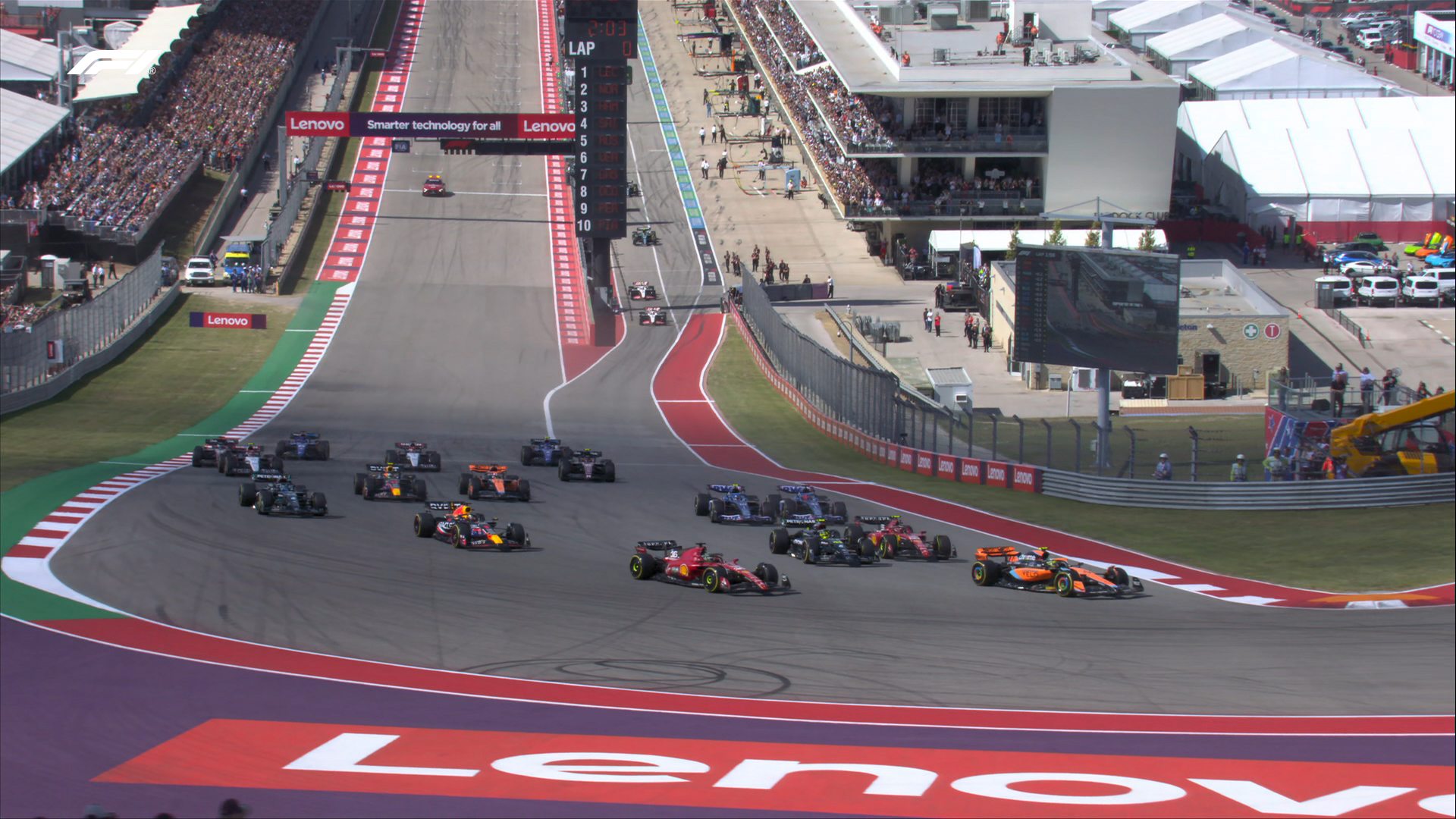
The most striking section is the climb towards turn 1. Its broad entry permits different attacking and defensive lines, after which the cars must quickly enter a sequence of direction changes. Braking at the ends of long straights and the later corner groups alter the lap’s rhythm again.
Circuit history
On 2012-11-18, COTA held its first F1 Grand Prix race. Hamilton won for McLaren, with Vettel and Alonso second and third, opening F1’s history in Austin.
The 2015 United States Grand Prix decided not only a race winner but also the drivers’ championship. Hamilton passed Rosberg late on to win and secured his third F1 world title early. Rosberg and Vettel joined him on the podium.
In 2019, Bottas won in Austin, while Hamilton’s second place secured his sixth drivers’ championship. The race winner and season champion were different people in the same event, making COTA an important title-battle venue again.
Two-wheeled racing has also made history here. At the 2024 Grand Prix of the Americas, Viñales won the MotoGP race for Aprilia, becoming the first rider in the MotoGP era to win Grands Prix for Suzuki, Yamaha and Aprilia, three different manufacturers.
Circuit characteristics
Uphill turn 1:The end of the start-finish straight climbs noticeably, with a broad entry offering different lines. An overtaking attempt requires more than comparing braking points: drivers must also account for the line beyond the crest and the changes of direction ahead.
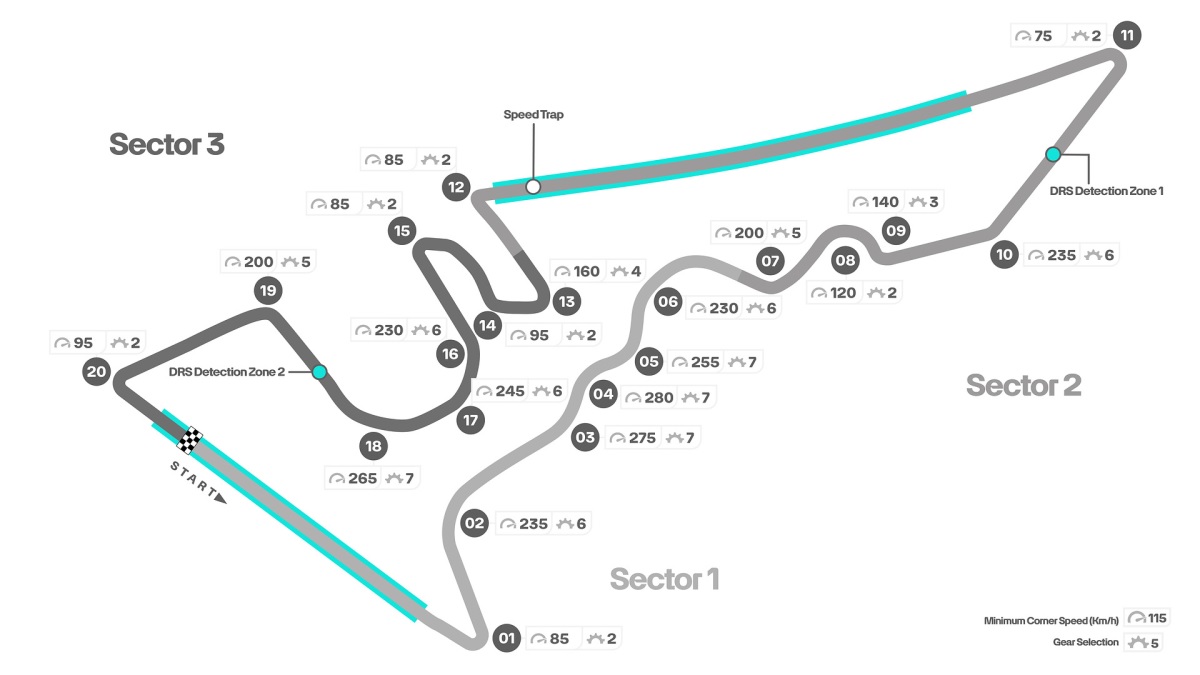
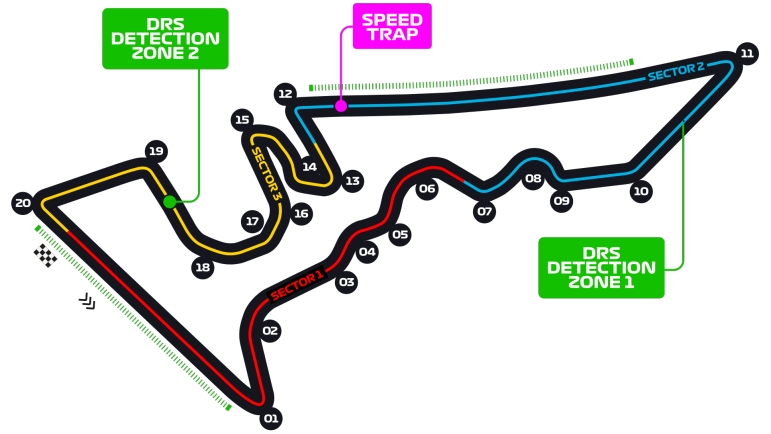
Turns 3 to 6:This fast sequence draws on Silverstone and Suzuka. Cars must change direction repeatedly in little time, and one exit affects the next entry. Continuity therefore matters more than conquering a single corner in isolation.
Turns 12 to 15:This section reflects Hockenheim’s stadium design. Braking after the long straight reduces speed, and the following corners require a compromise between traction and line choice.
Turns 16 to 18:This sustained turning sequence was inspired by turn 8 at Istanbul Park. It is in COTA’s second half, not COTA’s own turn 8. Sustained lateral loading makes car balance and tyre temperature important.
Surface and tyres:Before the 2024 event, turns 9 to 12 and the section from turn 16 to turn 3 on the following lap were resurfaced. The new surface and changing temperatures affect thermal degradation, requiring teams to apply limited practice data to tyre selection and pit planning.
Circuit of the Americas (COTA) is in Austin, Texas, USA, and has hosted the F1 United States Grand Prix since 2012. It combines fast linked corners, long straights and slow braking zones in one lap. Turn 1 on the hillside is especially distinctive: cars climb from the grid, choose a line across the wide corner entry, then head into the following sequence of turns.
Circuit of the Americas: basic data
Item
Data
Location
Austin, Texas, USA
First F1 Grand Prix
2012
Lap length
5.513 kilometres
Grand Prix race laps
56 laps
Race distance
308.405 kilometres
Race lap record
1:36.169
Record holder and year
Charles Leclerc, 2019
Which sections must be balanced over a lap?
The successive direction changes at turns 3 to 6 follow ideas similar to Silverstone’s fast sequence and Suzuka’s Esses; turns 12 to 15 reflect Hockenheim’s stadium section. The fast areas demand stability and responsiveness, while the slow sections require effective braking and exit traction. This combination prevents cars from seeking an advantage in only one type of corner.
The climb before turn 1 and the track’s width offer several attacking and defensive lines. When reading timing data, distinguish the race lap record from qualifying laps. The table’s 1:36.169 was set by Leclerc in the 2019 race; it is not the fastest lap ever completed here in any session.
The 2024 event: new asphalt and a Sprint weekend
Before the 2024 United States Grand Prix, extensive resurfacing covered turns 9 to 12 and the section from turn 16 to turn 3 on the following lap, including both long straights where DRS could be used. New asphalt can alter grip and wear characteristics, so existing data still needs reassessment against actual running at this event.
The round retained its Sprint-weekend format, leaving teams just one hour of Friday practice to gather their basic data. Pirelli supplied the C2 hard, C3 medium and C4 soft compounds, the same selection as the previous two editions. Identical compounds do not guarantee identical behaviour: surface temperature, resurfaced areas and car setup all affect long-run use.
Pirelli identified thermal degradation as the main concern at COTA and noted that local temperatures in October can vary significantly from day to day. Comparisons of practice, Sprint and Grand Prix lap times therefore need to consider weather and track conditions together. Previous pit strategies can serve as references but cannot replace assessment of the new surface.