
What kind of motorcycle racing is this?
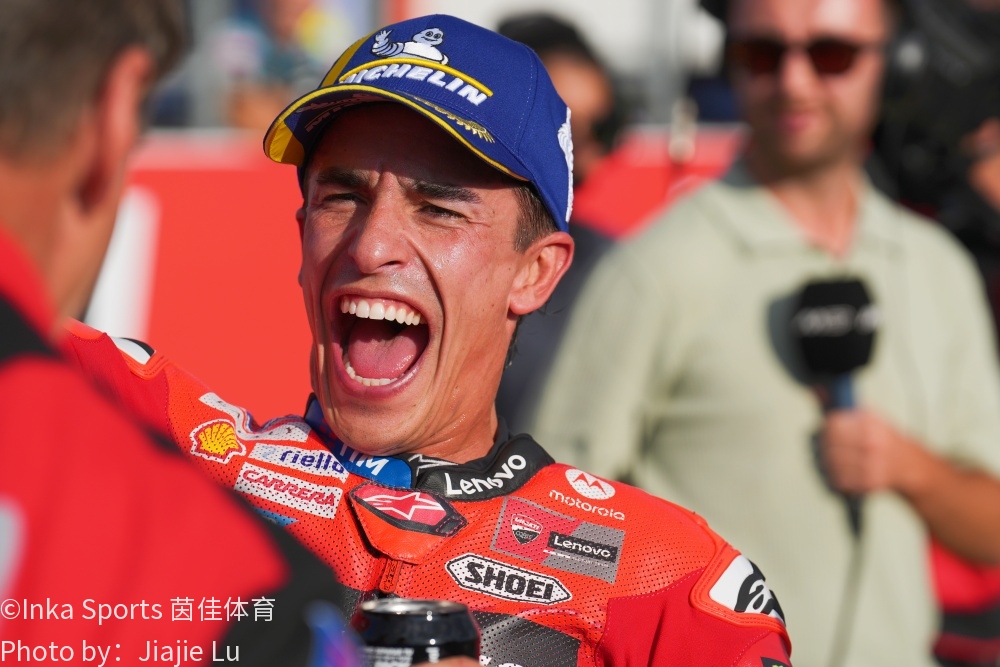
MotoGP is the premier class of Grand Prix motorcycle racing. Riders compete together for positions on closed circuits using purpose-built prototype racing motorcycles. These are not ordinary road bikes bought from a shop with the lights simply removed.
Racing tests a rider's braking, steering and throttle control, as well as the bike, tyres and team. Race numbers on screen are a useful way for newcomers to identify riders: learn one or two first, then get to know their teams. One manufacturer can supply several teams, so the same brand does not mean the same team.
Source: official MotoGP glossary (Prototype, Factory Team, Independent Team)
Why are there races on both Saturday and Sunday?
Under the normal schedule, every MotoGP round includes a Sprint, usually on Saturday, while the full-distance Grand Prix normally takes place on Sunday. The Sprint runs for roughly half the Grand Prix's lap count, has its own result and awards championship points. Weather or safety issues can alter the schedule or cause a race to be cancelled.
Free practice is for setting up the bike and learning the circuit. In the normal format, Friday's session called Practice determines direct entry to Q2: the fastest ten riders advance. The fastest rider in FP1 has not taken pole position.
Preparation comes first, then the fight for grid positions. Riders without direct Q2 entry contest Q1, whose fastest two advance. The twelve riders in Q2 compete for the first twelve grid positions. The Sprint follows in the afternoon.
The longer Grand Prix requires riders to balance fighting for positions with preserving tyre performance. A win normally earns 25 points, compared with 12 for the Sprint.
Q1 and Q2 set the grids for both races
The normal format puts the top ten from Practice plus the fastest two from Q1 into Q2: twelve riders in total. The fastest rider in Q2 takes pole position. The same qualifying session provides the grids for the Sprint and the Grand Prix; the Sprint result itself does not set Sunday's starting order. Grid penalties and other sanctions can change the actual starting grid.
Source: official MotoGP Sprint guide; FIM 2026 regulations, 1.16.3.B
The gap to the leader is not the gap to the rider ahead
P1 and P2 on the live timing tower mean current first and second place. Laps remaining tell you how much racing is left. Read a gap column's heading first: some show the gap to the leader, others to the rider immediately ahead. Do not compare them as though they mean the same thing.
The riders and figures are fictional and only illustrate the two kinds of gap.
| Position | Rider | Gap to leader |
|---|---|---|
| P1 | A | Leader |
| P2 | B | +1.200 |
| P3 | C | +2.700 |
C is 2.700 seconds behind leader A, but only 1.500 seconds behind B immediately ahead.
To judge whether C can catch B, watch whether the gap between them keeps shrinking. A quicker lap is one clue, but the rider ahead's lap time matters too. Change the lap or the reference rider and the figure can mean something different.
1:30.250 means 1 minute, 30 seconds and 250 milliseconds. A rider recording 1:30.400 is 0.150 seconds slower. That lap-time difference is not the gap between their positions on track during the race.
Why can a fast rider slow down later?
Riders choose front and rear tyres before the race, while tyre temperature, wear and grip change during it. Softer and harder compounds behave differently depending on the circuit and conditions. 'Soft' does not simply mean fastest throughout the race.
When watching a chase, focus on three places: can the rider close under braking at the end of the straight, hold the line through the corner, and accelerate earlier on exit? Getting close does not guarantee a safe pass, and a rider may preserve tyre performance for later laps. These are viewing cues, not enough evidence to identify the precise cause of a particular loss of pace from pictures alone.
Dry races do not normally feature routine tyre-change pit stops as in F1. Rain can change how the whole race is managed: bike changes, interruptions and restarts depend on the declared race status and flags.
What do white flags, red flags and Long Lap Penalties mean?
Riders must slow down and cannot overtake in the yellow-flag zone. In practice or qualifying, a lap affected by yellow flags may also be cancelled.
Riders return slowly to the pits. Race direction decides whether and how to restart under the rules.
In a MotoGP race, the white flag tells riders that they may change motorcycles. The white flag alone does not stop the race.
In the race, it tells a rider about to be lapped to give way. It does not require the rider ahead in an ordinary same-lap position battle to move aside automatically.
It indicates that danger in the relevant area has cleared or the track is available for normal use. Interpret it in the context of its location and the session.
Post-race penalties can still affect the official finishing order. The order shown on television at the line is not always the final result.
Why change bikes in the rain instead of just tyres?
When the Grand Prix is declared wet, or race direction shows the white flag authorising bike changes, MotoGP riders may enter the pit lane and switch to another motorcycle. Changing bikes while the race continues is called Flag-to-flag. If you see a bike change, check the weather and flags before deciding whether the race is still running.
Long Lap Penalty: taking a longer route
A Long Lap Penalty requires a rider to take a designated extra route, lose some time and rejoin the racing line safely. It does not mean completing one more full lap than everyone else. Nor is it used for every offence: race direction can also impose time penalties, grid drops and other sanctions.
Source: official MotoGP flag guide; FIM 2026 regulations (bike changes, Long Lap Penalties and flags)
Both races award points, but on different scales
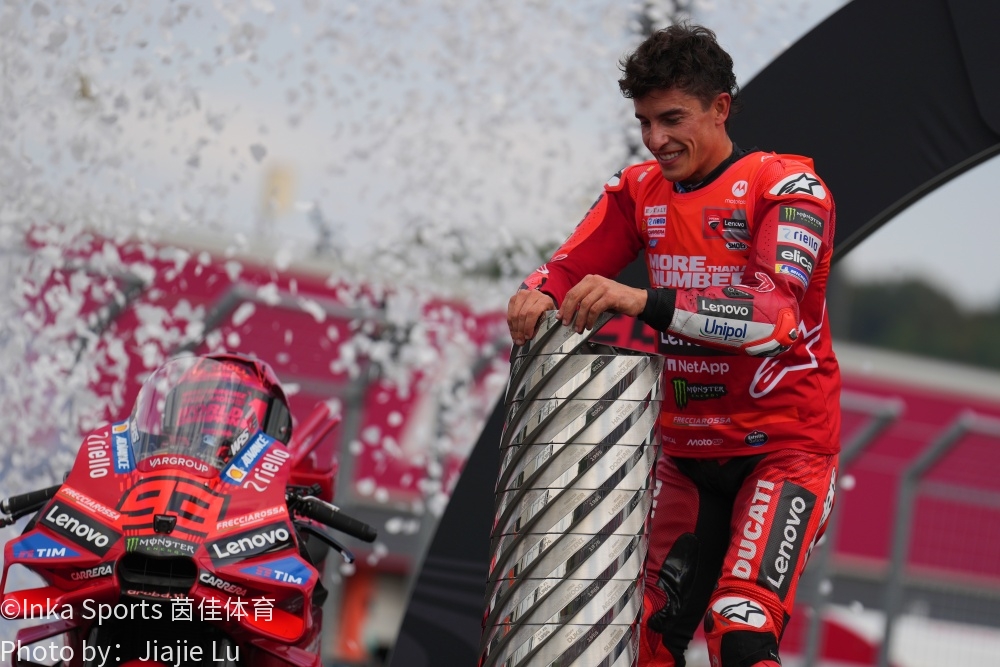
When full points are awarded normally, the top fifteen in the Grand Prix and the top nine in the Sprint score. Both sets of rider points count towards the championship, so the maximum for a normal weekend is 12+25=37 points. Consistently scoring throughout the year explains a title fight better than looking only at one round's podium.
| Position | Grand Prix | Sprint |
|---|---|---|
| 1 | 25 | 12 |
| 2 | 20 | 9 |
| 3 | 16 | 7 |
| 4 | 13 | 6 |
| 5 | 11 | 5 |
| 6 | 10 | 4 |
| 7 | 9 | 3 |
| 8 | 8 | 2 |
| 9 | 7 | 1 |
| 10 | 6 | — |
| 11 | 5 | — |
| 12 | 4 | — |
| 13 | 3 | — |
| 14 | 2 | — |
| 15 | 1 | — |
Interrupted, shortened or cancelled races are governed by separate provisions. This explains the normal format; actual points follow the official classification and standings.
Ten questions from first-time viewers
1. If time is short, which race should I watch first?
The Grand Prix is best for getting to know a complete race, while the Sprint offers a shorter taste of direct competition. Both award points. Before watching, confirm the session and start time. Our English schedule uses your local time zone, or UTC if it cannot be identified; in China, check against Beijing time (UTC+8).
2. Does every round have a Sprint?
The normal schedule includes a Sprint at every round of the MotoGP premier class, not just selected weekends. Weather, safety or schedule changes can affect whether it actually takes place.
3. Does winning the Sprint put a rider first on the Grand Prix grid?
No. Normally, qualifying determines both grids. The Sprint result itself does not determine Grand Prix starting positions.
4. Does topping Friday Practice mean taking pole?
No. The top ten in Practice normally advance directly to Q2, but pole still has to be won in Q2.
5. Why do some riders contest Q1 and then Q2?
They did not advance directly from Practice, but finished among the fastest two in Q1 to earn a Q2 place. Not every rider has to contest Q1.
6. Are all bikes from one manufacturer in the same team?
No. A manufacturer can supply both factory and independent teams. Identify riders by name, race number and team name together.
7. Can a rider continue after crashing?
Sometimes, depending on the rider, the motorcycle and the conditions permitted by race direction. One crash on screen does not by itself prove the rider has retired from the race.
8. Does a Long Lap Penalty mean one extra full lap?
No. The rider takes a designated extra section of the circuit, loses time and then returns to the normal racing line.
9. Does a wet-weather bike change mean the race is suspended?
Not necessarily. Racing can continue when flag-to-flag bike changes are permitted. A red flag indicates that the session is interrupted.
10. Will these rules always apply?
This page was checked for the 2026 season. Sporting procedures and technical rules change and must be checked again for the next season. For a particular event's timetable, consult its official schedule.
Rules and terminology sources: official MotoGP glossary and the FIM 2026 regulations cited above. The suggested viewing order is INKA Sports' advice.
Pick a round and follow two riders first
Identify race numbers, follow gaps and tyres, then watch the flags and penalties. Understand one race first, and gradually get to know the teams and championship points.
View the MotoGP schedule and results →