
What are they competing for in F1?
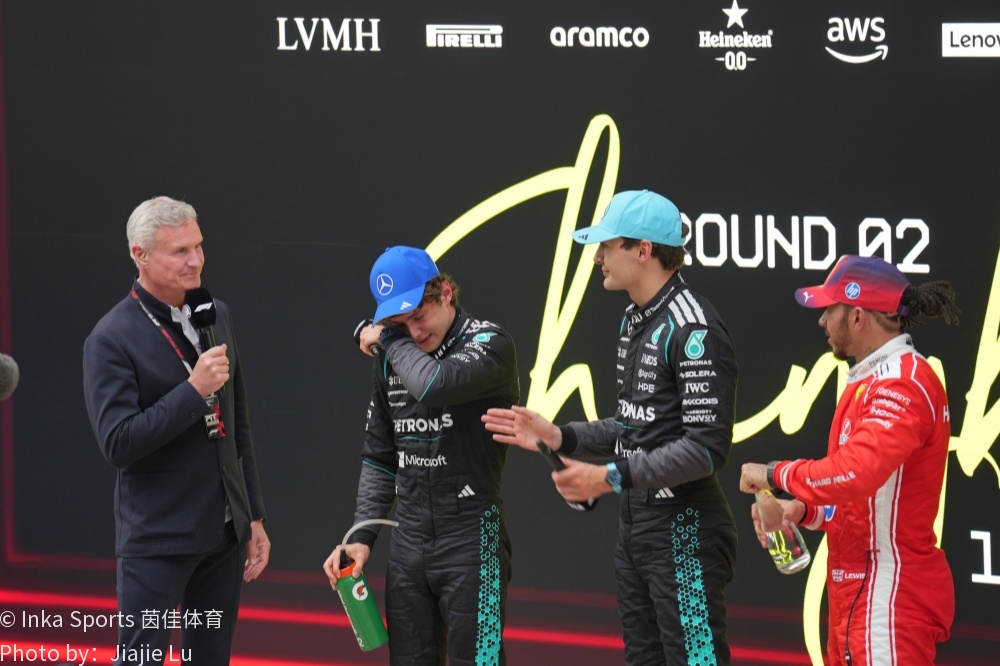
F1 is the Formula One World Championship. Its cars have one seat and exposed wheels, and teams design and develop their own cars under a common rulebook. The contest tests the driver, car, engineering team and decisions made during the event. In 2026 there are 11 teams and 22 race seats, with each team entering two cars.
A Grand Prix decides positions in that race. Across the season, points from the rounds are added up to decide two world championships: one for drivers and one for constructors. Both team-mates contribute to the team's total, while each driver also competes for an individual result.
Source: F1's official introduction
How is winning a race different from winning the championship?
In a Grand Prix awarding normal full points, the top ten score. A win earns 25 points, but consistent strong results also matter. Even without a podium at one round, points can influence who wins the championship.
Points may be reduced if a race ends early without covering sufficient distance. There is no extra point for the fastest Grand Prix lap in 2026.
What should you watch in practice, qualifying and the race?
Practice is for learning the circuit, setting up the car and testing tyres. Being fastest does not mean winning the Grand Prix. Qualifying compares single-lap speed and forms the basis of the Grand Prix grid. The Grand Prix is the race in which everyone competes together on track for positions and Grand Prix points.
This is the usual structure; some events use different days. Our English schedule shows times in your local time zone, or UTC if it cannot be identified. When watching in China, check against Beijing time (UTC+8).
Why is qualifying divided into Q1, Q2 and Q3?
Think of it as three rounds of elimination based on single-lap speed. Under the standard 2026 procedure for 22 cars, the slowest 6 are eliminated in Q1, another 6 in Q2, and the remaining 10 contest the top ten positions in Q3. Times from an earlier round are not carried forward.
First place in qualifying is called pole position. Grid penalties, pit-lane starts and other rules can make the actual starting positions differ from the qualifying result.
Source: FIA 2026 Sporting Regulations, B2.4 and B2.5
The Sprint is a separate, shorter race
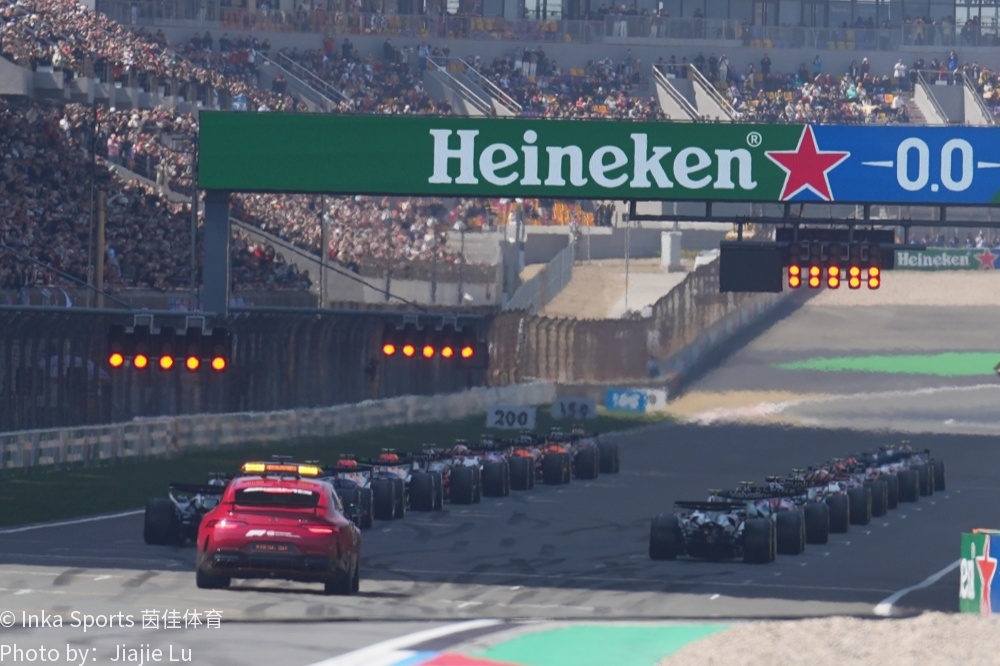
Selected weekends add a Sprint of about 100 kilometres. Normally, the top eight score from 8 down to 1 point, with no mandatory pit stop. It has its own Sprint Qualifying session; the Sprint result itself does not set the Grand Prix grid, which has separate qualifying. Penalties or car damage sustained in the Sprint can, however, affect the subsequent Grand Prix.
What does +1.200 beside a position mean?
During the race, start with current positions, then look at gaps and tyres. GAP usually means the gap to the leader; INTERVAL means the gap to the driver immediately ahead. The two figures answer different questions.
The drivers and figures are fictional and only explain how to read the display.
| Position | Driver | GAP | Tyre |
|---|---|---|---|
| P1 | A | Leader | Medium M |
| P2 | B | +1.200 | Medium M |
| P3 | C | +2.700 | Hard H |
C is 2.700 seconds behind leader A, but only 1.500 seconds behind B immediately ahead.
To judge whether a chasing car can catch the one ahead, first watch whether their gap keeps shrinking. To see how far a driver is from first place, use the gap to the leader. During pit stops, lapping or retirement, the display may instead show statuses such as PIT, +1 LAP or OUT.
Why stop for tyres when the car is running well?
Tyres affect grip and deteriorate with use. Teams choose between staying on track to keep position and spending time on fresh tyres to gain speed later. Start with the three dry-weather compounds at each event and the two wet-weather tyre types:
| Type | Marking | A beginner's explanation |
|---|---|---|
| Soft | Red · S | Usually more grip, with a shorter life |
| Medium | Yellow · M | A compromise between speed and durability |
| Hard | White · H | Usually more durable, but not always slower |
| Intermediate | Green · I | For damp surfaces or lighter rain |
| Full wet | Blue · W | For wetter surfaces with more standing water |
These are relative characteristics; temperature, circuit and car also affect performance. Fitting soft tyres does not guarantee an immediate increase in speed. A dry Grand Prix normally requires at least two different dry-weather compounds. There are exceptions when intermediate or full-wet tyres have been used.
Source: F1's official tyre guide; FIA regulation B6.3.6
A fictional example: how can losing positions still be part of a successful strategy?
- B is 1.5 seconds behind A, and neither car has changed tyres yet.
- B pits first for fresh tyres. After the speed-limited section and tyre change, B temporarily drops farther back.
- If B's new tyres reach their working range quickly, B may lap faster than A on old tyres.
- Once A has also pitted, compare their positions again: B may now be ahead.
This is called an undercut. Success depends on tyre warm-up, traffic and both cars' pace. Teams may also choose to stop later, so a single position change does not tell you who has gained.
The 'tyre-change time' shown on television often measures only how long the car is stationary in its pit box. The whole stop also includes entry, speed-limited running and exit. The actual loss is normally much larger than those few stationary seconds.
Source: F1's official glossary, U–Z (Undercut); glossary P–T (Pit stop)
Get to know these flags and safety signals
Drivers must slow down, and overtaking is prohibited in the yellow-flag zone. Double yellow flags require a more substantial reduction in speed and readiness to change direction or stop.
An incident, weather or track problem needs attention. Race control decides whether and how the session resumes.
At the relevant location or stage, it indicates that the earlier restriction has ended and normal racing can resume.
In a race, it normally tells a driver about to be lapped to give way. It does not ask drivers fighting on the same lap to surrender a position.
It marks the end of the session. Post-race penalties and other decisions can still change the final official result.
A warning directed at a specific driver; it is not disqualification.
What is the difference between SC and VSC?
SC means Safety Car: a physical vehicle leads the cars at reduced speed. The field usually bunches up and an earlier time advantage may shrink. VSC means Virtual Safety Car: there is no physical lead car. Drivers slow to prescribed reference times, rather than being deliberately brought together as under a physical safety car.
Overtaking is normally prohibited under safety-car conditions, and pit-stop opportunities can change. When SC or VSC appears, watch the incident response, which drivers use the opportunity to change tyres, and who has fresher tyres when racing resumes.
Do not mistake this year's Overtake Mode for the old DRS
In older race footage, you will often hear about DRS: when eligible, a driver opened part of the rear wing to reduce drag and help overtaking. For 2026, distinguish active aerodynamics from Overtake Mode: they are not the same system.
The front and rear wings can change angle to reduce drag in permitted sections. In corners, airflow presses the car towards the road to help the tyres grip; this is called downforce. Using the system does not require being less than one second behind another car. Its application is governed by the circuit and race-control provisions.
When the gap to the car ahead is within one second at the detection point and the system is authorised, a driver can gain an additional electrical deployment advantage to help close in. The advantage comes from the power unit, so it should not simply be understood as the old rear-wing DRS.
First-time viewers do not need to memorise motor power or energy figures. Notice whether the commentary is discussing wing adjustment or electrical-energy use to avoid confusing the two ideas. The event's race-control provisions determine the precise operating arrangements.
Source: F1's official 2026 terminology explanation; glossary K–O (Overtake Mode)
Ten questions from first-time viewers
1. If time is short, which session should I watch first?
Start with the Grand Prix to experience the start, position battles and pit stops. Then watch qualifying: it will be easier to understand why starting positions matter.
2. How do I read a qualifying lap time?
For example, 1:22.450 means 1 minute 22.450 seconds, not 1.22 minutes. Within the same qualifying segment, a shorter valid lap time is better.
3. Is the fastest driver in practice always a favourite to win?
Not necessarily. Teams may use different test programmes, fuel loads and tyres. Practice positions alone cannot predict the race result.
4. Why can a fast qualifier fall behind in the race?
A single flying lap and a long race make different demands. Tyre degradation, traffic, strategy, weather and faults can all change performance. Judge them in the context of how the race unfolds.
5. Which matters more: the driver or the car?
Both determine performance, alongside the engineering team and strategy. New viewers can first compare team-mates, then gradually learn the differences between cars.
6. Why can there be many overtakes but little change in the lead?
A race is about more than victory. Midfield points battles, team-mate comparisons and different tyre strategies meeting on track can all produce exciting contests.
7. What do OUT, DNF and DSQ mean?
OUT normally means a driver has left the current race; DNF means Did Not Finish; DSQ means Disqualified. Not finishing and receiving a classified finishing position are not exactly the same issue. Consult the official classification.
8. Must a driver give way when a faster car catches up?
Drivers legitimately fighting for position on the same lap do not have to yield merely because the car behind is faster. Lapping, blue flags and race-control instructions are different situations.
9. Are all positions final once the chequered flag falls?
Check the order across the line, then the official result. Post-race investigations, time penalties or disqualifications may change it. Results labelled 'provisional' in reports also require checking for updates.
10. When should I start learning the teams and drivers?
In your first race, choose one or two drivers to follow and note their car colours, numbers and team-mates. Explore their backgrounds when an interview or race interests you. That is easier than learning every name at once.
Questions 1, 5, 6 and 10 offer viewing advice. Terminology and rules were checked against F1's official glossary, A–E, P–T and the FIA 2026 Sporting Regulations.
Now pick a race and start watching
Confirm the session and start time in our schedule, which uses your local time zone or UTC if it cannot be identified; in China, use Beijing time (UTC+8) as your reference. Then follow one or two drivers' gaps, tyres and pit stops. Return to this page whenever you meet an unfamiliar term.
View the F1 schedule and results →