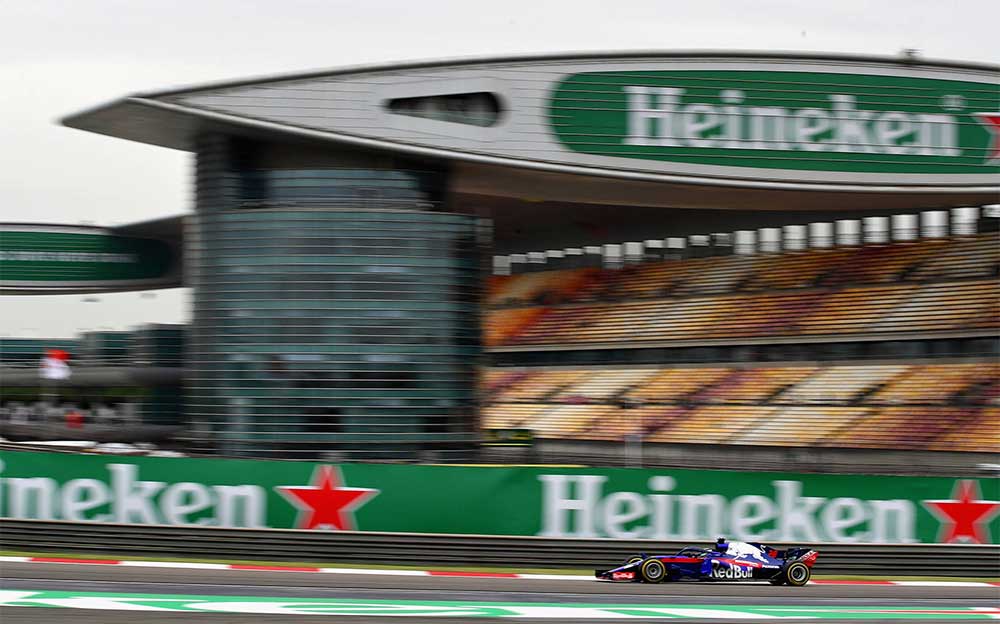
The third round of the 2018 Formula 1 season, the Chinese Grand Prix, began at the Shanghai International Circuit on 13 April. Its long straights connect with sequences of corners, requiring teams to find a balance between low drag and cornering grip in first practice. They also had to establish initial tyre and braking data in Friday’s daytime conditions.
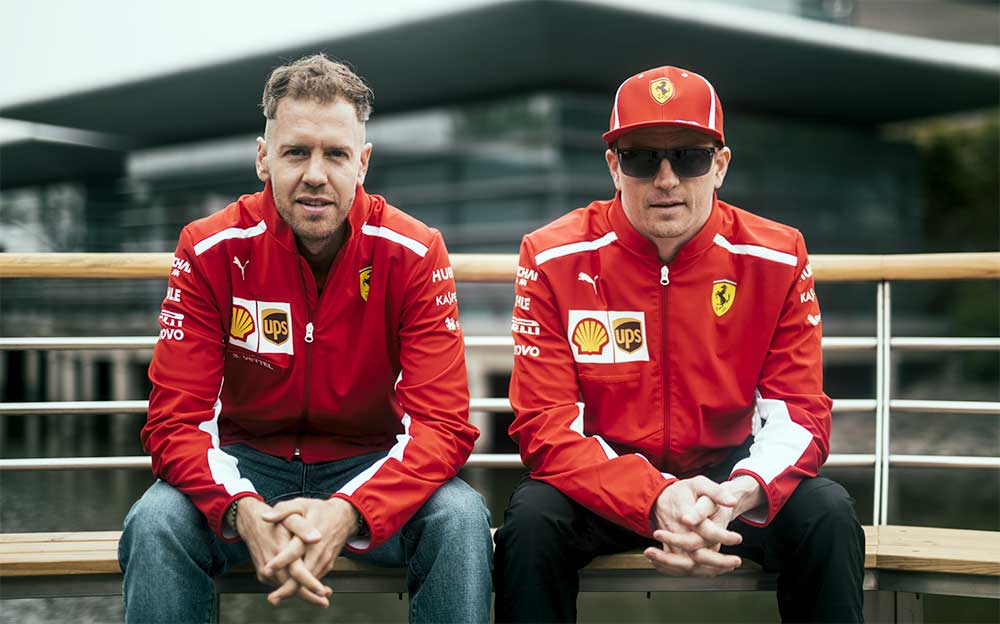
Mercedes’ Lewis Hamilton was fastest with a 1:33.999. Kimi Räikkönen was second, 0.359 seconds behind, with Valtteri Bottas another 0.099 seconds back in third. Both Mercedes drivers and Ferrari’s Räikkönen occupied the top three places, with the opening Friday session suggesting a close contest among the three leading teams.
Red Bull’s Daniel Ricciardo was fourth and Max Verstappen fifth, with Sebastian Vettel sixth. Less than seven-tenths of a second covered first to fifth, putting Ferrari, Mercedes and Red Bull at the front of FP1. Drivers were running different fuel loads and tyre programmes, leaving the session order as an initial reference.
Haas drivers Kevin Magnussen and Romain Grosjean were seventh and ninth, with Renault’s Carlos Sainz eighth and Nico Hülkenberg tenth. Five teams shared the top ten, with the midfield following the three leading teams. Shanghai’s long straights also made power delivery and slipstream management priorities during practice.
Pierre Gasly was 11th and Fernando Alonso 12th, with the two Force Indias 13th and 14th. Toro Rosso’s Brendon Hartley was 16th, while the Saubers were 17th and 19th. Williams drivers Lance Stroll and Sergey Sirotkin both completed substantial mileage to bring track data back to the team.
Esteban Ocon completed the most laps with 32, while Williams’ Sirotkin ran 31. Hamilton needed only 22 laps to set the fastest time. Practice mileage alone provided a limited measure of preparation for a fast lap, as teams followed different test programmes and used different track windows.
Hamilton held a slight edge over Räikkönen and Bottas in FP1, with the two Red Bulls next in the order. Track evolution, falling temperatures and tyre wear in Shanghai could all change the pace later. Teams still had to establish whether the cars’ balance remained stable during the afternoon’s long runs.
Formula 1’s official FP1 results list the fastest laps and lap counts of all 20 drivers. Ricciardo and Verstappen were fourth and fifth, with Vettel sixth. Haas and Renault led the midfield behind the three leading teams. FP2 would take place in conditions closer to the time of day scheduled for qualifying.
| Pos. | Driver | Team | Lap time / Gap | Laps |
|---|---|---|---|---|
| 1 | Lewis Hamilton | Mercedes | 1:33.999 | 22 |
| 2 | Kimi Räikkönen | Ferrari | +0.359s | 14 |
| 3 | Valtteri Bottas | Mercedes | +0.458s | 28 |
| 4 | Daniel Ricciardo | Red Bull | +0.538s | 22 |
| 5 | Max Verstappen | Red Bull | +0.669s | 22 |
| 6 | Sebastian Vettel | Ferrari | +0.862s | 18 |
| 7 | Kevin Magnussen | Haas | +1.179s | 21 |
| 8 | Carlos Sainz | Renault | +1.617s | 23 |
| 9 | Romain Grosjean | Haas | +1.719s | 21 |
| 10 | Nico Hülkenberg | Renault | +1.801s | 18 |
| 11 | Pierre Gasly | Toro Rosso | +2.038s | 21 |
| 12 | Fernando Alonso | McLaren | +2.045s | 29 |
| 13 | Sergio Pérez | Force India | +2.052s | 28 |
| 14 | Esteban Ocon | Force India | +2.352s | 32 |
| 15 | Sergey Sirotkin | Williams | +2.692s | 31 |
| 16 | Brendon Hartley | Toro Rosso | +2.716s | 23 |
| 17 | Charles Leclerc | Sauber | +2.724s | 23 |
| 18 | Stoffel Vandoorne | McLaren | +2.757s | 25 |
| 19 | Marcus Ericsson | Sauber | +2.910s | 21 |
| 20 | Lance Stroll | Williams | +3.278s | 28 |