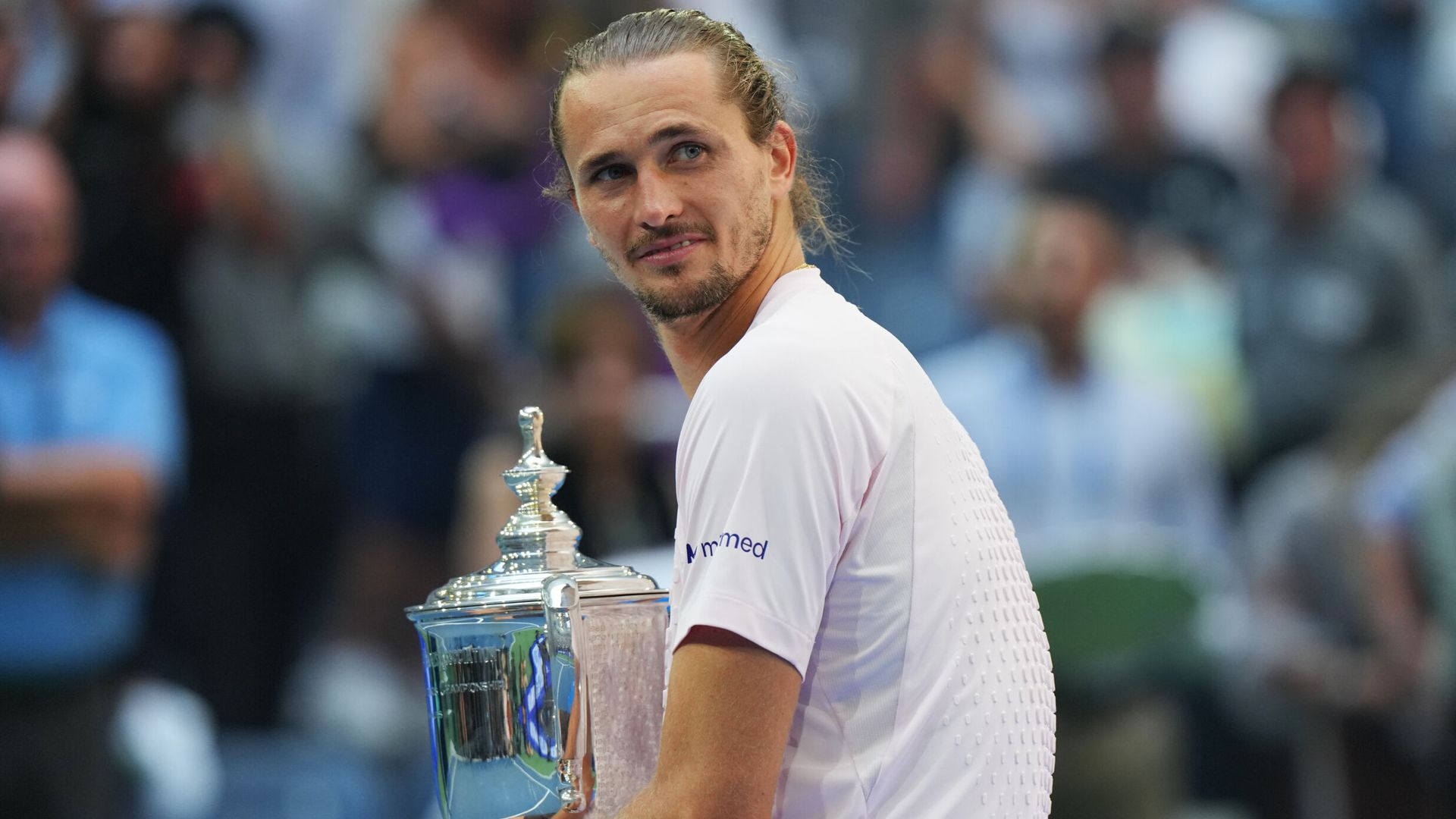
After winning the US Open men’s singles final on September 13, Zverev placed his current form at the forefront of the men’s game. As Sky Sports reported, his assessment came with a clear qualification: Sinner was recovering from injury, while Alcaraz had just returned from a lengthy absence. With both healthy and at their best, he still regarded Sinner as being ahead.
The official US Open match report confirmed that Zverev beat Shelton 6–3, 7–6, 5–7, 6–2, winning the second-set tie-break 7–2. It was his second Grand Slam title after the 2026 French Open, while Shelton was playing in his first major final. Zverev had carried his breakthrough on clay onto New York’s hard courts.
The qualification behind his confidence: his rivals’ fitness
Discussing his rivals in the Sky Sports report, Zverev distinguished their current circumstances from a contest when all are healthy. He noted that Alcaraz had returned after about four months out, while Sinner had missed the US Open through injury. Alcaraz reached the quarter-finals in New York, where he lost to Shelton.
Zverev’s assessment of Sinner also had a direct head-to-head basis from this season. According to the same report, after winning his first major at the French Open, he reached the Wimbledon final but lost to Sinner. His US Open title and his acknowledgement that a healthy Sinner still holds an edge can therefore be understood within the same sequence of results.
Evidence from the final: a third-set setback followed by an immediate break
The New York final also showed how he responded when his lead came under threat. According to the official US Open report, Shelton broke late in the third set to pull a set back. Zverev immediately broke in the opening game of the fourth and closed out the match 6–2. He won 68 of the 80 points played behind his first serve, a success rate of 85%.
INKA SPORTS analysis: what season results, direct meetings and rankings each tell us
Two Grand Slam trophies give Zverev’s confidence a sustained foundation. From the French Open to the US Open, he has won titles on two surfaces. The Wimbledon final, meanwhile, showed that Sinner could still beat him in a direct contest at the highest level. The former demonstrates Zverev’s ability to contend for titles consistently; the latter preserves a specific head-to-head reference for comparing them.
The final’s serving figures provide another perspective. Zverev converted the vast majority of points behind his first serve, leaving Shelton limited opportunities in those exchanges. After losing the third set, his early break in the fourth put the pressure of chasing back onto Shelton. That sequence explains the confidence generated by the title more clearly than the forcefulness of his post-match remarks alone.
Tournament seeding must also be distinguished from world ranking. The US Open listed Zverev as its top seed while describing him in the match report as world No. 2. Sinner remained world No. 1 in Sky Sports’ account. With Sinner absent, being the top seed in New York and second in the world was entirely consistent. Zverev’s claim to be the best at that moment was his personal assessment of playing form.
Conclusion
Zverev has broken through at both the French Open and the US Open this season and faced Sinner directly for the Wimbledon title. His confidence rests on tangible results, while the scope of his assessment is affected by his rivals’ fitness. Once both return to regular competition, meetings in the same tournaments will provide fresh evidence for comparison.