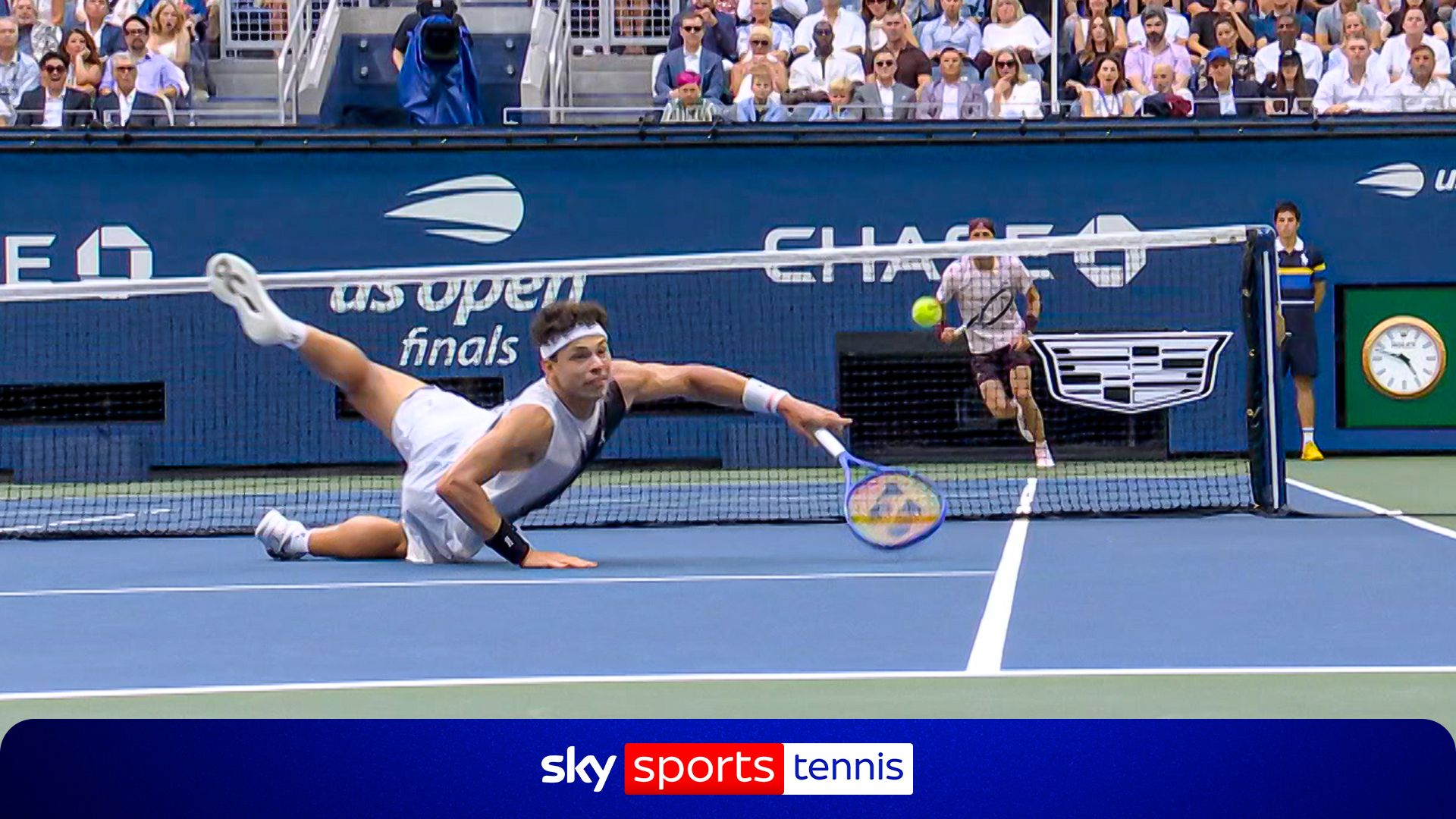
On September 13, 2026, local time, Alexander Zverev defeated Ben Shelton 6–3, 7–6(2), 5–7, 6–2 at Arthur Ashe Stadium in New York to win his first US Open men’s singles title and his second major after that year’s French Open. Shelton’s late break in the third set brought him back into the contest, but Zverev quickly regained control in the fourth.
Before the final, Zverev had won all five of their meetings. The US Open’s official match report noted that Shelton had previously taken only one set from him. It was also Zverev’s sixth major final and Shelton’s first. Their head-to-head record was only background, however: service games and key points still had to decide this match.
From a two-set lead to pulling clear again in the fourth
Zverev broke at the start of the opening set, meaning he won Shelton’s service game. He then protected his own serve and broke again while leading 5–3 to take the set 6–3. Both of Shelton’s double faults in that set came on break points. At the same time, he struggled to win return points behind Zverev’s first serve, preventing him from promptly recovering the games lost early on.
Shelton offered more resistance on serve in the second set and, under pressure late in the set, took the score to 6–6 and a tie-break. Zverev then won the first five points and closed it out 7–2 to establish a two-set lead. The notation 7–6(2) means Zverev won the set and Shelton scored only 2 points in the tie-break. A set that remained close until its closing stages did not produce an equally close tie-break.
The turning point in the third set came in the 12th game. Serving at 5–6, Zverev had a chance to take the match into another tie-break but made errors in that game. Shelton finally broke to win the set 7–5. Zverev had previously held 66 consecutive service games in their meetings; that breakthrough kept alive Shelton’s chance of turning the match around.
Zverev immediately broke Shelton in the opening game of the fourth set. He continued to hold and added another break to finish the match 6–2. The official US Open report recorded that he lost only 4 points on serve throughout that set. The ATP’s report on its official Finals website added that he won 12 of the match’s last 14 points. Both figures show that the German had regained control in the closing stages of the fourth set.
Men’s singles final: set-by-set result
| Player | First set | Second set | Third set | Fourth set | Result |
|---|---|---|---|---|---|
| Zverev | 6 | 7 (tie-break 7–2) | 5 | 6 | Champion |
| Shelton | 3 | 6 | 7 | 2 | Runner-up |
INKA SPORTS analysis: why could Shelton not sustain his comeback after winning a set?
First, Zverev’s first serve gave his service games considerable protection. Across the match, he won 68 of the 80 points played after landing his first serve, a first-serve points-won rate of 85%. That figure measures success after a first serve goes in. It does not mean 85% of first serves landed, nor does it mean 68 aces. Shelton needed consecutive return points within limited opportunities to pose a sustained threat to his opponent’s holds.
Yet an overall percentage cannot erase local fluctuations. Zverev also won 11 of 12 points behind his first serve in the third set, a high proportion, but still lost it. First-serve figures do not include all service points, and the break at 5–6 directly decided the set. Shelton’s breakthrough showed that he could take advantage when Zverev made mistakes; it did not establish that he could consistently dominate the German’s service games.
The break at the start of the fourth made sustained pressure harder to establish. Having just pulled a set back, Shelton immediately had to chase the game score again. Zverev protected his fresh lead by holding while losing only 4 service points throughout the set. The key was therefore not merely whether the third set brought a wobble, but who established an advantage first in the fourth and could then preserve it on serve.
For Shelton, reaching a first major final and taking a set from an opponent he had failed to beat in five previous meetings represented tangible progress in New York. For Zverev, the basis of the title lay in his responses during this match: quickly pulling away in the second-set tie-break, then winning the opening game of the fourth after losing the third. He established leads promptly in both phases and maintained them through service holds, ultimately keeping the contest to four sets.
Conclusion
Zverev’s second Grand Slam title came from serving strength and sustained scoring at key moments. Shelton’s late third-set breakthrough extended the final, but losing serve immediately in the fourth, combined with his opponent again protecting his service games firmly, stopped the comeback from continuing. The four sets showed that a single successful break can change a set; overturning a match requires maintaining return pressure into the next one.