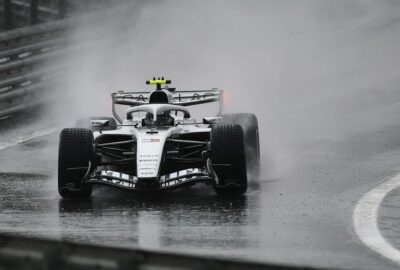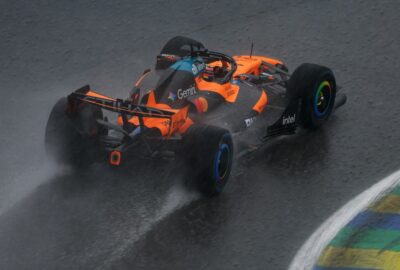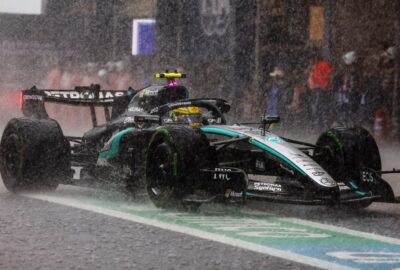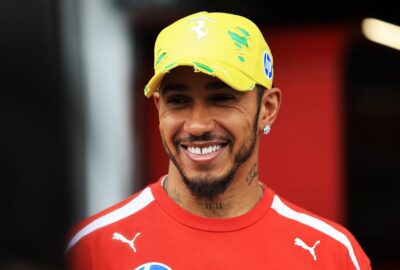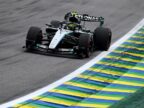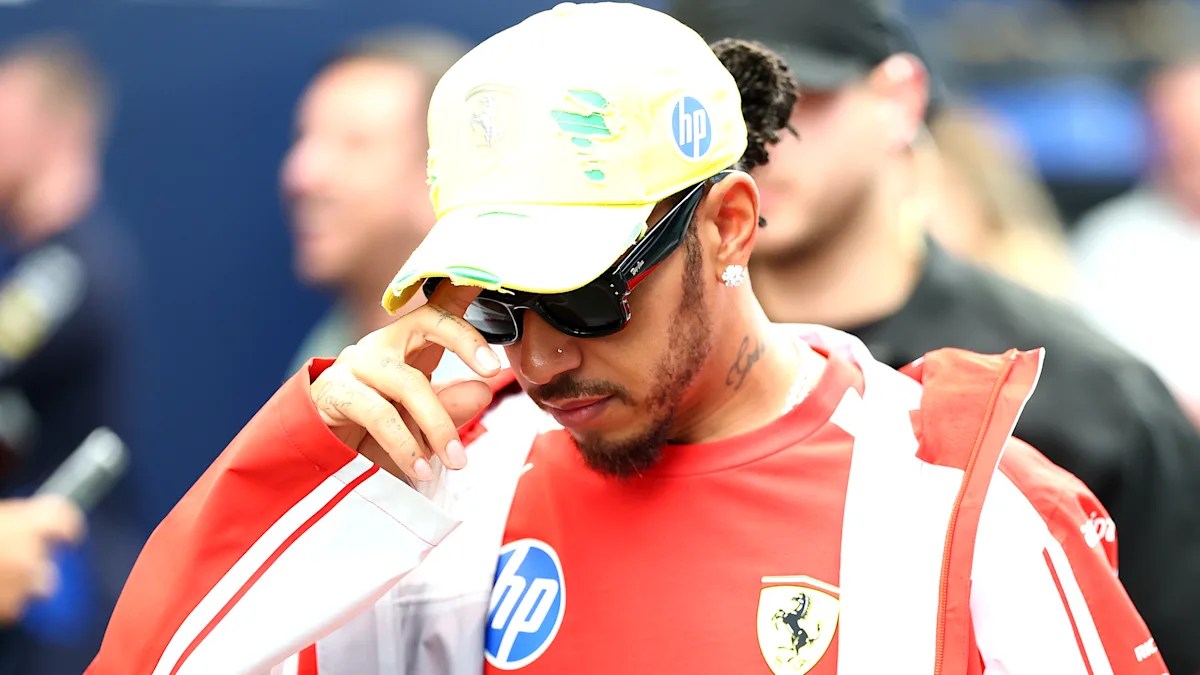
Power-unit changes have substantially reshaped the 2026 Sao Paulo Grand Prix grid. F1 reporting, including Ferrari’s confirmation of its changes, detailed penalties affecting Hamilton, Leclerc, Verstappen, Perez and Russell. Hamilton’s situation escalated to a back-of-grid start after a further complete replacement following FP3.
Hamilton: a complete replacement after the initial ten-place drop
Both Ferraris initially received ten-place drops for exceeding their internal-combustion-engine allocations. Hamilton then experienced vibrations, power loss and smoke in the cockpit during final practice. Ferrari removed the unit for checks and confirmed a complete replacement before qualifying. He still ran, using the session to check the engine and wet-weather handling while saving tyres for the race.
Hamilton qualified 11th and F1’s subsequent report placed him 20th on the grid. Leclerc reached Q3 in fourth and is due to start 14th. Leclerc said the wet running had provided substantial learning and hoped variable weather could help a recovery towards the podium, presenting that as his race ambition.
Verstappen and Perez face back-of-grid penalties
Verstappen exceeded his allocation for the engine, turbocharger and exhaust, accumulating 30 places of penalties. After completing Q1 he did not attempt a Q2 time, qualifying 16th. F1’s report placed him 21st on the grid. He explained that Red Bull had identified an issue and chosen to take the penalty here, with the aim of moving forwards in the race.

Cadillac also fitted Perez with a new Ferrari engine, turbocharger and MGU-K, requiring a back-of-grid start. Russell’s previously confirmed five-place engine penalty converts second in qualifying into seventh on the grid. Lawson and Hulkenberg consequently move from fifth and sixth to third and fourth, opening opportunities for the midfield. Lawson and Hulkenberg each gain two places because Russell and Leclerc, who qualified ahead of them, both drop behind. Hamilton, Verstappen and Perez qualified behind the pair already, so their back-of-grid penalties do not provide an additional place each.
How excess components produce grid penalties
F1’s explanation of the applicable allocation rules specifies a ten-place drop for the first excess element of a type and generally five places for subsequent excesses, accumulated at the same event. A penalty exceeding 15 places requires a back-of-grid start. The resulting slots depend on the individual decisions and grid procedure.
Why penalised drivers still qualify and limit risk
Hamilton described qualifying as a test. He told F1’s official media that the priorities were checking the engine and the car’s wet-weather feel while retaining tyres for a potentially wet race. Finishing 11th in qualifying did not mean the team had targeted 11th as its competitive limit: once a back-of-grid penalty was established, improving his qualifying position could not restore the corresponding starting slot.
Verstappen said Red Bull had identified a problem and chosen to take the penalty here, while the possible recovery would only become clear in the race. His 2024 victory from 17th and 2025 third place from a pit-lane start show that major recoveries have happened at Interlagos, without guaranteeing another this year. After setting a Q1 time and avoiding further Q2 risk, he still faces the traffic and overtaking demands of starting 21st.