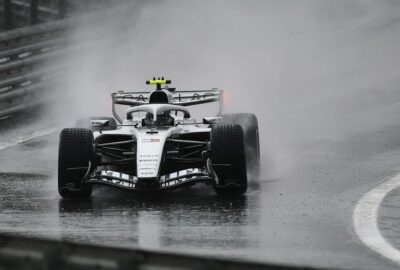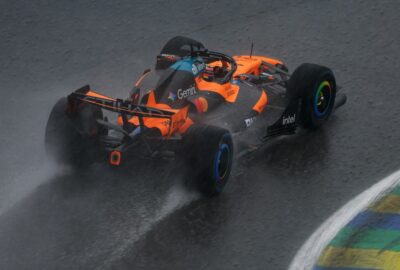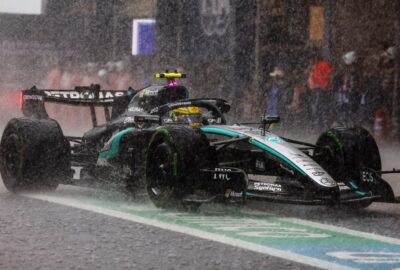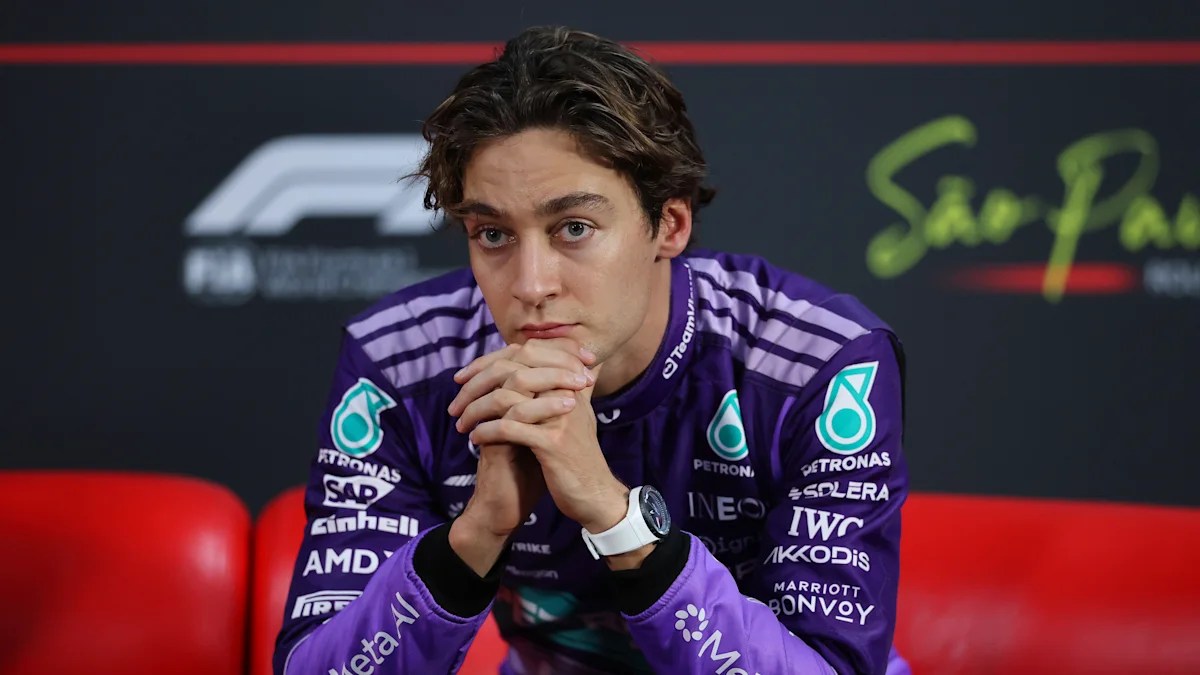
After taking pole in Sao Paulo, Norris highlighted clean execution during the two opportunities available at the start of Q3. Russell blamed a collective Mercedes misjudgement in aborting his second lap. Their comments to F1’s official media add context to the final 0.204s gap. Full qualifying report and classification
Norris: prepare the tyres and complete the lap
Norris explained that confidence in the car mattered especially in low grip and poor visibility. He needed to bring the tyres into their operating window, brake late and accelerate firmly while avoiding lock-ups and wheelspin. The gain depended on linking those demands through a complete lap.
He recorded 1m27.470s before the rain intensified. Norris felt he had delivered the best performance available to him, but said McLaren still lacked its main rivals’ dry-weather speed. He consequently welcomed more rain for the race, with Antonelli promoted alongside him by Russell’s penalty. Russell qualified second but receives a five-place drop for exceeding his season’s engine allocation, placing him seventh on the grid. Antonelli consequently moves from third to second: the change to the front row comes from that penalty, not a revised qualifying time.
Russell: creating space costs the remaining track window
Russell described a different decision. Approaching Albon on his second fast lap, Mercedes opted to back off and create space, expecting approximately another minute before heavier rain. The conditions deteriorated sooner and the next chance disappeared. Russell believed the abandoned attempt could have challenged for pole, describing an unfinished lap.
Wolff added in the team’s feedback that Russell had been slightly ahead of Norris but was catching Albon. Continuing or backing off had been a difficult choice. In hindsight, Wolff said they should have continued, acknowledging the outcome without treating the unfinished lap as a recorded time.
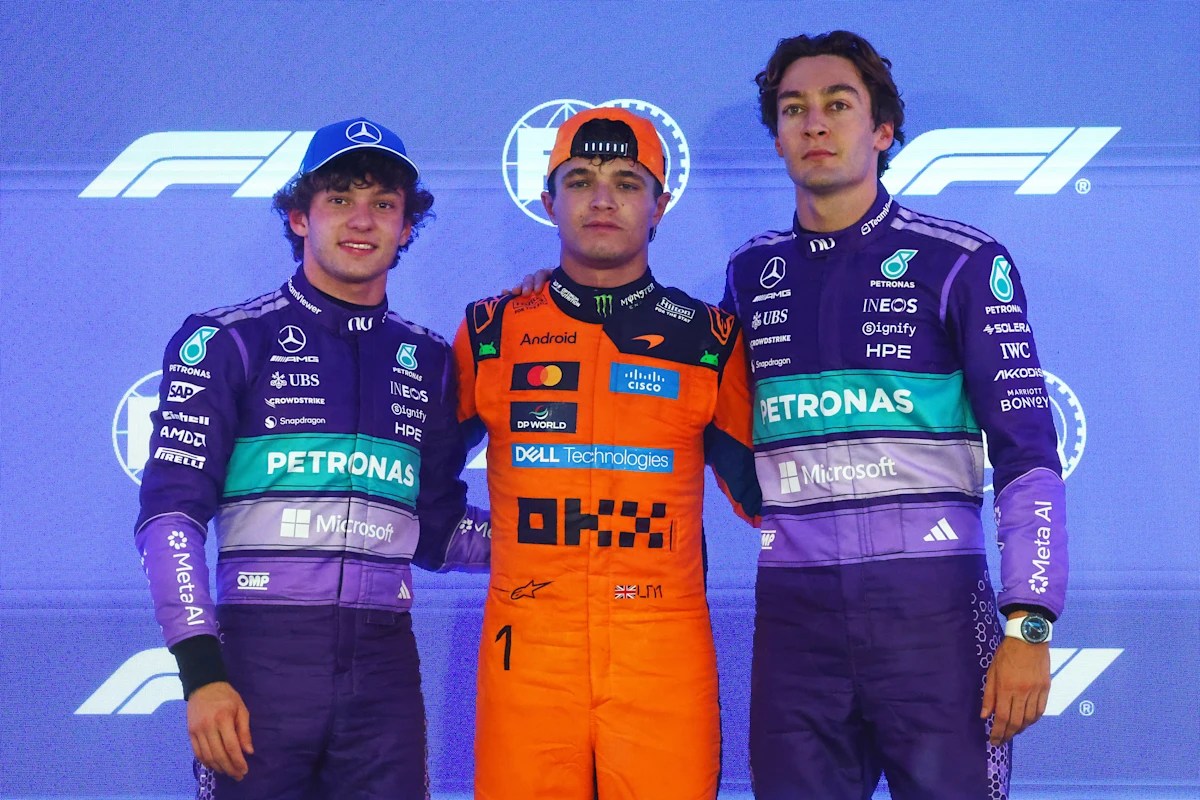
Antonelli moves to the front row as Mercedes looks to the race
Antonelli admitted making two significant Q3 mistakes and finished 0.625s behind Norris. He regarded the wet running as useful learning, said he now had more experience with the car in those conditions, and would do his best if the race was dry. Russell starts seventh after his penalty, while Mercedes also aims to secure the Constructors’ Championship.
INKA SPORTS Analysis and Conclusion — Why waiting another lap removed the pole opportunity
Russell faced two specific risks. Continuing the current lap could cost time as he caught Albon; backing off for space depended on the next lap retaining sufficiently good track conditions. Mercedes chose the latter because it expected roughly another minute before heavier rain. Once conditions deteriorated sooner, a clearer gap could not restore the lost grip, so preparation for a cleaner next lap instead removed a chance to complete a useful time.
Norris reversed that order of exposure: he banked a sufficiently fast time in the opening opportunities before the next rain arrived. His emphasis was not simply on bravery, but on combining tyre preparation, braking and acceleration without an error over the whole lap. The final 0.204s gap compares completed best laps. It cannot prove that Russell would necessarily have taken pole by continuing, because tyre condition, traffic and the rest of his unfinished lap still mattered.
The supported conclusion is that Mercedes’ expected weather window did not materialise, while Norris had already secured a competitive time. This does not make waiting universally wrong in the wet or require a driver to press on regardless of traffic: an improving track or greater obstruction could change the choice. At Interlagos this time, the conditions Mercedes sought for the next lap depended on a period of usable weather that did not exist.