Switching from full wets to intermediates
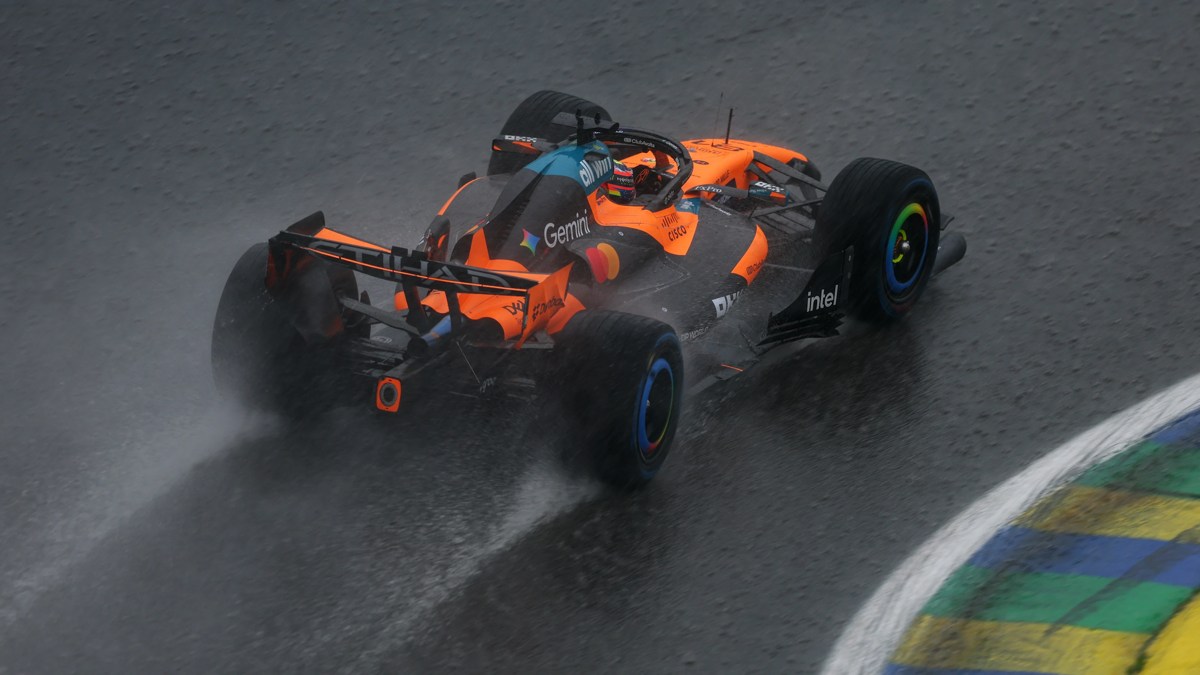
Oscar Piastri qualified 12th in the wet at the 2026 Brazilian Grand Prix and is set to start tenth. Leclerc's ten-place penalty for an additional engine moves him to 14th, while Hamilton's complete power-unit replacement puts him 20th. Both drop behind Piastri, promoting him two places. Team mate Norris took pole. Piastri focused on the tyre change and adapting to the evolving surface when explaining the contrasting outcomes.
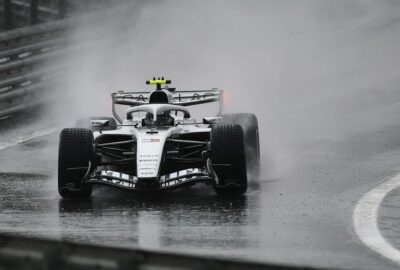
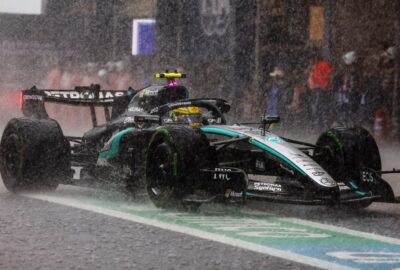
He progressed through Q1 on full wets, while conditions in Q2 became suitable for intermediates. Piastri told the media he had just completed a lap before changing tyres and felt the switch came a little late. Another lap or two would have helped bring the intermediates up to temperature.
He also needed to change his driving lines. Some lines that worked on the full wets did not work on intermediates. The issue therefore involved both the timing of the stop and the running available afterwards to adjust his driving and locate grip.
Different parts of the lost opportunity
Piastri felt another lap and better decisions might have put him in a stronger position. But he did not simply blame the red flag when asked: without it, everyone else would also have had another lap. Adding a lap only to his own performance would not prove he would have advanced.
The team's comments published by F1 provide further context. Piastri said his position well up the road and the risk of an earlier red flag complicated the tyre call. He felt the car was reasonable in the wet and more competitive in the dry over the weekend, making the missed opportunity frustrating.

Team principal Andrea Stella emphasised that Piastri was about to complete a lap when the red flag appeared and believed it would probably have been enough for Q3. He also acknowledged the difficulty of judging when to change to intermediates in rapidly evolving weather. The lap was never completed and did not become an official time.
INKA SPORTS Analysis and Conclusion: tyre decisions shape the laps available
The explanations are compatible. A late tyre change compresses the time available for warm-up and adapting lines; the red flag then removes part of an already limited opportunity. Piastri's account concerns the preparation leading into that moment, while Stella focuses on how the last chance disappeared. The red flag alone does not explain both stages.
Norris completed a decisive lap in changing conditions, demonstrating McLaren's ability to fight for pole. That does not establish that copying the same decision would necessarily have worked for Piastri. Their positions on track, tyre states and completed running differed, and an unfinished lap cannot be added to the classification.
McLaren's review concerns when to change tyres, how to leave time for adaptation and how to manage a sudden interruption. Piastri still treats the weather as the first variable for the race: dry performance gives him confidence, while rain requires continued assessment. His recovery from tenth remains a task for the Grand Prix itself.