The Belgian Grand Prix weekend began at Spa-Francorchamps on August 24, 2018. Sebastian Vettel topped first practice with a 1:44.358, with Max Verstappen 0.151 seconds behind in second and Lewis Hamilton third, 0.318 seconds off the leader.
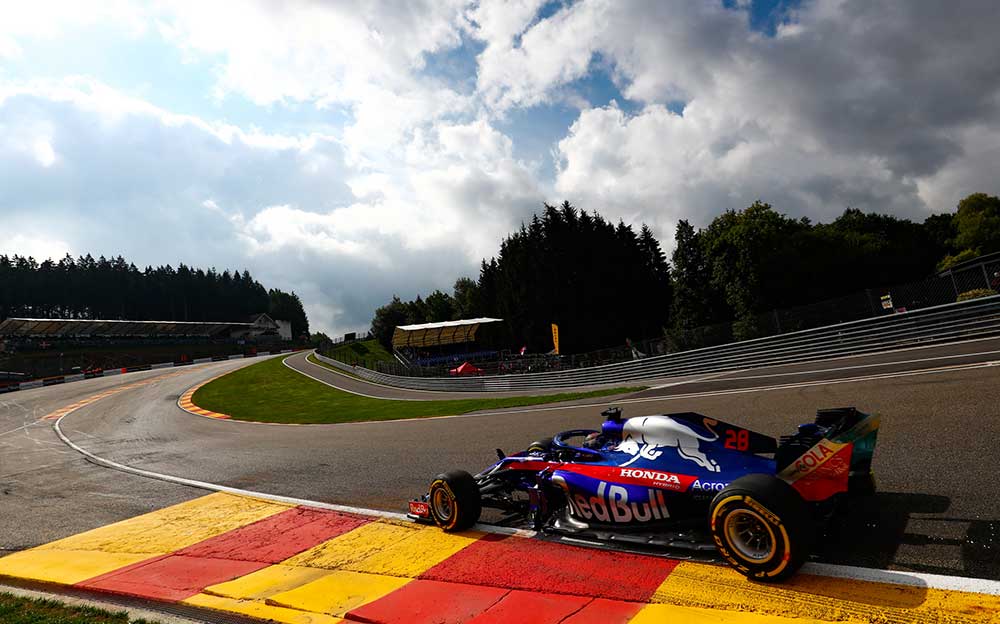
A lap of Spa measures 7.004 kilometres and includes the climb through Eau Rouge and Raidillon and the Kemmel Straight. Teams need to balance low drag with stability through the high-speed corners. Friday morning’s time gaps offer a limited guide to qualifying pace, as track temperature and tyre programmes also affect lap times.
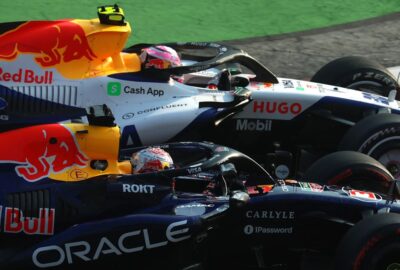
Ferrari had Vettel fastest and Räikkönen fourth, while the two Mercedes drivers were third and fifth. Red Bull’s Verstappen was second, but Ricciardo completed only four laps and finished sixth. His limited running early in the session meant that a single lap time gave an incomplete picture of his competitiveness around the circuit.
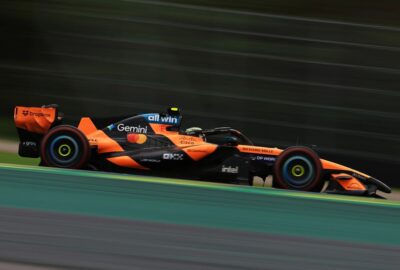
McLaren put reserve driver Lando Norris in Fernando Alonso’s car for first practice, marking Norris’s first official practice appearance at a Grand Prix weekend. He finished eighteenth and completed 26 laps. Alonso sat out the session and would return to the car afterwards.
The two Force India drivers finished seventh and ninth, with Ocon ahead of Pérez. The team had just undergone a change of control and entered the Belgian Grand Prix as a new entity, with further operational and technical integration to manage during the weekend. The drivers’ practice performances laid the groundwork for their subsequent strong qualifying positions.
Renault had Hülkenberg eighth and Sainz tenth, while Haas drivers Grosjean and Magnussen finished twelfth and seventeenth. The midfield was spread over around a second. Straight-line speed and tyre preparation would shape the subsequent qualifying contest, with the first Friday session providing an initial reference for each team’s set-up work.
Toro Rosso’s Gasly was eleventh and Hartley fifteenth, completing 25 and 23 laps respectively. The circuit’s long lap makes power-unit energy recovery strategy particularly important. All twenty cars received an official timed classification in this session, with no cancelled or missing practice entry.
The official F1 first-practice classification was led by Vettel’s 1:44.358, with 0.151 seconds separating the top two. Norris replaced Alonso and finished eighteenth, while Ricciardo remained sixth despite his limited lap count. The table below retains the official best lap times, gaps and lap totals for all twenty drivers.
| Position | Driver | Team | Time/Gap | Laps |
|---|---|---|---|---|
| 1 | Sebastian Vettel | Ferrari | 1:44.358 | 19 |
| 2 | Max Verstappen | Red Bull | +0.151s | 20 |
| 3 | Lewis Hamilton | Mercedes | +0.318s | 22 |
| 4 | Kimi Räikkönen | Ferrari | +0.360s | 17 |
| 5 | Valtteri Bottas | Mercedes | +0.366s | 25 |
| 6 | Daniel Ricciardo | Red Bull | +1.200s | 4 |
| 7 | Esteban Ocon | Force India | +1.428s | 22 |
| 8 | Nico Hülkenberg | Renault | +1.593s | 19 |
| 9 | Sergio Pérez | Force India | +1.811s | 21 |
| 10 | Carlos Sainz | Renault | +1.852s | 19 |
| 11 | Pierre Gasly | Toro Rosso | +1.942s | 25 |
| 12 | Romain Grosjean | Haas | +2.029s | 20 |
| 13 | Charles Leclerc | Sauber | +2.196s | 20 |
| 14 | Marcus Ericsson | Sauber | +2.199s | 19 |
| 15 | Brendon Hartley | Toro Rosso | +2.574s | 23 |
| 16 | Lance Stroll | Williams | +2.607s | 25 |
| 17 | Kevin Magnussen | Haas | +2.654s | 21 |
| 18 | Lando Norris | McLaren | +3.006s | 26 |
| 19 | Sergey Sirotkin | Williams | +3.009s | 23 |
| 20 | Stoffel Vandoorne | McLaren | +3.094s | 13 |