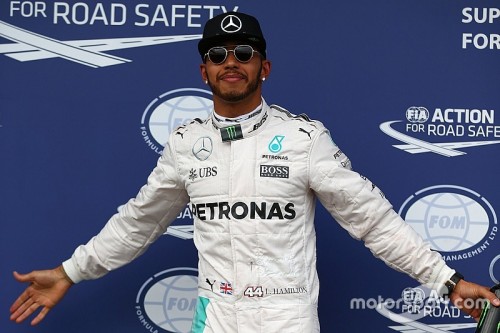
Qualifying for the 2016 Australian Grand Prix introduced a new elimination format, with the slowest driver progressively removed by a countdown during each segment. Hamilton had topped FP3. On Saturday afternoon, he had to contest the final qualifying laps under a new mechanism that reshaped the familiar late-session rush.
Hamilton took pole with a 1:23.837 in Q3. Rosberg was second on a 1:24.197, 0.360 seconds behind. Vettel was third and Räikkönen fourth, giving Mercedes and Ferrari the top four places.
Toro Rosso’s Verstappen was fifth and teammate Sainz seventh, with Massa sixth. Ricciardo was eighth and the only Red Bull driver to reach Q3. The home driver, the focus of attention for Australian fans, therefore finished behind the first three rows.
The biggest talking point was how early the outcome of Q3 was settled. Drivers were eliminated in succession under pressure from the countdown, and Ferrari did not send Vettel or Räikkönen out again to improve their times. Hamilton and Rosberg therefore secured the top two places early.
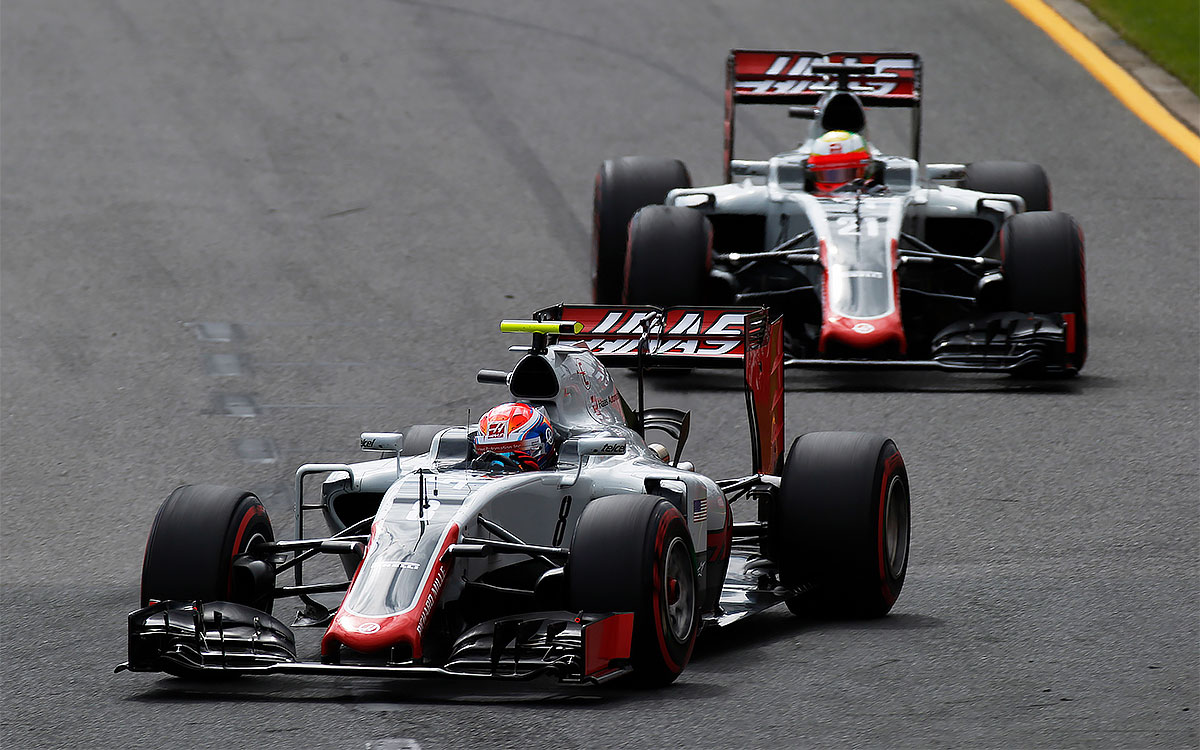
The Force India drivers finished ninth and tenth, with Pérez ahead of Hülkenberg. Bottas was 11th, Alonso 12th and Button 13th. Most drivers from Renault, Sauber, Red Bull and Haas were eliminated in Q1 or Q2.
Two grid penalties also accompanied the qualifying results. Haryanto received a three-place drop for a pit-lane collision in FP3, and Bottas a five-place drop for an unscheduled gearbox change. The table retains the original qualifying classification, with penalties applied to grid positions.
The elimination format drew criticism from teams, drivers and spectators in Melbourne. The FIA subsequently confirmed that the previous timed knockout format would return from the Chinese Grand Prix. Qualifying in Australia thus determined the opening race’s grid and marked an important point in the new rules’ brief trial that season.
Hamilton took pole with a 1:23.837, beating Rosberg by 0.360 seconds. Vettel and Räikkönen were third and fourth, giving Ferrari the second row. Ricciardo was eighth, and neither McLaren reached Q3.
| Position | No. | Driver | Team | Q1 | Q2 | Q3 | Laps |
|---|---|---|---|---|---|---|---|
| 1 | 44 | Lewis Hamilton | Mercedes | 1:25.351 | 1:24.605 | 1:23.837 | 14 |
| 2 | 6 | Nico Rosberg | Mercedes | 1:26.934 | 1:24.796 | 1:24.197 | 13 |
| 3 | 5 | Sebastian Vettel | Ferrari | 1:26.945 | 1:25.257 | 1:24.675 | 14 |
| 4 | 7 | Kimi Räikkönen | Ferrari | 1:26.579 | 1:25.615 | 1:25.033 | 13 |
| 5 | 33 | Max Verstappen | Toro Rosso | 1:26.934 | 1:25.615 | 1:25.434 | 12 |
| 6 | 19 | Felipe Massa | Williams | 1:25.918 | 1:25.644 | 1:25.458 | 12 |
| 7 | 55 | Carlos Sainz | Toro Rosso | 1:27.057 | 1:25.384 | 1:25.582 | 14 |
| 8 | 3 | Daniel Ricciardo | Red Bull | 1:26.945 | 1:25.599 | 1:25.589 | 15 |
| 9 | 11 | Sergio Pérez | Force India | 1:26.607 | 1:25.753 | — | 12 |
| 10 | 27 | Nico Hülkenberg | Force India | 1:26.550 | 1:25.865 | — | 14 |
| 11 | 77 | Valtteri Bottas | Williams | 1:27.135 | 1:25.961 | — | 9 |
| 12 | 14 | Fernando Alonso | McLaren | 1:26.537 | 1:26.125 | — | 9 |
| 13 | 22 | Jenson Button | McLaren | 1:26.740 | 1:26.304 | — | 9 |
| 14 | 30 | Jolyon Palmer | Renault | 1:27.241 | 1:27.601 | — | 12 |
| 15 | 20 | Kevin Magnussen | Renault | 1:27.297 | 1:27.742 | — | 11 |
| 16 | 9 | Marcus Ericsson | Sauber | 1:27.435 | — | — | 9 |
| 17 | 12 | Felipe Nasr | Sauber | 1:27.958 | — | — | 7 |
| 18 | 26 | Daniil Kvyat | Red Bull | 1:28.006 | — | — | 5 |
| 19 | 8 | Romain Grosjean | Haas | 1:28.322 | — | — | 6 |
| 20 | 21 | Esteban Gutiérrez | Haas | 1:29.606 | — | — | 6 |
| 21 | 88 | Rio Haryanto | Manor | 1:29.627 | — | — | 3 |
| 22 | 94 | Pascal Wehrlein | Manor | 1:29.642 | — | — | 3 |