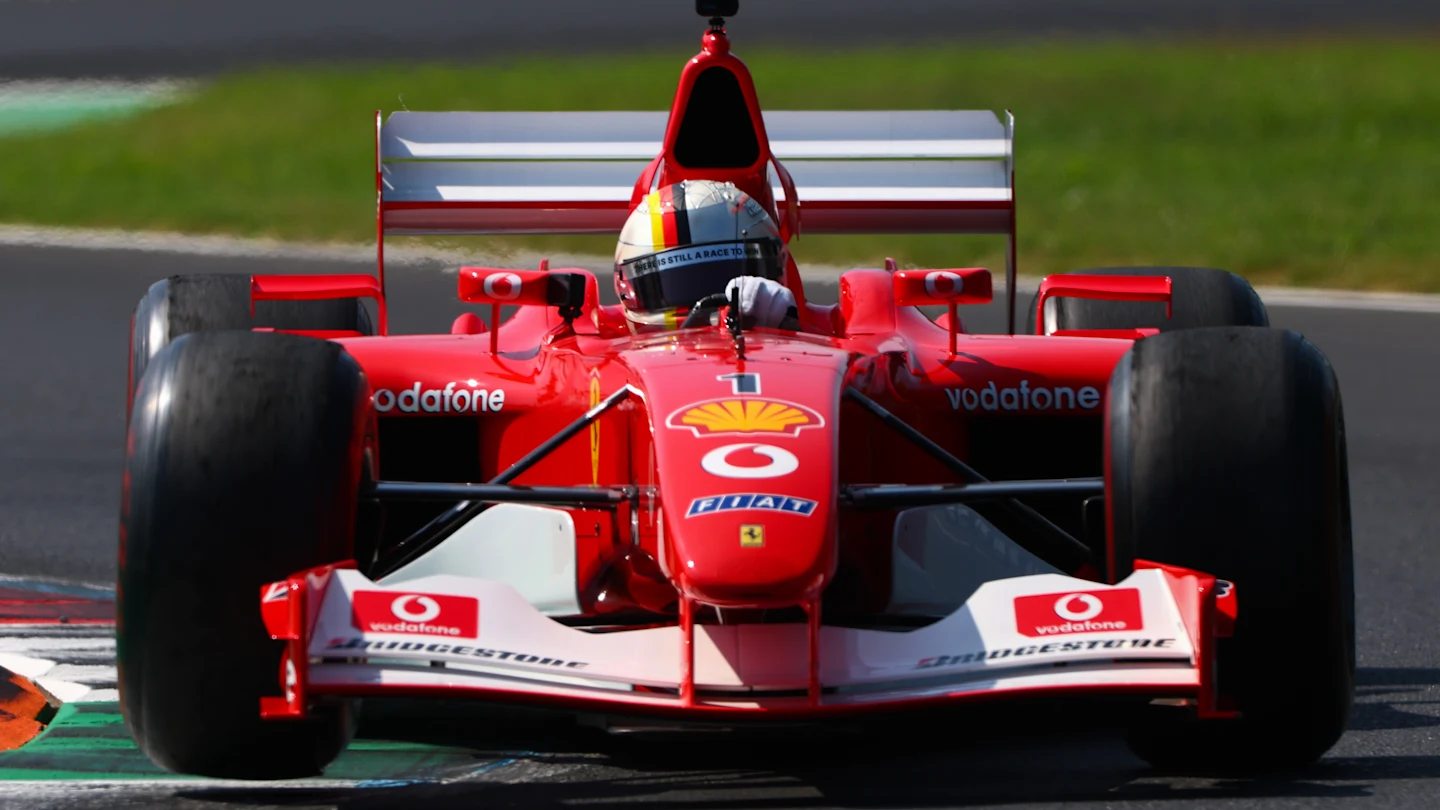
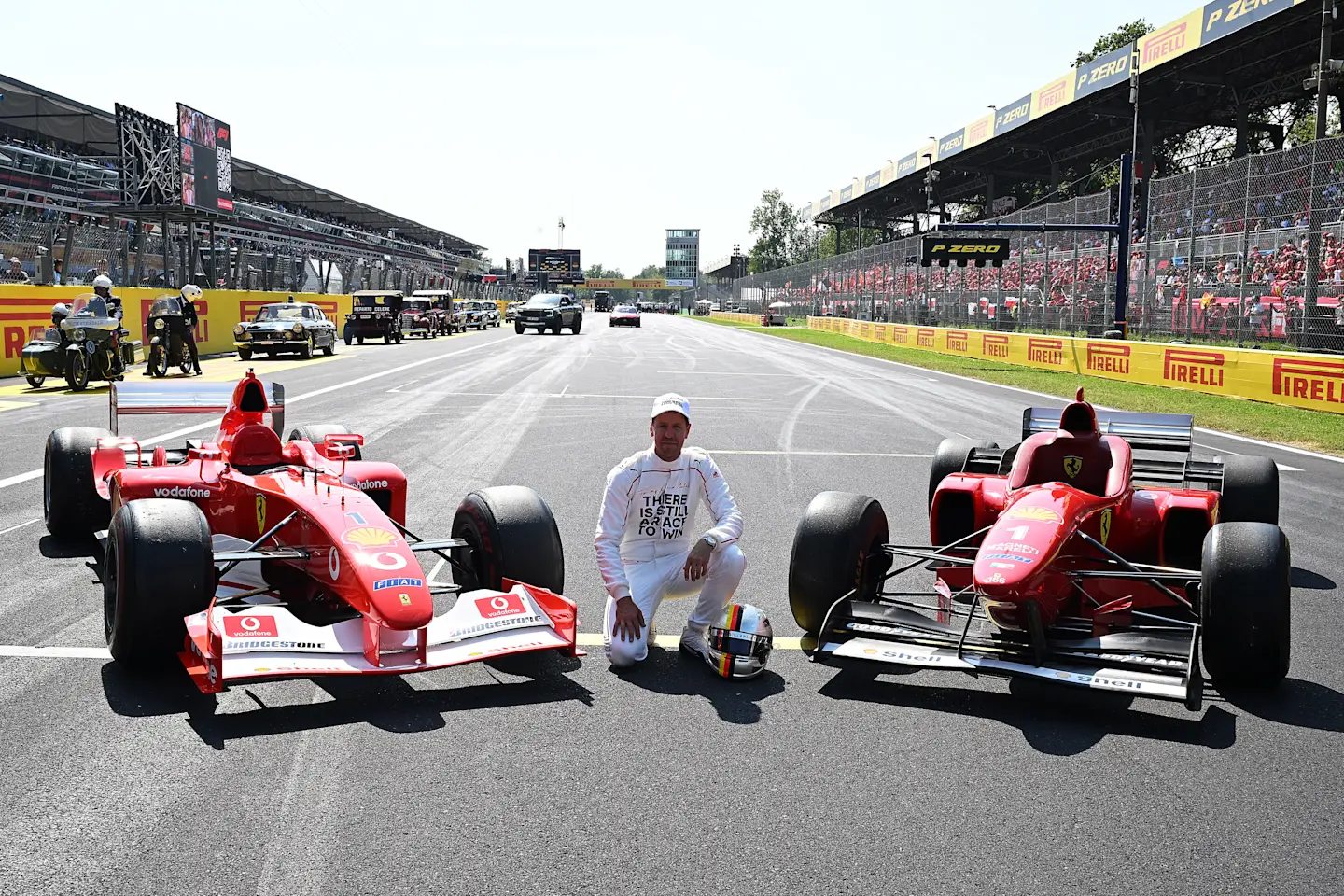
Sebastian Vettel believes F1 has an opportunity to combine sustainability objectives with the appeal of racing cars. An interview published by Motorsport.com on 20 September recorded the four-time world champion driving Michael Schumacher’s Ferrari F2002 during the Italian Grand Prix. Revisiting a V10 car also prompted him to discuss current rules and future choices.
Vettel did not endorse every aspect of the driving experience under the current rules, but neither did he regard older cars as the sole benchmark. In his view, the F2002 represented the leading technology of 2002, just as modern cars represent their own era. Performance, precision, discipline, teamwork and responsibility for the future are all F1 values he considers important.
What new possibilities does fuel offer?
Vettel described sustainable fuel as a step forward with potential beyond F1 to inspire other championships. He also argued that the next generation of cars should be designed responsibly: a technology may be impressive engineering without being transferable to road use. That is his proposed direction, not a completed power-unit concept.
F1’s official fuel explainer on 30 January said feedstocks for the 2026 advanced sustainable fuel could come from carbon capture, municipal waste or non-food biomass and would undergo independent certification. It also discussed fuel usable without modifying existing engines, citing Vettel’s earlier demonstrations in historic cars such as the Williams FW14B.
A future V8 direction still differs from settled details
At the subsequent Azerbaijan press conference on 24 September, Audi’s Mattia Binotto said the V8 direction was clear and could be introduced as early as 2030, but the future power-unit concept still lacked clear details. To implement it then, the regulations needed agreement and a vote before the end of the year. He felt specifics such as hybridisation still required discussion with the FIA. The FIA’s original transcript separates a directional consensus from complete rules that would allow design work to begin.
INKA SPORTS analysis: why a fuel choice does not answer the driving-experience question
Existing demonstrations of historic cars using sustainable fuel offer a concrete example: changing the fuel source can coexist with retaining a familiar form of racing car. But the fuel’s origin and certification do not answer how a driver will use the next power unit. Operating an old car and delivering the desired driving experience in modern F1 are different levels of evidence. The former cannot directly prove the latter has been achieved.
Binotto’s 24 September answer further shows that these discussions can be at different stages. Fuel already has examples of application, while details such as hybridisation in future power units remain under negotiation. Vettel’s aim of combining enjoyment with responsibility does not supply a complete power-unit design. Historic demonstrations show a possible combination, but cannot replace unsettled rules or prove future cars already meet that aim.
Summary
Vettel is proposing that several F1 values be considered within one design discussion: preserve the cars’ appeal while taking the future seriously. Existing sustainable-fuel demonstrations show room to combine a new fuel source with familiar forms of racing car. That example supports pursuing designs that accommodate both, but does not guarantee the driving experience of the next F1 generation.