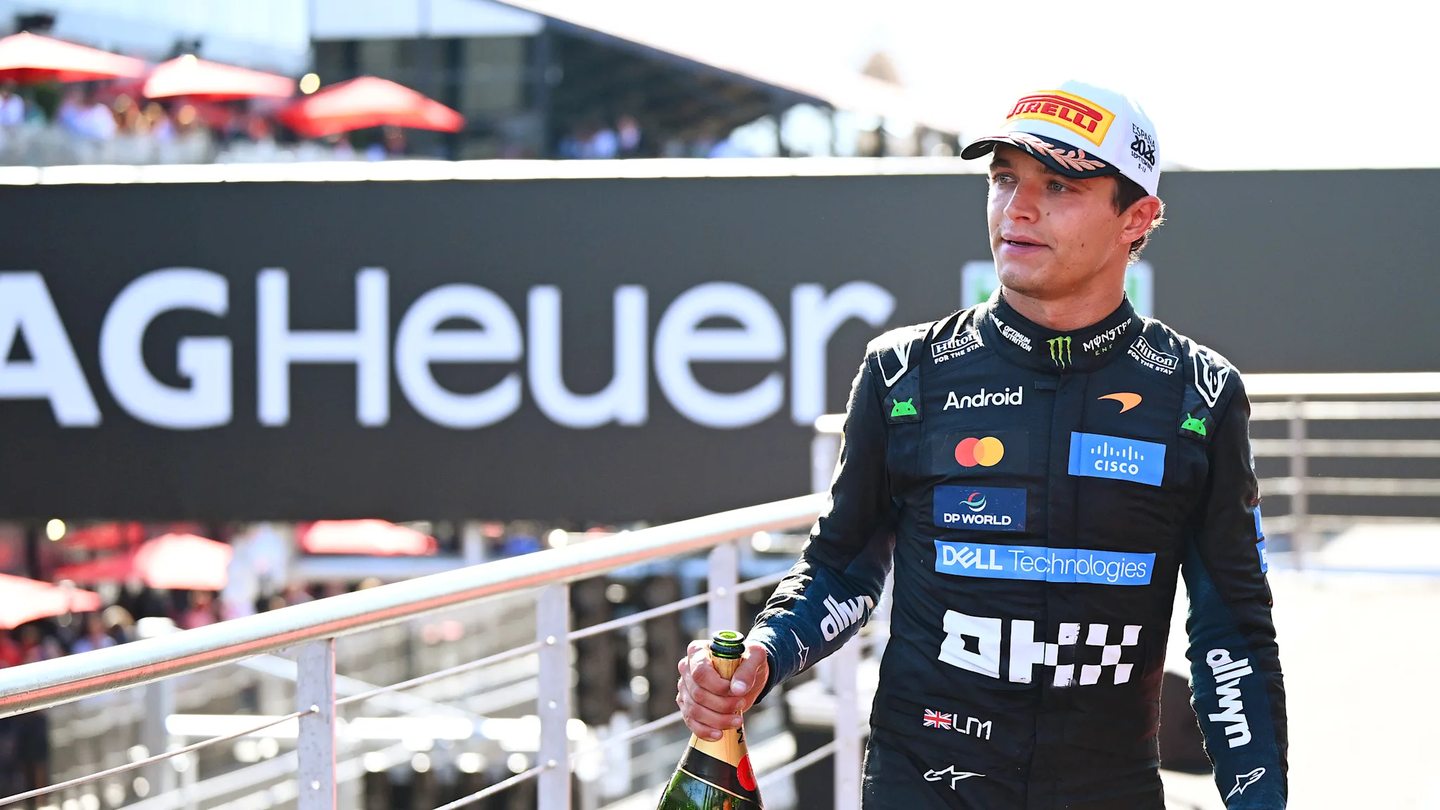
According to Motorsport.com’s report on 20 September, former Haas team principal Guenther Steiner backed Lando Norris on The Red Flags podcast to pass George Russell and challenge for second in the 2026 drivers’ standings. His premise was that Norris would maintain his recent form, making it a conditional prediction.
The FIA’s post-Spanish Grand Prix standings showed Kimi Antonelli leading on 292 points, Russell second on 211, Hamilton third on 191 and Norris fourth on 186. Norris was 25 points behind Russell, but Hamilton was another rival to overcome before reaching second.
Consecutive wins underpin Steiner’s assessment
McLaren and Norris’s recent results provide the background. Norris won consecutively in Hungary and the Netherlands, then finished fourth in Italy before taking pole and third in Spain. F1’s official post-race report noted three poles in the last four rounds, though Norris still felt his Saturday performances could improve.
Norris previously told Sky Sports that the team was working efficiently and with great commitment, and that it possessed many of the conditions needed to win, though parts of the car still required improvement. McLaren’s post-race interview on 14 September also recorded his praise for the car in Spain’s slow corners. That had not previously been a season-long strength, making the performance a surprise to him.
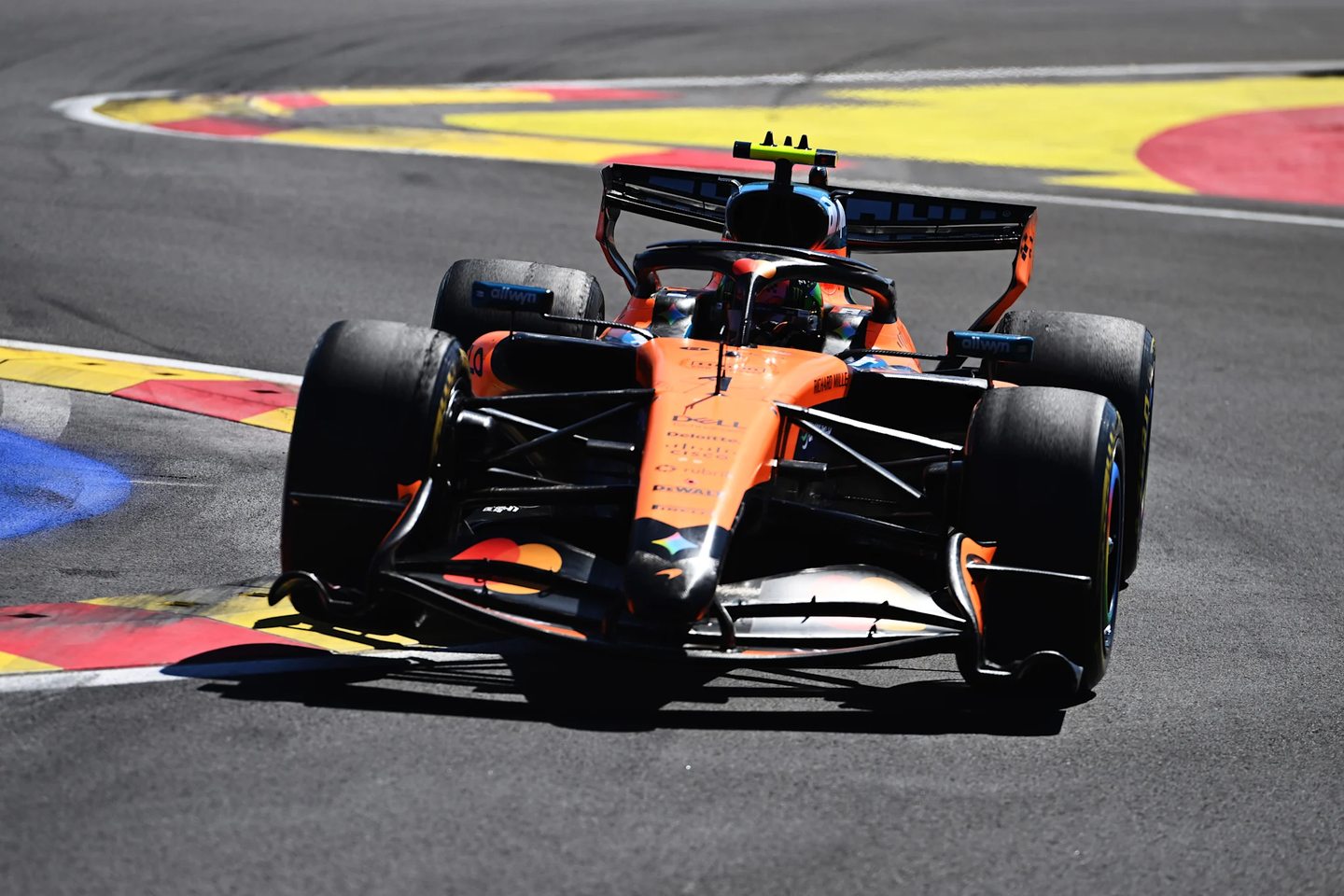
Spain: speed did not become a win
Spain also showed the gap between pace and outcome. McLaren’s report recorded that Norris had already passed pit entry when Stroll’s stoppage triggered a Virtual Safety Car. Antonelli, Verstappen and Russell behind him could pit in time. By Norris’s next lap, the track was green again, and a slower tyre change added to the loss. He emerged fifth and recovered to third.
INKA SPORTS analysis: why front-running speed does not remove the difficulty of catching up
Why had recent front-running speed not removed the difficulty of the chase? Spain offered a specific explanation: favourable track position helps convert a pace advantage fully into points. Norris had led, but missing the VSC pit window and suffering a slow tyre change left him chasing from behind. F1’s official account recorded him closing on Verstappen and trying for second without completing the pass. In the same race, being able to extend a lead does not guarantee that recovered time can become positions when running behind.
The VSC timing and slow tyre change also need separate assessment. One depends on when neutralisation occurs; the other is an execution issue the team can investigate. They cannot be combined into one identical improvement task. Norris scored 15 points and Russell 10 at that round, a net gain of 5. That supports Norris’s ability to close the gap, while showing that a stronger weekend does not mean every part of the speed advantage was converted. Steiner’s assessment has recent form behind it, but the final order remains beyond what this evidence can prove.
Summary
Steiner’s confidence in Norris’s pursuit of the runner-up position rests on recent form after McLaren’s recovery. Spain showed that front-running pace, pit windows and overtaking conditions after a stop jointly influence points. Norris closed on Russell there, but the 25-point deficit and Hamilton between them remain. That supports discussion of a conditional chase, not a guarantee of the final standings.