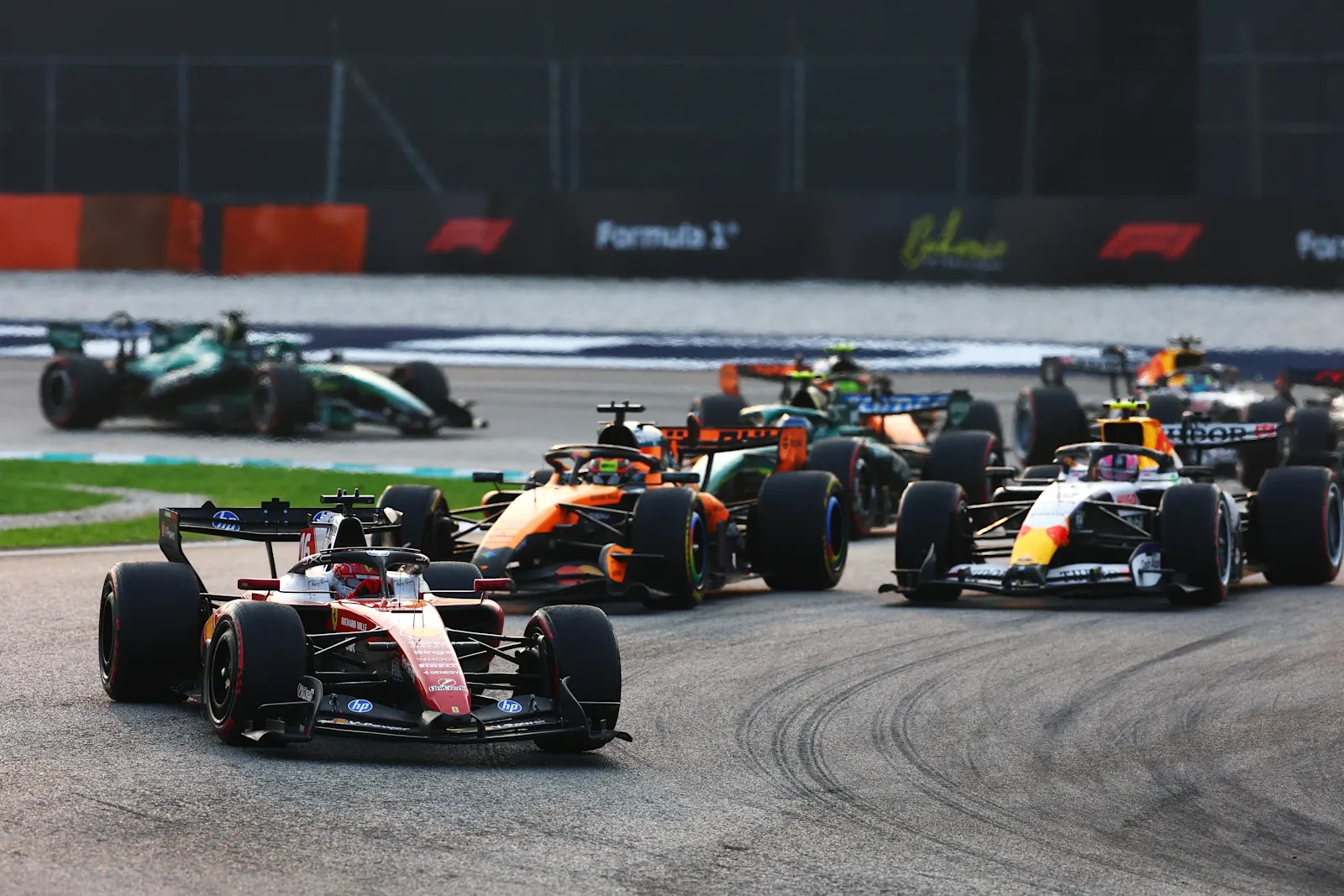
Ferrari’s preparations for the Mexican Grand Prix address the tasks of both a race weekend and a winter. In two interviews published by F1 on October 30, China Standard Time (UTC+8), Charles Leclerc focused on extracting the full potential of the current car as the key to fighting for victory here. Lewis Hamilton discussed using the final five rounds to test working processes and establish a clear direction for power unit and chassis development in 2027.
Leclerc focuses on qualifying as deviations from the window prove costly
Leclerc finished second in both Singapore and the United States, but does not therefore regard Ferrari as the automatic favourite in Mexico. He still rates Mercedes highly and recognises Red Bull’s recent competitiveness. Ferrari’s opportunity depends on extracting everything from its existing package, particularly by getting the tyres and car into the right operating condition for the crucial qualifying lap.
Leclerc explained that the car was highly sensitive once it moved outside its optimum window, particularly when track temperatures fell in recent Q3 sessions. The final decisive lap in the United States was affected by that limitation, which he believes cost the team a front-row start. The team has identified the problem, but he is unsure whether it can be solved in the short term. A more direct measure than treating successive second places as proof of greater pace at the next round is whether the final qualifying attempt delivers the speed shown earlier.
Hamilton’s description of the final five rounds focused more on working methods. He wants Ferrari to retain second in the constructors’ championship while reviewing this season’s experience and continuing to improve its processes. Looking to next year, he made power the top priority, while hoping to retain this year’s car’s strengths, add downforce and broaden its effective operating range. His comments on the power deficit and its impact are his assessment of the car, rather than independently published horsepower measurements for the manufacturers.

Altitude poses a different test, with rivals also awaiting answers
Thursday’s FIA press conference offered another perspective. Russell expected altitude to make turbo response an important factor and thought Ferrari’s smaller turbo could be beneficial. However, Ferrari-powered Haas driver Oliver Bearman said they would only know whether they were more or less competitive once the car was on track. These pre-race assessments cannot yet be translated directly into a lap-time advantage here.
INKA SPORTS analysis: weekend set-up and winter development need separate assessments
The limitations discussed by Ferrari’s two drivers overlap, but do not call for the same solutions. Leclerc emphasises consistently bringing the existing car into its qualifying operating window as temperatures change; Hamilton places some of the required improvements in next year’s power unit and chassis. Even if preparation and set-up improve qualifying here, that would not establish that the longer-term power requirements have disappeared. Equally, focusing on next year does not mean abandoning results available now.
Summary: judge short-term progress by delivery on the key qualifying lap
The most valuable feedback from Mexico will be whether Ferrari can keep the car in its effective operating range on the crucial qualifying lap, and whether actual power unit response at altitude matches the drivers’ expectations. The former concerns extracting the car’s full potential now, while the latter can add evidence for future development. Both questions require actual running this weekend, rather than conclusions based solely on the previous round’s podium or rivals’ pre-race predictions.