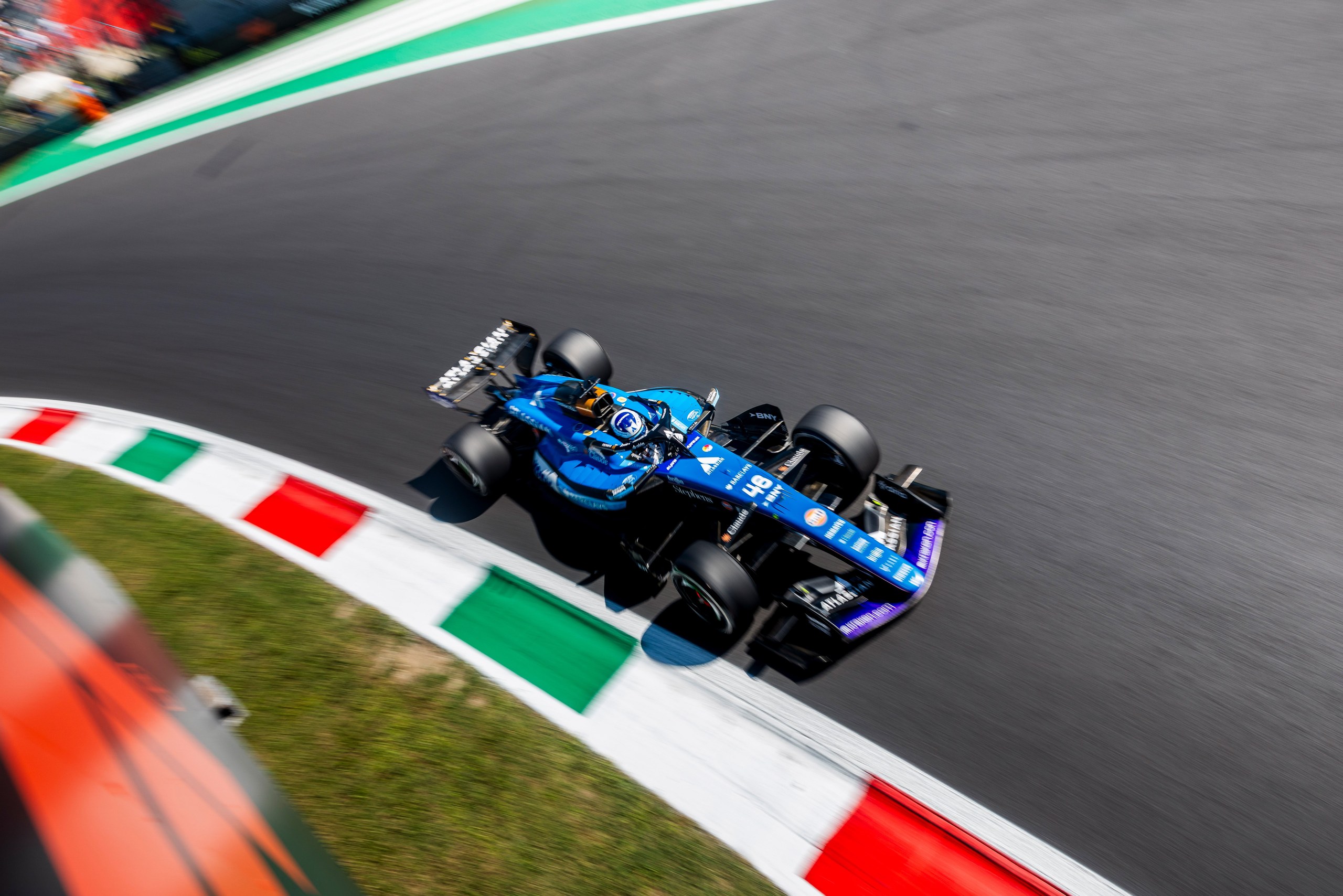
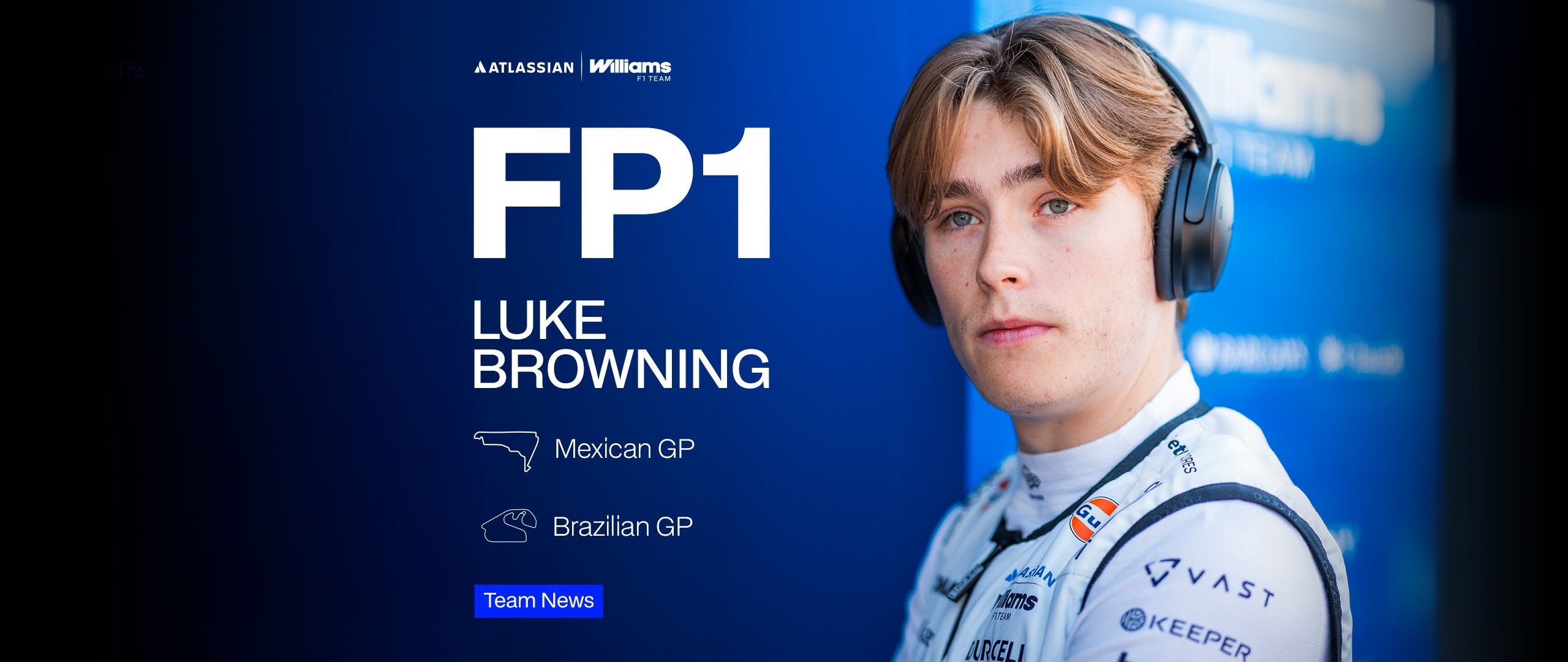
Williams confirmed on October 27 that reserve driver Luke Browning will drive the FW48 in first practice at the Mexican and Brazilian Grands Prix, completing the team's final two mandatory rookie practice outings of the season. He will replace Albon in Mexico and Sainz in Brazil. The two sessions also have a specific purpose: giving him his first experience of the lighter chassis upgrade introduced in Baku and taking that on-track feedback into his simulator work.
Driving Albon's and Sainz's cars across the two rounds
Browning's most recent F1 first-practice appearance was at the Italian Grand Prix. The car has since received a new chassis specification, so although he has continued working behind the scenes, he needs to drive it to understand how the new package behaves. The team wants him to take track data and his impressions back to Grove, helping it compare simulator work with feedback from the real car.
Browning said being entrusted with all four rookie FP1 sessions this season demonstrated the team's faith in him. He hopes to build mileage, deepen his understanding of the new package and bring back useful data and feedback. For a driver combining reserve duties with simulator work, the sessions offer both track time and an opportunity to compare his day-to-day assessments with the real car.
Once these outings are completed, Browning will have undertaken all four of Williams' mandatory rookie FP1 sessions this season. Sporting Director Sven Smeets explained that keeping the same driver for all four tests is valuable because it helps improve correlation between track data and simulator work. He also described taking part in consecutive race weekends as a natural step in Browning's development.
INKA SPORTS analysis: The same driver provides continuity in feedback
Smeets' emphasis is on establishing a continuous feedback process between real-car testing and simulator work. Browning is already involved in data analysis and simulator development. Driving the updated car allows him to bring direct impressions of the new package into that existing work. Experiencing the car himself gives him a more specific understanding of its changes than simply knowing a component has been updated, and lets him compare those impressions in subsequent simulator tests.
Using the same driver for all four FP1 sessions also allows the team to follow one person's feedback over time. Different circuits, weather and test programs affect how a car feels, so the main purpose of this feedback is to help the team understand the new package and compare its behavior with the simulator. Assessing the upgrade still requires the conditions and test data from each event; retaining one driver provides a relatively consistent source of feedback.
Browning is also competing in Japan's Super Formula with Kondo Racing this season and remains in the Williams Driver Academy. As an F1 reserve driver, he must be available during race weekends while contributing to data analysis and simulator work. The Mexico and Brazil outings connect these duties: they add experience in top-level machinery and provide more direct reference points for ongoing F1 development.
Conclusion
For Williams, the value of the two rookie FP1 sessions lies in taking experience of the updated car back to the simulator. For Browning, they offer continued involvement in the team's testing and a chance to build useful feedback. The next points to watch are how he describes the new chassis and how those observations inform the team's subsequent work. For a reserve driver involved in development behind the scenes, the data analysis after practice is part of the job too.