For the Japanese MotoGP on 4 October 2026, the hard rear tyre that nobody had tried at Motegi on Friday or Saturday became the entire field’s choice. The change followed the Sprint, when damage to soft rear tyres prompted Michelin to withdraw that option for the Grand Prix. Riders had to reassess their selection. Why did riders wait until Sunday warm-up to try this available reserve option? The full result is in our full race report.
The carcass and surface rubber of this hard rear
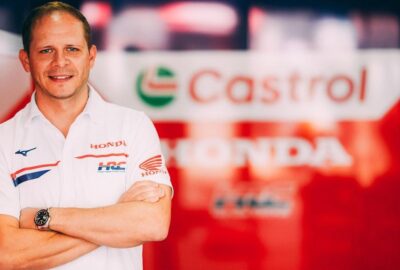
Michelin’s MotoGP manager Piero Taramasso explained that this hard rear used a stiffer carcass, the tyre’s internal supporting structure, with the same surface rubber compound as the soft version.
From no testing to a post-Sprint rethink
The tyre was already included in Michelin’s allocation. On Thursday, Jack Miller said he did not consider it an option. None of the teams tried it on Friday or Saturday either. It remained a reserve, leaving riders without experience of running it during this Motegi weekend.
After Jorge Martín and Francesco Bagnaia suffered damage to their soft rear tyres in the Sprint, Michelin withdrew the soft rear option for the Grand Prix. The medium rear remained available, with Michelin recommending the hard. Warm-up was extended from 10 to 20 minutes so riders could try the previously unused tyre. This short Sunday session before the race allows teams to check their bikes and adapt to the day’s track conditions.
Previous experience, setup time and waiting for others
Luca Marini pointed to previous experience. He said this type of tyre had performed poorly at other circuits, which was why riders had ruled it out. He also questioned why a tyre that had previously worked badly suddenly performed well at Motegi.
Alex Rins emphasised the shortage of practice time. Teams needed their limited running to work on bike setup and were reluctant to sacrifice a run to try another tyre. Testing it could reduce the time available to resolve setup problems.
Alex Márquez admitted that in such circumstances riders hoped someone else would try it first and show how it worked. Bagnaia accepted that riders also bore responsibility. Hearing it was a reserve option usually encouraged them to avoid it, but he felt they should learn about every available choice. He also said they had overlooked the combination of Motegi’s new asphalt and the soft surface compound on this tyre.
Taramasso confirmed that Michelin asked riders to try the hard rear in warm-up. He linked the teams’ earlier reluctance to use it in practice to the shortage of time and described the selection process as a lesson for future races.
Warm-up changed the choice, the whole field used the hard rear
Marini said the tyre worked well in this warm-up, contrasting with his previous experience. Every rider ultimately selected a medium front and hard rear for the 24-lap Grand Prix. Running it on this circuit turned the overlooked reserve into the whole field’s choice.
INKA SPORTS Analysis and conclusion, how waiting for others delayed testing the reserve tyre
Waiting for someone else’s results requires someone to invest the time first. The setup pressure described by Rins encouraged teams to prioritise familiar tyres, while the tendency described by Alex Márquez passed responsibility for testing the reserve to others. If each team takes that approach, new evidence is slow to emerge. Once the soft rear was withdrawn, this preparation was concentrated into the 20-minute session immediately before the race.
Motegi shows the value of checking a reserve tyre under the conditions in which it may be needed. Marini had ruled it out on experience from other circuits, while Bagnaia identified the overlooked combination of new asphalt and soft rubber. Previous experience and limited setup time explain the initial reluctance, and the different warm-up feedback demonstrates the value of a fresh run. Obtaining circuit-specific feedback on a possible race option gives teams a basis for choosing again if their familiar tyre is withdrawn.