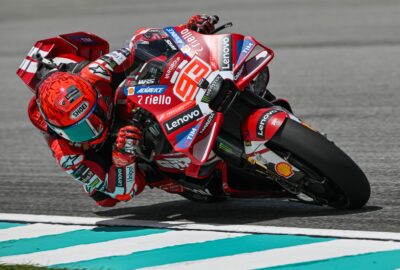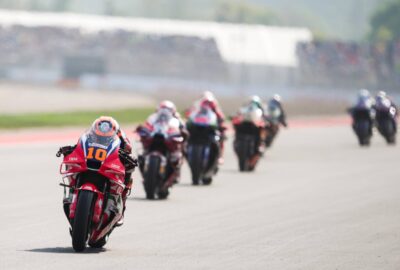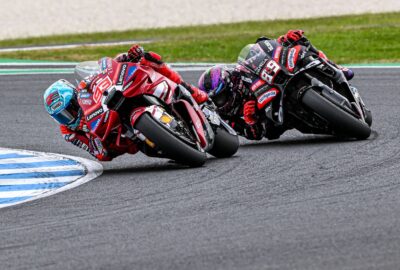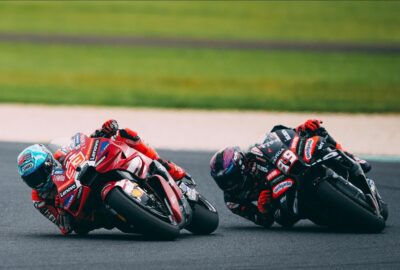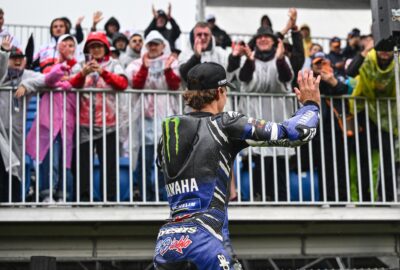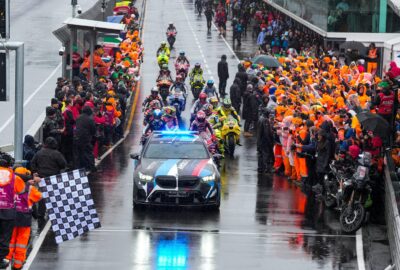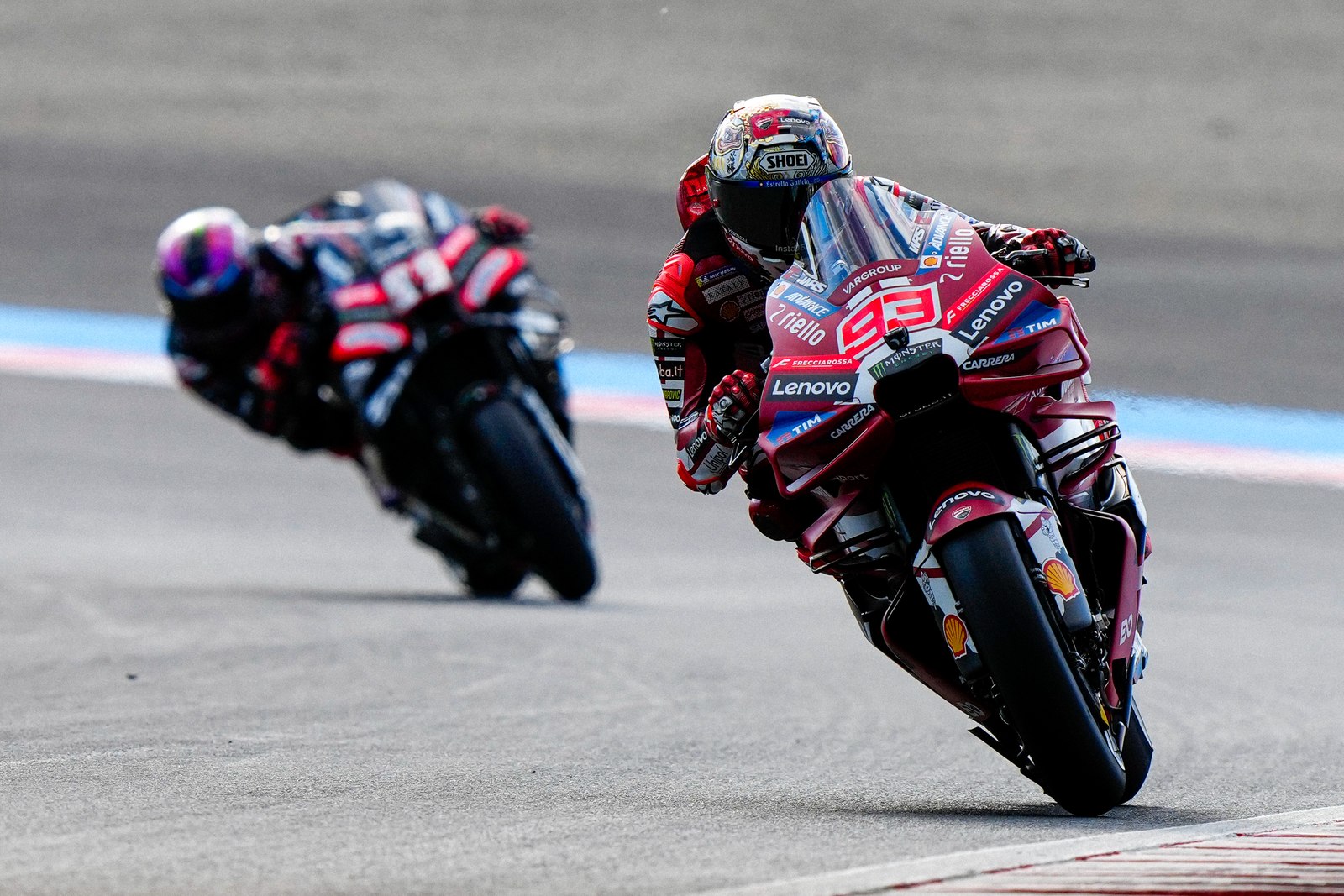
Round 16 of the 2026 MotoGP season, the Japanese Grand Prix, ran over 24 laps on October 4. Marc Márquez won in 41 minutes 31.467 seconds, 1.363 seconds ahead of Jorge Martín. Marco Bezzecchi finished third, putting both Aprilia riders on the podium. Márquez completed a weekend double and reduced the title gap from 12 points before Japan to 2.
The race: a lap 11 pass and the response that followed
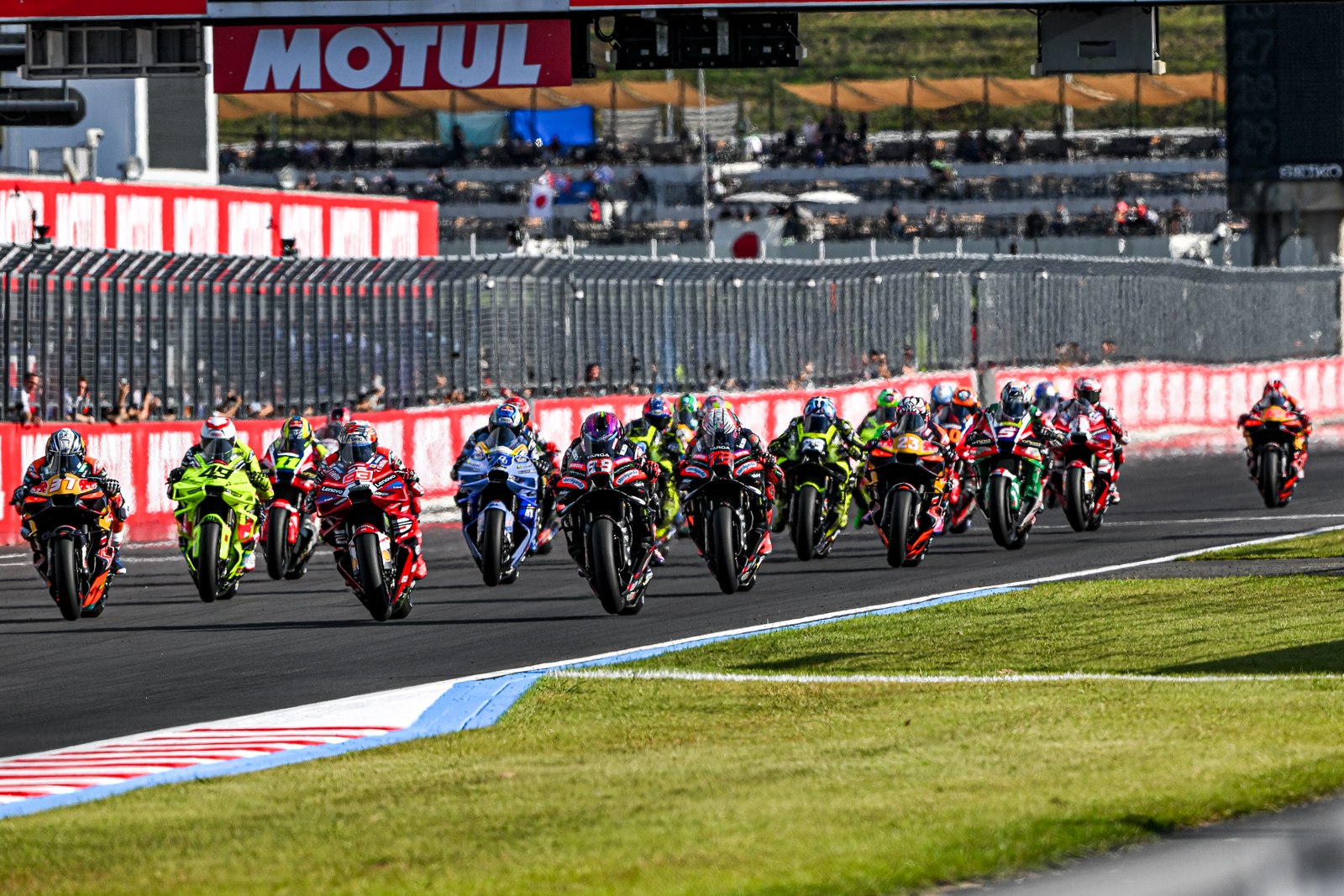
Polesitter Martín retained the lead at the start, with Marc Márquez following. Bezzecchi and Álex Márquez passed front-row starter Acosta, who initially fell to fifth and then eighth on lap two. The leaders were separated by about 0.4 seconds on lap five; by lap ten, they had opened a gap of about 1.9 seconds to Bezzecchi.
The lead changed at Turn 9 on lap 11, where Marc Márquez passed on the inside. Calculations from the official lap times show Martín was faster on both laps 16 and 17, reducing the gap to 0.718 seconds at the end of lap 17. Márquez responded with 1 minute 43.291 seconds on lap 18, extending his lead to 1.052 seconds by the end of that lap and 1.244 seconds by the end of lap 19.
The battle for third lasted to the finish. Bastianini was still about 1.9 seconds behind Bezzecchi at the start of lap 15, then lowered the race’s fastest lap on four consecutive laps late on. At the end of lap 23 he remained 0.343 seconds behind, ultimately finishing fourth by just 0.078 seconds. His lap of 1 minute 43.041 seconds was officially recognised as Motegi’s new race lap record, 1.371 seconds faster than Bagnaia’s 2025 record.
A substantial gap separated the leading four from the chasing group. Bastianini finished 2.330 seconds behind the winner, but there were 12.485 seconds between him in fourth and Fernández in fifth. Fernández, Ai Ogura and Acosta finished fifth to seventh respectively. The two battles at the front and the contest for fifth unfolded at different levels of pace.
How riders managed the race on a common hard rear tyre
Conditions were dry, with official temperatures of 20 degrees Celsius in the air and 28 degrees on the surface. Pre-race discussion centred on hard versus medium rear tyres, and every rider ultimately used the recommended hard rear. With limited practice laps on that tyre, the race became the practical test of whether the choice would last the full distance.
In Ducati’s report, Marc Márquez said following Martín early on had not been easy. After taking the lead, he mainly managed his pace, pushing harder when his rival closed. His good feeling with the bike from the Sprint onwards allowed him to ride consistently and precisely.
Bastianini said in KTM’s report that the hard rear felt better than expected from the first lap, making the tyre choice clear. He lost some time passing Acosta early on, then kept trying to push harder from the middle to the closing stages, eventually recognising an opportunity to fight for the podium.
From Sprint to Grand Prix: Martín’s two races
Aprilia’s Sprint report described a different situation for Martín. After taking pole in qualifying, he suffered a loss of rubber from the centre of his soft rear tyre with six laps remaining in the Sprint and had to manage his pace thereafter. He then exceeded track limits while defending against Bastianini on the last lap and was demoted from second to third. Sunday’s switch to the hard rear meant the tyre conditions differed between the races.
On Sunday, Aprilia achieved its first double MotoGP Grand Prix podium at Motegi, while satellite riders Fernández and Ogura also finished in the top six. Martín said in the team’s report that he had pushed until the last lap but Márquez was still stronger. Bezzecchi said Bastianini was very fast late on and third had been hard-earned.
Race classification: retirements and riders who continued
Álex Márquez served long-lap penalties on laps five and seven, dropping to ninth after his second visit to the loop. He eventually crashed out after completing 18 laps. Saturday’s Sprint runner-up Diogo Moreira also failed to reach the Grand Prix finish, completing only 8 laps. Both were on the official list of non-classified riders.
Two other riders continued after crashing. Jack Miller remounted and finished 19th. Johann Zarco also continued after two long-lap penalties and a crash, finishing 20th, two laps down. Being lapped but classified is distinguished in the results from the non-classified retirements of Álex Márquez and Moreira.
Japanese Grand Prix full race results
| Position | Bike number | Rider | Team | Total time | Gap / Status | Points |
|---|---|---|---|---|---|---|
| 1 | 93 | Marc Márquez | Ducati Lenovo Team | 41:31.467 | — | 25 |
| 2 | 89 | Jorge Martín | Aprilia Racing | 41:32.830 | +1.363 seconds | 20 |
| 3 | 72 | Marco Bezzecchi | Aprilia Racing | 41:33.719 | +2.252 seconds | 16 |
| 4 | 23 | Enea Bastianini | Red Bull KTM Tech3 | 41:33.797 | +2.330 seconds | 13 |
| 5 | 25 | Raúl Fernández | Trackhouse Racing | 41:46.282 | +14.815 seconds | 11 |
| 6 | 79 | Ai Ogura | Trackhouse Racing | 41:46.677 | +15.210 seconds | 10 |
| 7 | 37 | Pedro Acosta | Red Bull KTM Factory Racing | 41:48.395 | +16.928 seconds | 9 |
| 8 | 63 | Francesco Bagnaia | Ducati Lenovo Team | 41:51.800 | +20.333 seconds | 8 |
| 9 | 54 | Fermín Aldeguer | Gresini Racing | 41:55.012 | +23.545 seconds | 7 |
| 10 | 10 | Luca Marini | Honda Team | 41:57.144 | +25.677 seconds | 6 |
| 11 | 33 | Brad Binder | Red Bull KTM Factory Racing | 41:57.320 | +25.853 seconds | 5 |
| 12 | 20 | Fabio Quartararo | Yamaha Team | 42:02.334 | +30.867 seconds | 4 |
| 13 | 15 | Somkiat Chantra | Honda Team | 42:02.800 | +31.333 seconds | 3 |
| 14 | 12 | Maverick Viñales | Red Bull KTM Tech3 | 42:05.462 | +33.995 seconds | 2 |
| 15 | 21 | Franco Morbidelli | VR46 Racing Team | 42:06.057 | +34.590 seconds | 1 |
| 16 | 42 | Álex Rins | Yamaha Team | 42:10.695 | +39.228 seconds | 0 |
| 17 | 7 | Toprak Razgatlıoğlu | Pramac Racing | 42:11.029 | +39.562 seconds | 0 |
| 18 | 49 | Fabio Di Giannantonio | VR46 Racing Team | 42:22.283 | +50.816 seconds | 0 |
| 19 | 43 | Jack Miller | Pramac Racing | 42:42.594 | +1:11.127 | 0 |
| 20 | 5 | Johann Zarco | Castrol Honda LCR | 41:38.339 | 2 laps down | 0 |
| — | 73 | Álex Márquez | Gresini Racing | 31:23.842 | Retired, 18 laps completed | 0 |
| — | 11 | Diogo Moreira | Honda LCR | 14:02.516 | Retired, 8 laps completed | 0 |
INKA SPORTS analysis: how Marc Márquez protected the lead, and why Bastianini missed the podium
As Martín closed, Márquez pulled clear in time
Marc Márquez’s advantage was his ability to respond after taking the lead. Martín closed on laps 16 and 17, and Márquez immediately accelerated on laps 18 and 19 to restore a gap of more than 1 second. Before Martín could get close enough to attack, he was left with another gap to make up. That matches Márquez’s post-race account of managing the pace in front and pushing when his rival approached. The final margin of 1.363 seconds was the result of a gap being narrowed and reopened. The decisive factor was when he accelerated, rather than simply who set the fastest lap.
Aprilia breaks through at Motegi, but Martín still has to win the direct duel
A double podium and four bikes in the top six extended Aprilia’s Motegi success from the factory team to its satellite operation. To win the Grand Prix, however, Martín still needed an answer to Márquez’s acceleration when challenged; pole and the early lead were only the starting point. His losses came at different stages on the two days. On Saturday, damaged soft rubber forced him to manage his pace, then a last-lap track-limits infringement turned second into third. On Sunday’s hard rear, he recovered some time after being passed but could not keep closing and retake the lead. Reviewing the races separately therefore calls for different priorities: avoiding additional mistakes when tyre-limited, and sustaining pressure after being overtaken.
Record laps first have to bring a rider into passing range
Bastianini’s four consecutive improvements to the fastest lap demonstrated formidable late pace. But entering the final lap, he still had to erase a 0.343-second gap before he could attempt to pass Bezzecchi. He was faster again on that lap but remained 0.078 seconds behind at the flag, with no race distance left. His post-race account of time spent passing Acosta early on explains why his late acceleration still had to recover earlier losses. Bezzecchi’s third place came from building an advantage earlier and holding the position to the finish. Their battle shows how track position and laps remaining when fast laps arrive directly affect whether speed becomes a better result.
Conclusion
Marc Márquez accelerated in time as Martín closed, protecting his lead and completing the double. Aprilia took its first double Grand Prix podium at Motegi, but Martín never regained an attacking opportunity after being overtaken. Bastianini reduced the podium gap to 0.078 seconds, yet his late record laps could not recover every earlier loss. Japan showed that controlling a lead, catching a rival and completing an overtake are three separate racing tasks; the last also requires enough distance remaining.
Championship changes after Japan
Martín continued to lead on 333 points, ahead of Marc Márquez on 331 and Bezzecchi on 284, 49 off the lead. Acosta was fourth on 243 and Ogura fifth on 237. Márquez scored 37 points in Japan, Martín 27 and Bezzecchi 20. The three championship checkpoints are shown below; the next round is at Mandalika in Indonesia.
Three title contenders: championship points through the weekend
| Checkpoint | Martín | Marc Márquez | Bezzecchi | Gap between the leading two | Bezzecchi’s deficit to the leader |
|---|---|---|---|---|---|
| Before Japan | 306 | 294 | 264 | 12 | 42 |
| After the Sprint | 313 | 306 | 268 | 7 | 45 |
| After the Grand Prix | 333 | 331 | 284 | 2 | 49 |