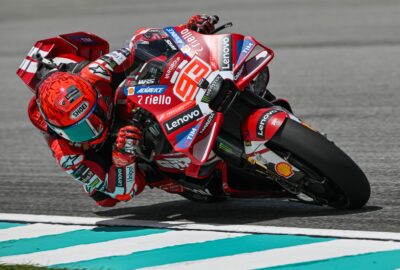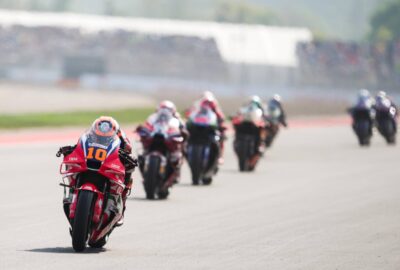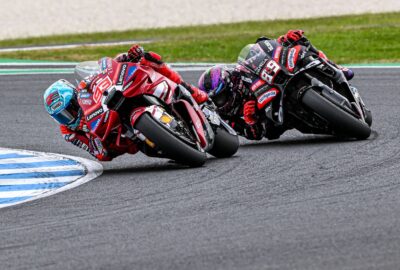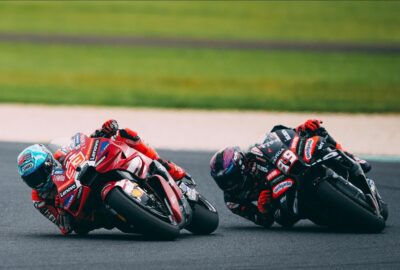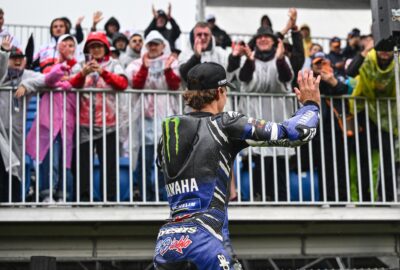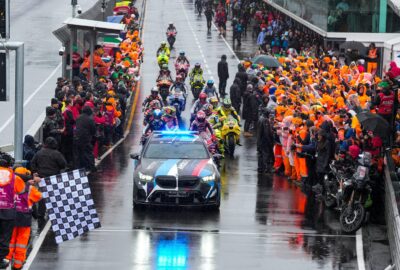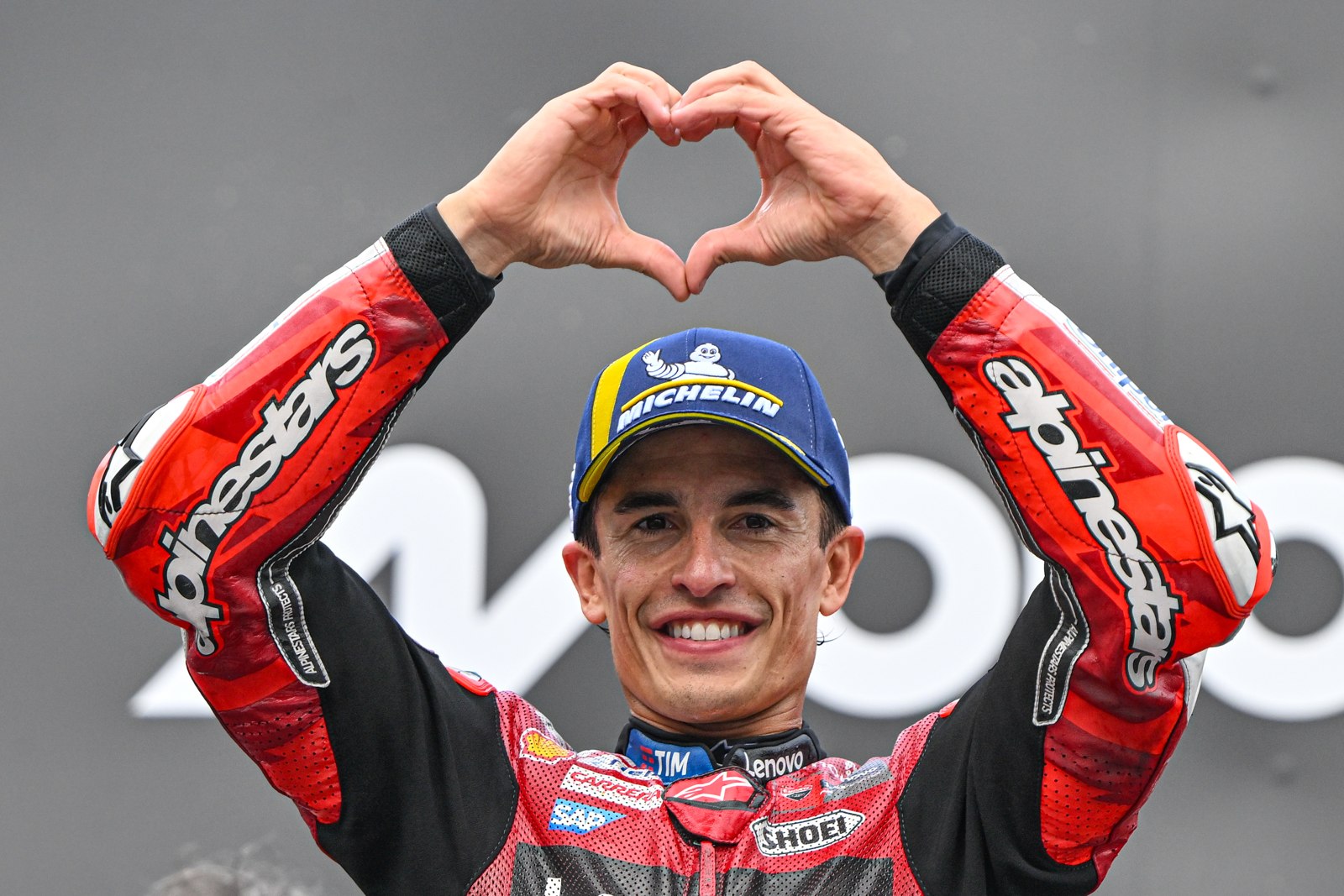
The Japanese Grand Prix on October 4 brought Ducati’s MotoGP Grand Prix win total during Luigi Dall’Igna’s tenure as Ducati Corse General Manager to 100. Marc Márquez delivered the 100th victory. The milestone includes every rider who has won on a Ducati during Dall’Igna’s tenure, across both factory and satellite teams.
From rebuilding to a century: the scope of the record
Dall’Igna made his official debut as the new head of Ducati’s racing division at the first winter test after the 2013 season. The team had just endured a difficult year. It was not until Austria in 2016, when Andrea Iannone and Andrea Dovizioso finished first and second, that Ducati ended a six-year wait for a Grand Prix win. The century reached in Japan records the results accumulated after that rebuilding process.
Of the 14 riders listed by Ducati, Francesco Bagnaia contributed 31 wins and Marc Márquez 20, giving the current factory pair a combined 51. Adding Andrea Dovizioso’s 14 brings the leading three to 65, with the other 11 contributing 35. The figure of 51 combines the two riders’ individual winning records from the start of Dall’Igna’s tenure, rather than from the formation of the current factory line-up.
The two riders in Japan: pace management and braking difficulties
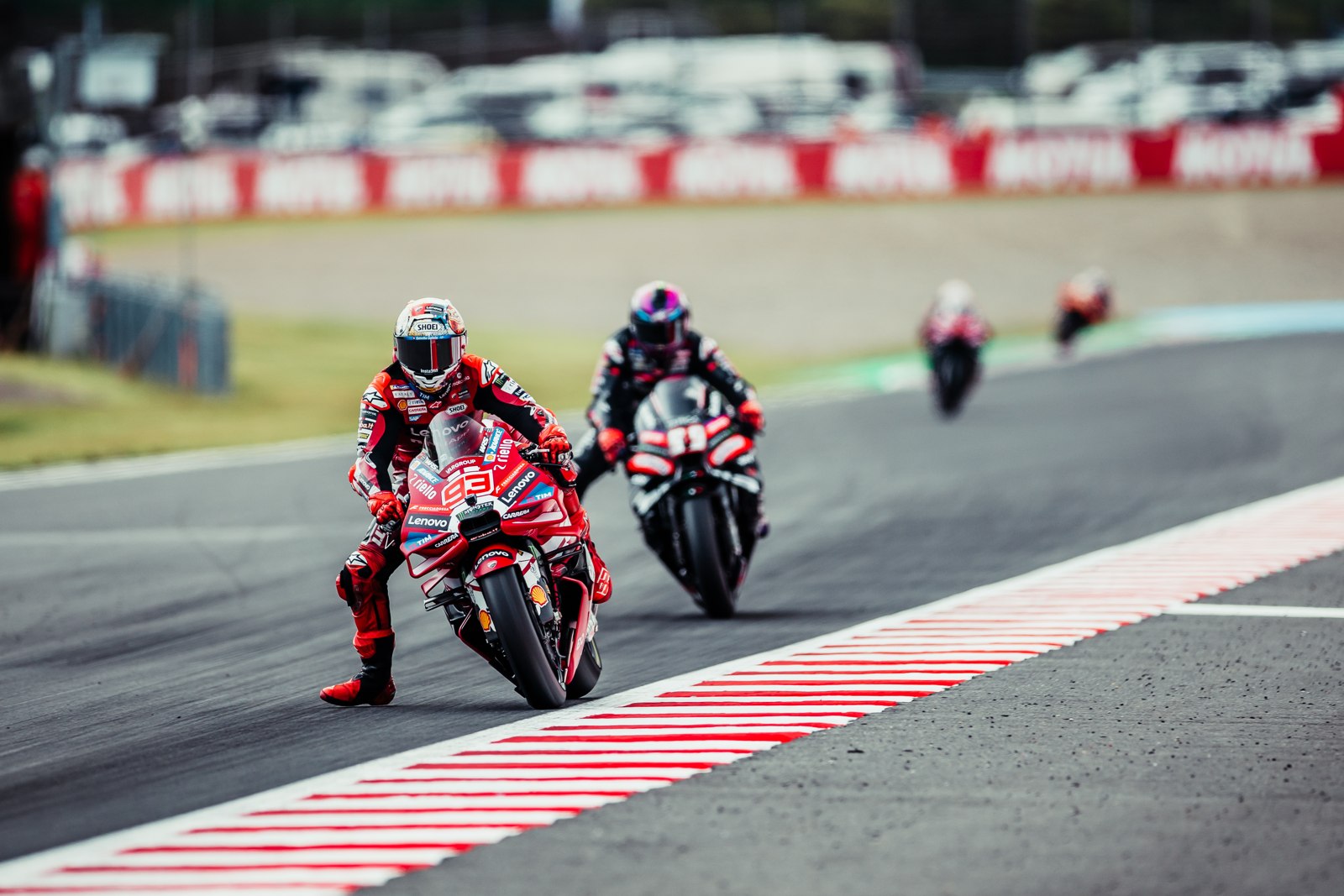
Marc Márquez held second after the start of the Japanese Grand Prix and passed Jorge Martín for the lead on lap 11. In the team’s report, he said following Martín early on had not been easy. Once ahead, he mainly managed his pace, accelerating when his rival drew closer. His good feeling with the bike from the Sprint onwards allowed him to ride consistently and precisely.
Marc Márquez scored a combined 37 points from the Sprint and Grand Prix, moving to 331 in the championship and second place, just 2 points off the lead. Bagnaia finished eighth and stood ninth on 164 points. Although both ride for Ducati’s factory team and rank near the top of its century-of-wins list, their pace and sensations in this race differed significantly.
Bagnaia identified braking and corner entry as the specific difficulties. The bike struggled to shed enough speed on entry, compromising his position on exit. He tried braking more aggressively, but that made the bike nervous and was not a riding style he could sustain throughout the race. Crashes ahead helped him recover positions, yet he still felt it would have been difficult to do better that weekend.
Dall’Igna revealed that the team had divided testing duties between the riders during warm-up to find the right direction for tyre selection. He praised Marc Márquez’s performance and acknowledged that Bagnaia had completed the race while still dealing with problems. Their joint warm-up work did not produce matching post-race feedback about the bike.
Comparing the weekend’s feedback: Friday grip and Sprint adjustments
In the earlier report on Friday’s feedback, Marc Márquez felt the resurfaced track offered very high grip, while Bagnaia was still searching for traction. Bagnaia ended afternoon practice sixteenth and had to contest the first qualifying session, Q1. Their feelings about the bike had diverged from the first day of the weekend.
In the post-Sprint report, Marc Márquez said small pre-race adjustments had brought the bike closer to his preferred riding style. Bagnaia said corner-entry vibration from lap six had led him to use more rear brake, after which the rear tyre overheated badly. He retired at the end of the penultimate lap of the twelve-lap Sprint, but completed Sunday’s twenty-four-lap Grand Prix.
The figures: fourteen winning riders under Dall’Igna
| Rider | Wins |
|---|---|
| Francesco Bagnaia | 31 |
| Marc Márquez | 20 |
| Andrea Dovizioso | 14 |
| Jorge Martín | 8 |
| Enea Bastianini | 7 |
| Álex Márquez | 4 |
| Jorge Lorenzo | 3 |
| Jack Miller | 3 |
| Marco Bezzecchi | 3 |
| Danilo Petrucci | 2 |
| Fabio Di Giannantonio | 2 |
| Andrea Iannone | 1 |
| Johann Zarco | 1 |
| Fermín Aldeguer | 1 |
INKA SPORTS analysis: Ducati wins, but why is Bagnaia still struggling for speed?
Different levels of control over race pace
Ducati’s century of victories with fourteen riders demonstrates success across different seasons and line-ups. Japan also showed two different race situations within its current factory team. Once ahead, Marc Márquez could manage his pace and then accelerate according to how much Martín was closing. Bagnaia spent the race trying to alter his braking to address insufficient deceleration on entry. Dall’Igna praised their warm-up tyre testing, as well as Marc’s win and Bagnaia’s finish despite his problems. Beyond the milestone, the factory team still has a specific task: enable Bagnaia to brake and negotiate corners more consistently on every lap.
Insufficient deceleration on entry creates problems on exit
Bagnaia’s feedback from the two races forms a clear sequence. On Saturday, he used more rear brake to avoid entry vibration and believed this overheated the rear tyre. On Sunday, he struggled to slow sufficiently and consequently reached the exit in a poor position. Braking more aggressively made the bike nervous and could not be sustained for the full race. The very actions intended to improve entry created tyre or handling difficulties, making it hard to string together faster laps.
The team’s task is therefore to let him slow smoothly on every lap and exit in the right position. Completing 24 laps on Sunday represented progress in finishing and scoring compared with Saturday’s Sprint retirement. However, Bagnaia himself felt he could go no faster, and his eighth place also benefited from crashes ahead. Further analysis should focus on his braking feedback and performance over consecutive laps: can he reduce these forced compensations, rather than recover positions through others’ mistakes?
Conclusion
The century of wins marks Ducati’s long-term achievement, while the two riders’ feedback in Japan identifies the factory team’s current problem. Marc Márquez already has the feel needed to control his pace from the lead. Bagnaia needs to regain a sustainable braking approach that connects deceleration on entry with positioning on exit. Rider feedback and consistency over consecutive race laps will reveal more about that improvement than a finishing position alone.
Post-race standings and the next round
After Japan, Ducati’s factory team was second in the teams’ standings on 495 points, while Ducati led the manufacturers’ standings on 469. The next round is at Mandalika in Indonesia, where track action begins on October 9.