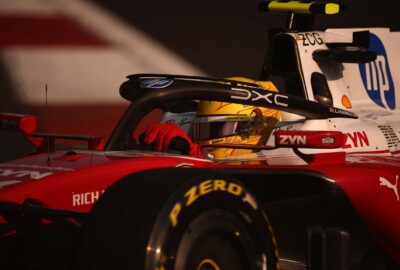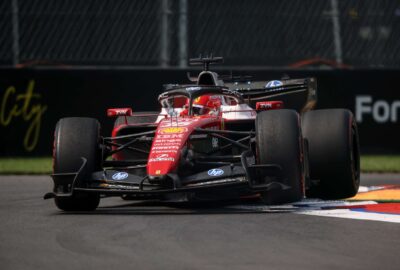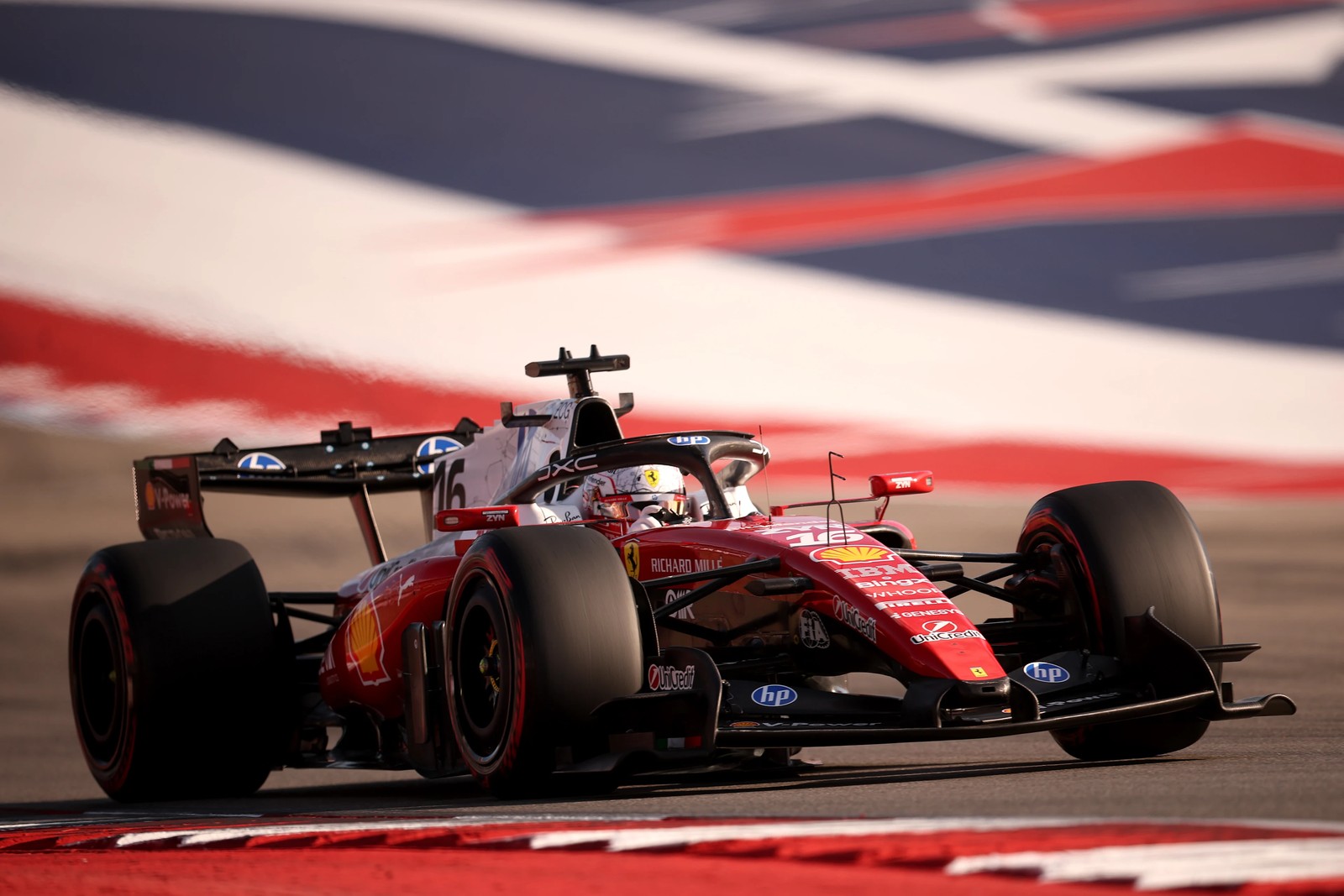
Ferrari did not turn its practice advantage into pole position at the United States Grand Prix. Leclerc qualified fourth on October 24, with Hamilton fifth, separated by just 0.044 seconds. In F1's official interviews afterward, Hamilton emphasized the straight-line speed deficit, while Leclerc focused more on his Q3 out-lap and tire condition. Behind similarly close lap times, the drivers identified limitations that were not entirely the same.
Hamilton: The car feels good, but time is still being lost on the straights
Hamilton felt his flying lap was clean and the car's overall feel was good. Citing the approaches to Turns 1 and 11, he said rivals continued accelerating when Ferrari's power delivery began to fall away. He also felt other teams had caught up in chassis and downforce performance, making it harder for Ferrari to recover its straight-line losses in corners.
Discussing rival power, Hamilton acknowledged he had not yet seen the weekend's actual figures. He nevertheless believed comparable straight-line performance would give Ferrari a chance of the front row. The actual times were 1:34.267 for Leclerc and 1:34.311 for Hamilton.
Leclerc: Potential is there, but the out-lap does not prepare the tires
Leclerc's emphasis was that he believed the car had greater potential that day, but that potential included getting the tires into the right state. He said temperatures were one or two degrees lower in Q3 than earlier, which affected him substantially. He was already sliding more on the out-lap and then struggled to complete the flying lap cleanly.
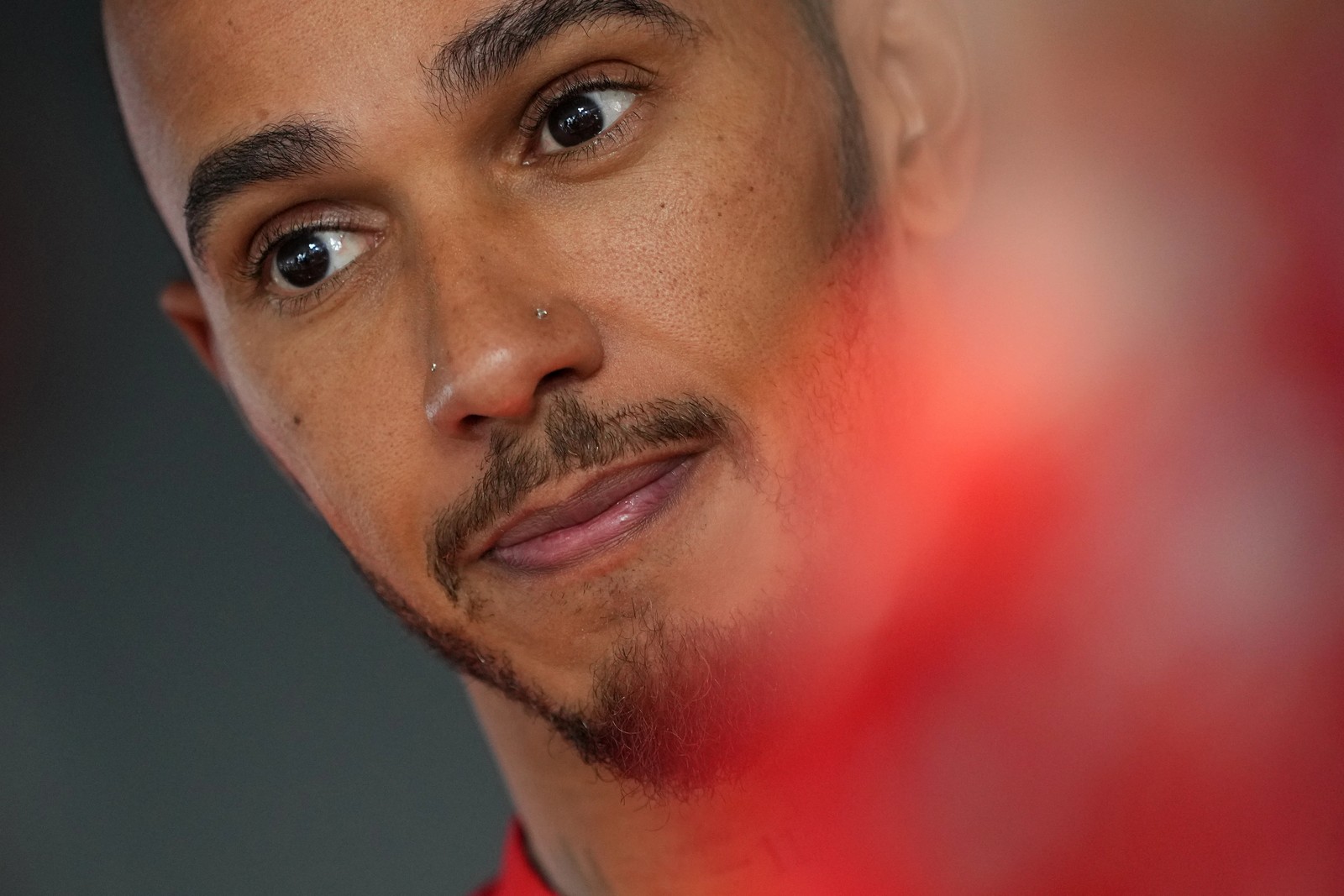
The out-lap connects the pit lane to the timed lap and is the phase in which a driver prepares the tires for the attempt. Leclerc linked his disappointment more closely to that process and said Ferrari needed a better understanding of its tires. In his observation, rivals often found it easier to perform in Q3, while Ferrari paid a substantial price for moving even slightly outside the window.
INKA SPORTS analysis: Similar results can reflect different losses
Straight-line performance and lap preparation are compatible explanations. Hamilton described relative speed he still could not match after feeling he had completed a lap properly. Leclerc described a car that had not reached the condition he needed in the final phase. Taken together, the more useful question is how Ferrari can reduce both its underlying competitive deficit and losses in executing a particular lap, rather than assigning every gap to one cause.
The drivers being just 0.044 seconds apart establishes that their final times were close, not that they lost time in the same places at every corner and on every straight. Leading practice and qualifying fourth and fifth are likewise comparisons of results in different sessions. Without complete corresponding run data, they cannot assign precise losses separately to power, tires or upgrades.
Conclusion
Ferrari's qualifying produced two clear lines of work: Hamilton wants to close the straight-line gap, while Leclerc wants better tire preparation and performance extraction for the decisive lap. The first may not be solvable in one weekend; the second is an immediate task raised directly by driver and team. Hamilton still hopes to move forward through the start and strategy, but that is a race objective and cannot replace the qualifying result already recorded. The full United States Grand Prix qualifying report contains the results for both Ferraris and every other participant.