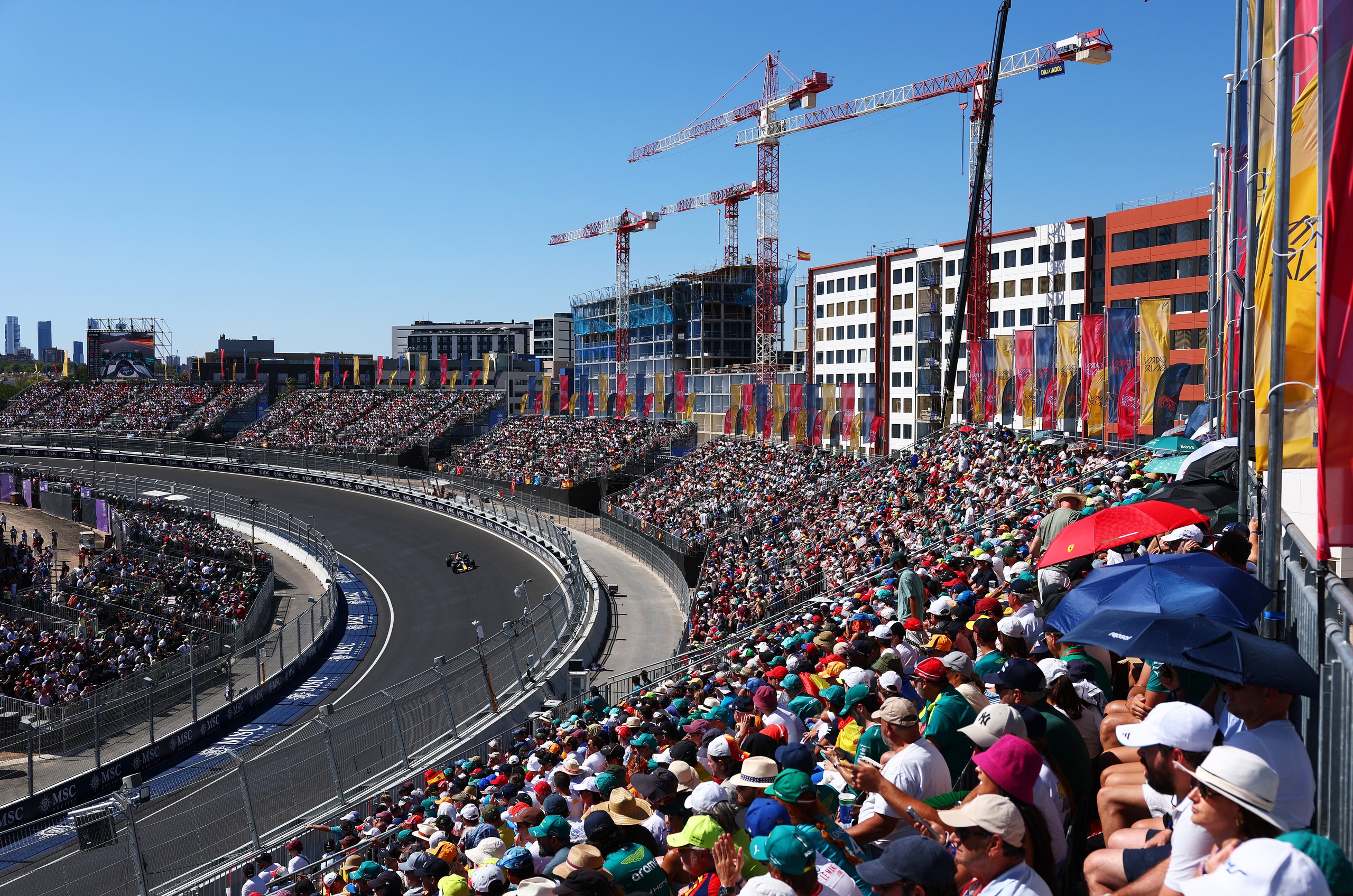
After the inaugural F1 race in Madrid on 13 September, event managing director Luis García Abad said the organisers had received circuit recommendations from the FIA. They were willing to use the work needed to reinstall the Madring for 2027 to improve overtaking.
Madrid has a long-term framework within which to make changes. The agreement announced by F1 in 2024 runs from 2026 to 2035, with the circuit built around the IFEMA Madrid exhibition centre and combining street and non-street sections. That ten-year commitment means feedback from the inaugural race will shape the event experience for years to come.
Organisers plan to use feedback from the debut for 2027
Abad explained that the circuit had to be set up again the following year. He said the site and facilities left room for changes and that the organisers would explore them with Formula 1 and the FIA.
Norris wants more room to enter corners side by side
Lando Norris suggested a straight from Turn 17 to Turn 20, ending in a hairpin with a wider entry. A hairpin requires heavy braking, and a wider opening could give the attacking driver another line as the cars slow down.
Drivers’ feedback at the briefing on Friday, September 11, also highlighted corner-entry space. Sections around Turn 5, among others, require simultaneous turning and braking, making it easier for the leading car to defend. Norris also identified Turns 5, 6 and 7 as more difficult areas. His proposal remains driver feedback.
INKA SPORTS analysis and summary: Overtaking needs room from entry to exit
The feedback points to whether an attacking car has another usable line. On a solo qualifying lap, a driver can choose a braking point and entry line, with successive corners testing precision. When two cars are fighting, the following driver also needs enough space after the car ahead has occupied the ideal line. A demanding driving challenge and limited overtaking opportunities can therefore coexist.
Norris’s proposal for a wide-entry hairpin addresses precisely that distinction. Based on how battles for position usually unfold, a wider entry could allow two cars to choose different braking lines: the following car might close up on the inside or retain an outside line into the corner. Whether that space produces an effective attack also depends on the gap at the end of the straight, the width through the corner and whether the exit can accommodate cars running side by side.
Changing adjacent corners also requires attention to how they connect. If the following car is already too far behind at the previous exit, widening the next entry may still leave it unable to draw alongside. Conversely, an entry that permits a battle may be undermined by an exit that narrows too soon. Assessing the Turn 17-to-Turn 20 proposal requires examining the entire sequence of entry and exit lines, rather than simply comparing straight lengths.
Abad confirmed the organisers’ willingness to make changes. The Turn 17-to-Turn 20 layout was Norris’s suggestion. Its value would depend on whether a following car can close in under braking, draw alongside at turn-in and keep a usable line to the exit.