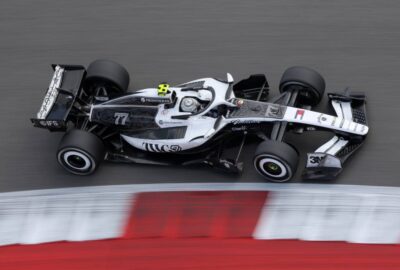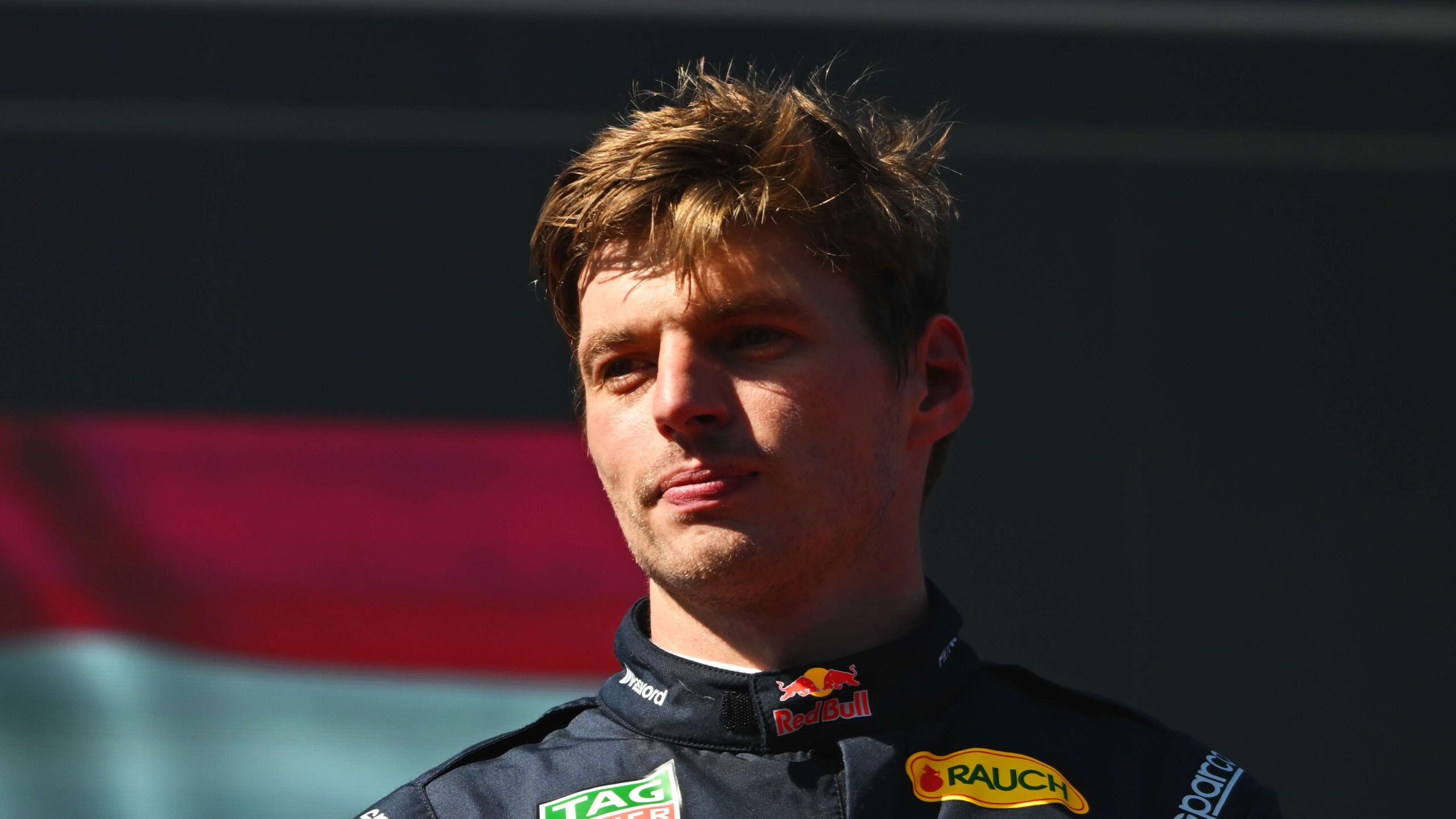
The 2026 F1 Spanish Grand Prix concluded at Madrid’s Madring circuit on September 13, with Antonelli claiming his eighth win of the season ahead of Verstappen and Norris. Who converted pace into a result, and who lost an opportunity elsewhere? Drawing on F1’s official race report, driver feedback and Pirelli’s information, the gains and losses need to be examined separately through pit-stop timing, tyre-change execution, failures and collisions. For the full result, see our race report.
The lead changes hands in the pit-stop window
Starting from pole, Norris gradually pulled away from Antonelli during the opening stint. F1’s race report recorded a lead of 4.5 seconds, which was still growing. Antonelli had tyre and track-limits issues to manage; his victory did not follow a race spent consistently outpacing his rival. Mercedes also acknowledged, in the post-race reactions compiled on F1’s website, that the timing of the virtual safety car had helped them.
The turning point was triggered by Stroll stopping. A virtual safety car (VSC) requires cars on track to slow down, reducing the relative time lost by pitting then. Antonelli, Verstappen and others took the opportunity to change tyres. Norris had already passed the pit entry, and racing had resumed by the time he next reached it. His tyre change then left the car stationary for about 7 seconds, and he emerged fifth. Missing the cheaper pit-stop window and suffering a slow tyre change were two successive events.
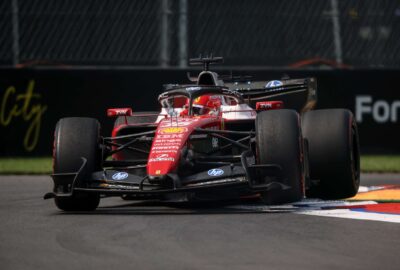
Norris subsequently recovered to third, again partly through differing pit strategies. Russell made a second tyre stop, while Leclerc, who started on hard tyres, extended his opening stint until the end of lap 48. The later safety car or red flag Ferrari had hoped for never arrived, and Leclerc finished fourth. Norris continued to pressure Verstappen but could not complete a pass before the finish.
Pirelli’s post-race report showed that all three podium finishers stopped only once: Antonelli and Norris switched from mediums to hards, while Verstappen went from softs to hards. In his post-race comments published on F1’s website, Verstappen felt he lacked Antonelli’s and Norris’s pace, but said the circuit’s difficulty for overtaking had helped him hold second. That was his assessment of the race; second place itself does not establish that Red Bull had become faster than both teams.
Mechanical trouble, points and a home-race collision
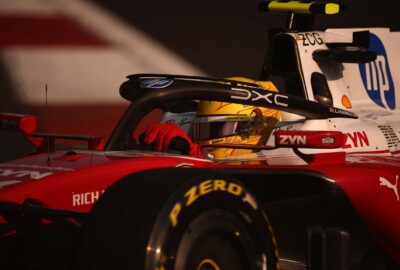
Hamilton suffered a different kind of loss. He started fourth and initially fought Verstappen for position, but retired early with a braking-system problem. Ferrari team principal Vasseur said afterwards that the precise cause remained under investigation. The retirement should therefore be treated as a reliability issue, rather than a direct verdict on Hamilton’s race pace.

Some midfield drivers preserved their opportunity all the way to the finish. Colapinto qualified ninth and finished seventh, scoring 6 points for Alpine. He said afterwards that pitting under the VSC had saved time, before a long second stint required both tyre management and defence. A top-ten grid position gave him a platform to score; defending after the stop converted that opportunity into points.
The two home drivers both missed the points, but their problems were different. Sainz and Alonso were both eliminated in the first part of qualifying (Q1). During the race, Sainz collided with Alonso, received a 5-second penalty and later retired. Alonso finished 17th and said afterwards that the contact had forced him to pit for a new front wing. Sainz received the penalty; Alonso’s costs included damage and an additional stop.
INKA SPORTS analysis: why did superior pace not decide the finishing order?
The time advantage Norris built in the opening stint was confronted by the difference between his rivals stopping during a slowdown and his own stop under normal racing conditions. The slow tyre change then compounded the loss. Calling the outcome simply bad luck overlooks execution; attributing everything to those 7 seconds overlooks the window already missed. Both factors belong in the review, and the finishing gap cannot be used to calculate either factor’s isolated effect.
Once positions had changed, recovering time and completing an overtake became two different challenges. Pirelli noted that the hard tyre’s durability enabled long stints, with none of the top three needing another stop. Verstappen could defend the position he had gained through the tyre change to the finish, so Norris’s earlier pace advantage did not automatically translate into places. Antonelli benefited from the timing but still had to complete the remaining distance. That does not mean he was the fastest in every phase.
The same explanation cannot be applied to every disappointed driver. Leclerc extended his first stint to retain a chance of benefiting from an interruption that had yet to occur. Hamilton’s failure prevented him from continuing, while Alonso had collision damage to address. Their outcomes had different causes. Finishing positions alone cannot rank them on a simple scale of pace or quantify the benefit of a particular car upgrade.
Conclusion
The central distinction in Madrid was whether existing pace could still be exploited after the crucial stops. Antonelli and Verstappen gained favourable positions and held them, while Norris struggled to recover after unfavourable timing and a slow tyre change. The hard tyre’s ability to last the remaining distance and the difficulty of overtaking combined to prolong the effect of that positional shift. This conclusion applies to the conditions of this race; it does not establish who would inevitably have won without disruption.