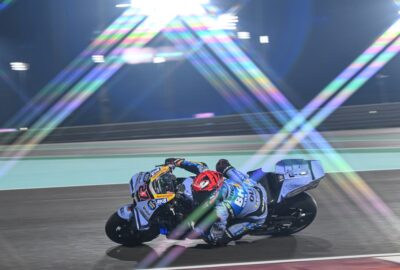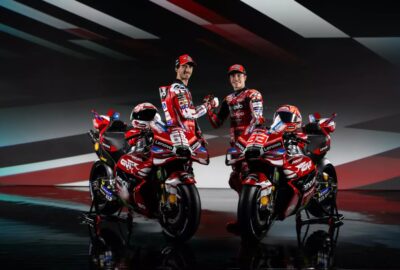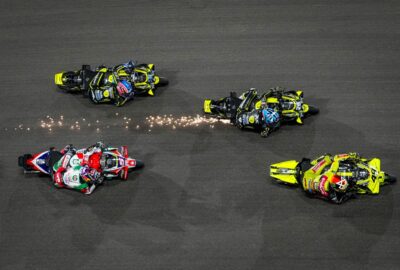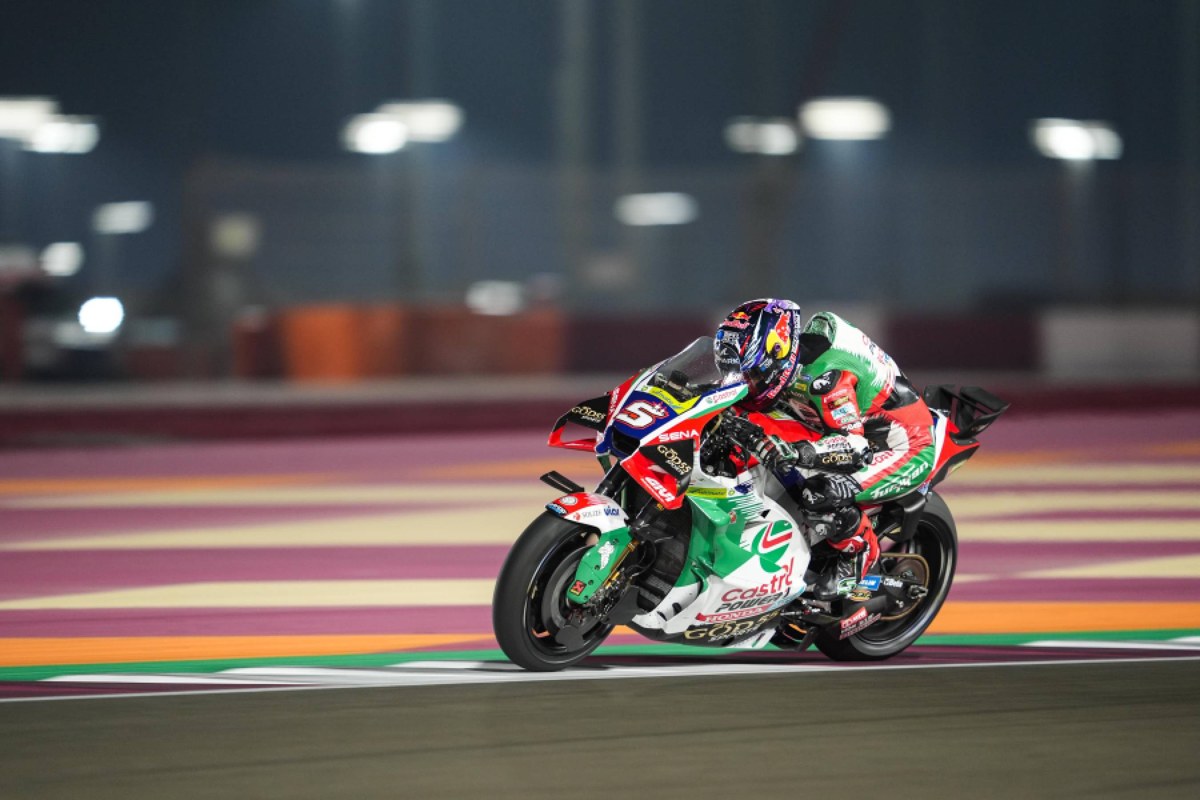
Honda technical director Romano Albesiano believes aerodynamics could become even more important to motorcycle design under MotoGP’s 2027 regulations. With engineers already studying airflow around the whole bike, he expects bodywork, swingarm and exhaust development to remain closely connected.
Smaller wings within a whole-bike project
MotoGP will move to 850cc engines in 2027 alongside revised aerodynamic rules. The announced changes make the top of the front fairing 50mm narrower and move its foremost point back by 50mm. Aerodynamic parts behind the rider will enter homologation, with one update permitted per season.
The measures aim to reduce aerodynamic effects that hinder close racing. Albesiano expects the wings may produce less downforce, the aerodynamic load pressing the motorcycle towards the track. He nevertheless considers wings only one part of how engineers manage the air.
His description extends to pressure and airflow around the lower bodywork and rear of the motorcycle. Almost every visible component must satisfy both its mechanical function and the overall aerodynamic project, so that coordination will continue within the new limits.
Exhaust design and the tyre-pressure question
Albesiano cited the swingarm, which connects the rear wheel to the chassis, as a component that now has an aerodynamic role. The exhaust must likewise deliver engine performance while fitting the bike’s airflow requirements. Individual components therefore influence each other’s design.
He also identified front-tyre pressure management as a separate factor affecting current racing. In his view, it has a significant influence during Grands Prix, with qualifying presenting a different situation.
With Pirelli replacing Michelin in 2027, Albesiano hopes that management becomes less sensitive. He stressed that he does not yet know whether it will.