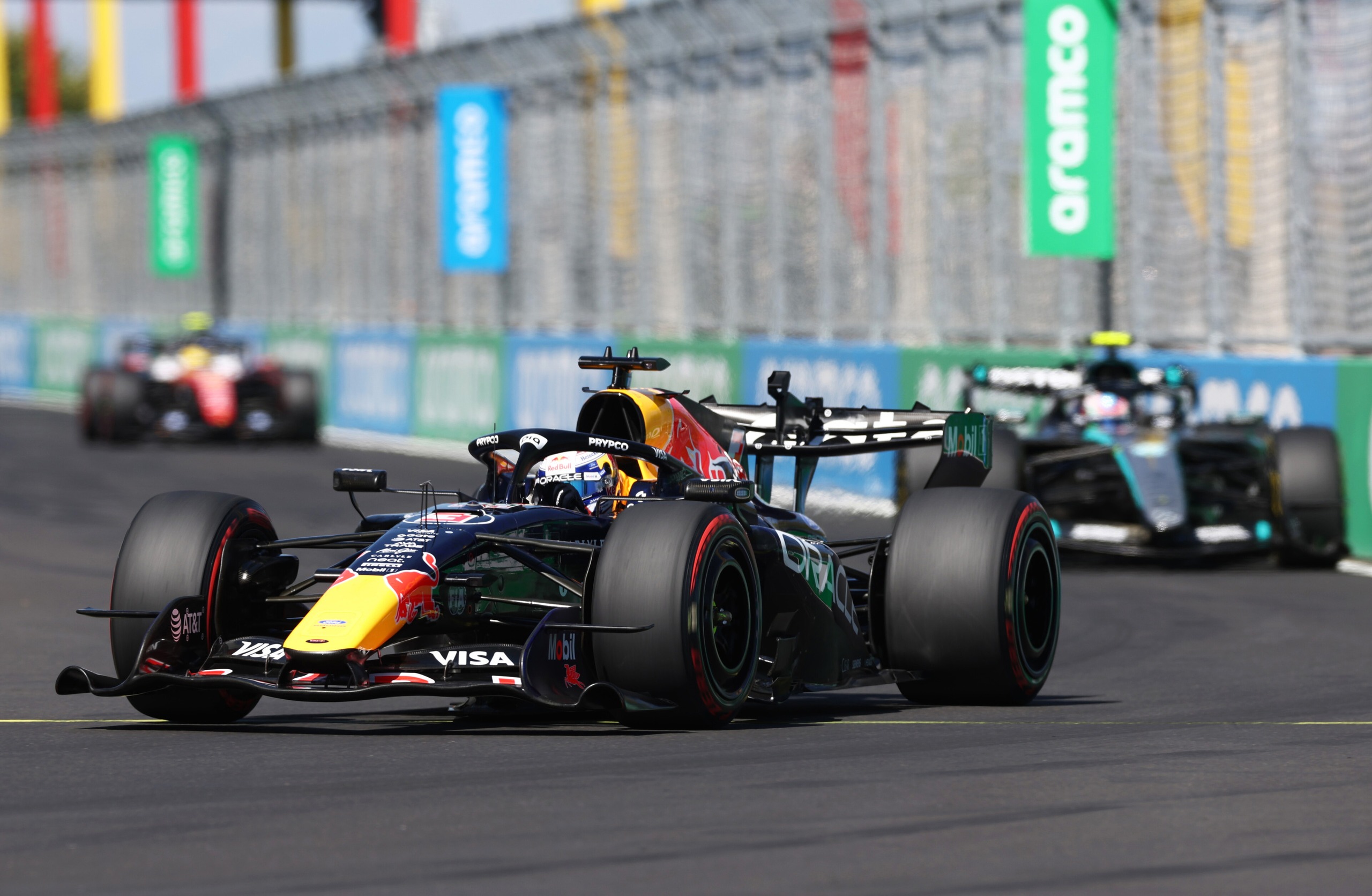
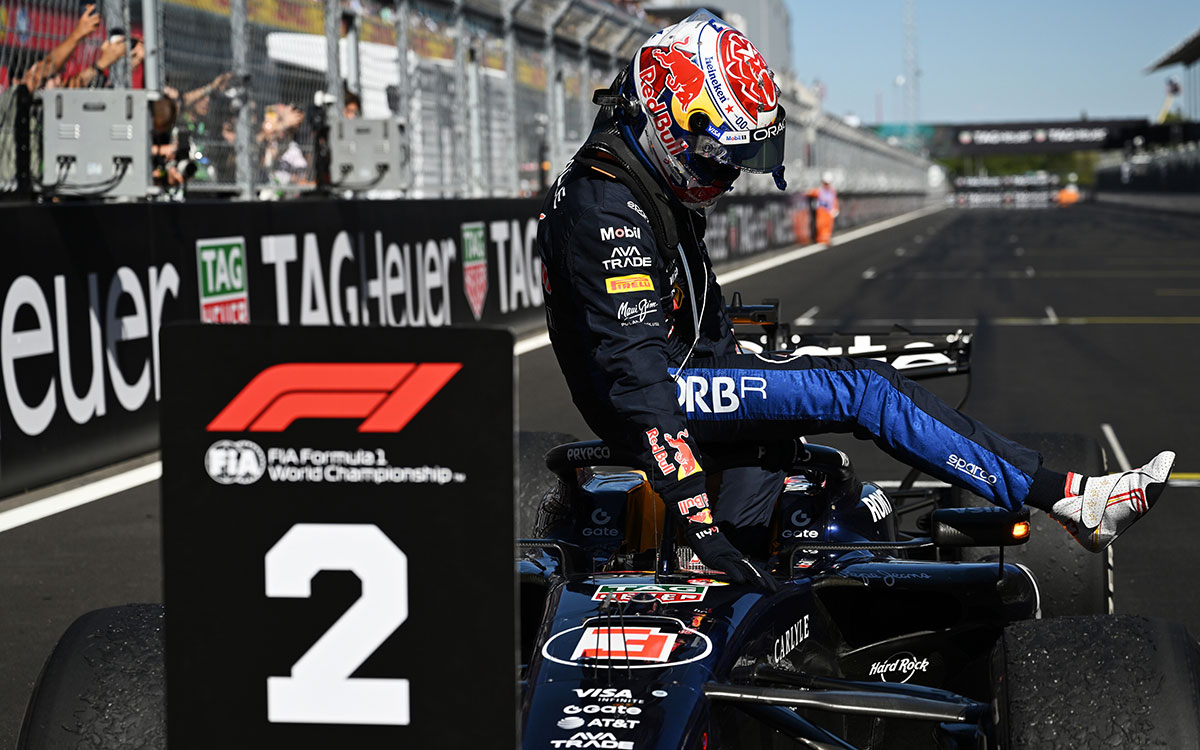
Max Verstappen finished second in the Spanish Grand Prix in Madrid on 13 September. He started third and ran off track while fighting Lewis Hamilton on the opening lap. Red Bull told him to hand back the place, and on lap four he let both Kimi Antonelli and Hamilton by. Verstappen said he was avoiding contact. Red Bull team principal Laurent Mekies was weighing the risk of a time penalty if he kept the place.
Antonelli was between Verstappen and Hamilton on lap four
Hamilton challenged Verstappen at Turn 1. Verstappen left the track and kept third, then passed Antonelli on track to move into second. Hamilton wanted the place back, while Verstappen said over the radio that the two cars had nearly made contact. Red Bull race engineer Gianpiero Lambiase eventually instructed him to give way to Hamilton.
The cars were running Verstappen, Antonelli and Hamilton in that order. Putting Hamilton back ahead meant letting the Mercedes through as well. Antonelli said he was confused at first because Verstappen had passed him normally. He understood once he heard Red Bull needed to give the place back to Hamilton. Brake trouble then sent Hamilton wide on lap six. He retired a lap later, and Verstappen was back in third.
Verstappen described avoiding contact while Red Bull weighed a penalty
Verstappen said Hamilton was attacking the car ahead when he went over the kerb, bottomed out and bounced back towards the racing line. Verstappen felt the two cars might have collided had he stayed on his line, and that his race might already have ended by Turn 2.
Mekies believed that keeping the position could lead to a five- or ten-second penalty. A Safety Car later in the race could bunch up the field, making the same penalty cost more than the two places Verstappen was giving up. Hamilton’s brake trouble had yet to change the order. Red Bull chose to give the place back immediately and leave Verstappen to regain ground on track.
INKA SPORTS analysis and summary: Giving up positions had a known cost
Article B1.8.6 of the sporting regulations required drivers to return to the track safely and avoid gaining a lasting advantage. The Race Director could give a driver the opportunity to return the full advantage gained. Verstappen’s account explained why he went off, and Red Bull dealt with the position he had kept. Giving way had an immediate, visible cost. The positions lost to a time penalty would have depended on the gaps to other cars later.
Verstappen’s recovery to second also owed something to his pit stop and late defence. Lance Stroll stopped on lap 13, bringing out the Virtual Safety Car, which requires the field to slow. Verstappen pitted under it on lap 14. Norris stopped on lap 15 after green-flag running resumed and dropped to fifth before recovering to third. On the penultimate lap, Verstappen cut the Turn 5 chicane in traffic. Norris got alongside but could not complete the pass and finished 0.738 seconds behind. Red Bull accepted the cost of giving up two places early. Taking the stop under the Virtual Safety Car and keeping Norris behind were also needed to secure second.