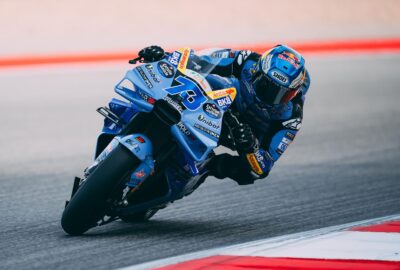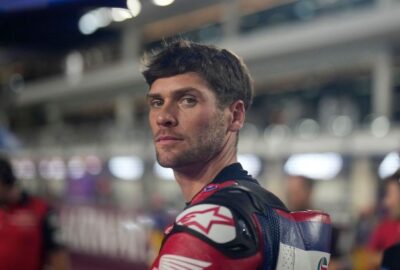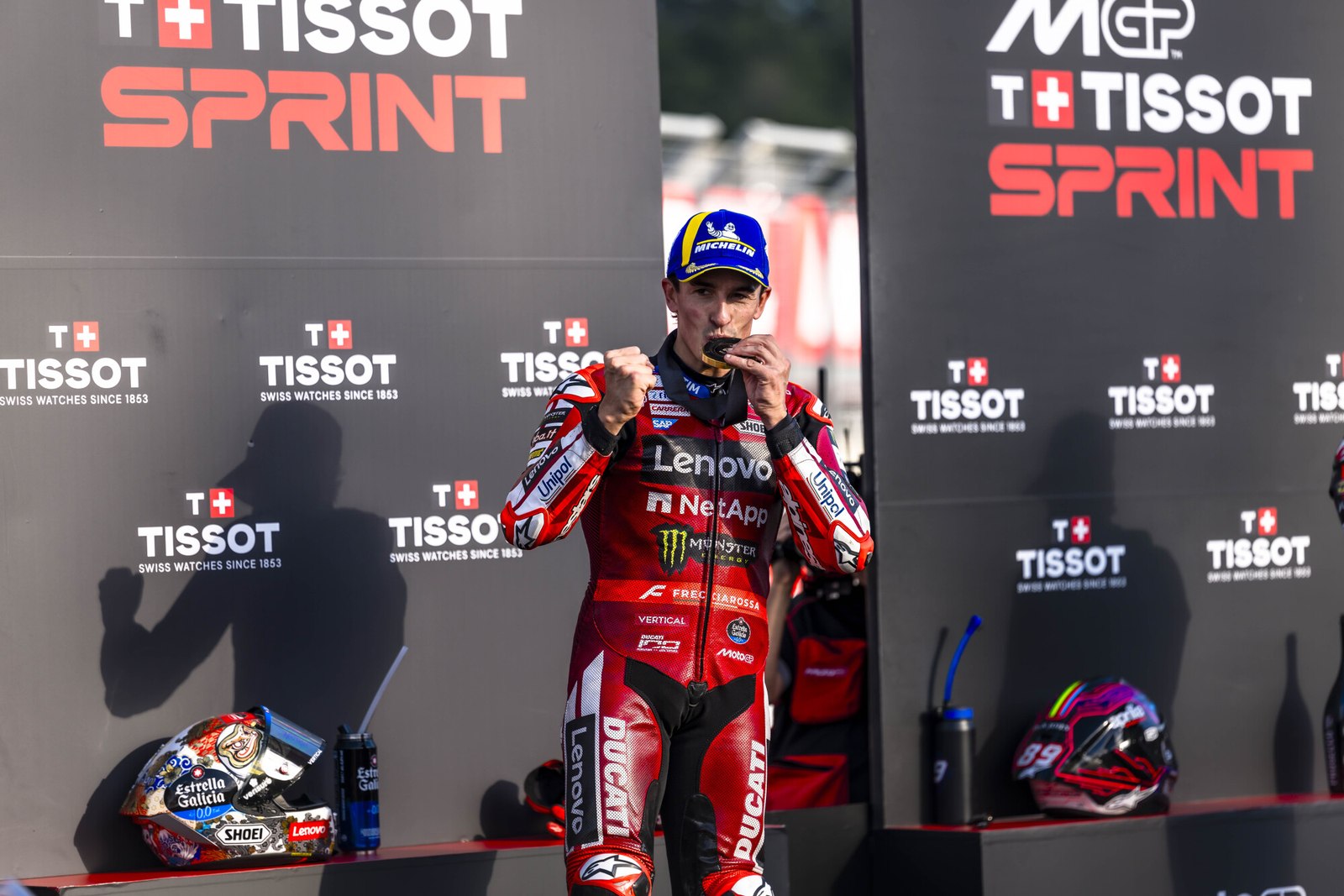
Both factory Ducatis started the Japanese Grand Prix Sprint at Motegi on 3 October with a new medium front and a new soft rear. Marc Márquez took the lead from second on the grid, set the fastest lap on lap nine and won. Francesco Bagnaia started 13th and returned to the pits after completing 11 laps, one short of the finish.
Marc Márquez took the lead he wanted through the opening corners
Jorge Martín tried to challenge around the outside at the start, but Marc Márquez led after the first two corners. Marc Márquez said a front-row start, particularly from one of the first two positions, had been important. A small change before the race made him more comfortable on the bike and allowed him to ride in a way that felt more natural. Once he had taken the lead, Martín was his closest pursuer.
At half-distance the gap was about a second. Marc Márquez was able to press on and set a 1:43.471 on lap nine. The timing matters in a 12-lap Sprint. His start had secured track position, but it was his speed in the second half that made it difficult for the chasing riders to mount another attack.
Bagnaia felt vibration on corner entry from lap six
Bagnaia was fighting around the edge of the top ten when his race began to unravel. He recalled vibration on corner entry from lap six. To work around it he used the rear brake more, after which he felt the rear tyre overheat considerably. Motegi’s new asphalt had made the rear tyre hard to predict before the start. The team chose what it considered the best compromise, but Bagnaia still needed more grip.
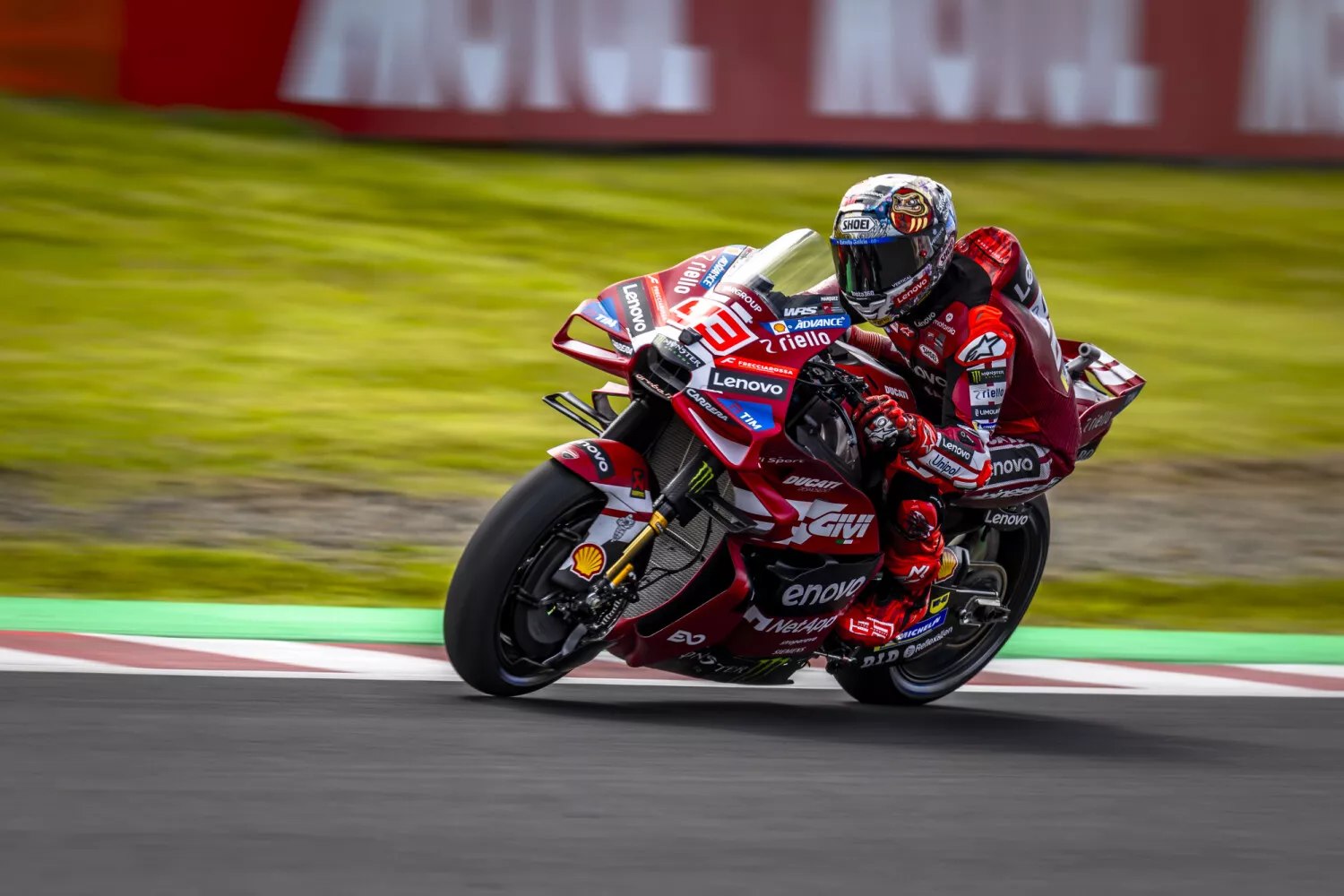
The lap chart shows that his pace did not fall away in a straight line. He recorded a 1:45.766 on lap six, ran identical 1:44.540s on laps eight and nine, and improved again to 1:44.469 on lap ten. He was genuinely quicker for a few laps, but he could not sustain that recovery to the finish and pulled into the pits at the end of the penultimate lap.
| Lap | Rider | Lap time |
|---|---|---|
| 6 | Francesco Bagnaia | 1:45.766 |
| 9 | Marc Márquez | 1:43.471 |
| 10 | Francesco Bagnaia | 1:44.469 |
INKA SPORTS analysis and summary: the same rear compound posed two different questions
Bagnaia needed to understand why he lacked the grip on entry that would have allowed him to use less rear brake. His tenth lap was 1.297 seconds faster than his sixth, but that difference alone tells us little about the state of the rear tyre. In Bagnaia’s account, the action he took to manage the vibration brought another problem: overheating. A brief improvement on the stopwatch could coexist with a problem serious enough to end his race.
Sunday’s Grand Prix was scheduled for 24 laps, twice the Sprint distance. Marc Márquez wanted to retain the feel he had found, but said Ducati would first inspect his used soft rear before making the race tyre choice. His question was how far an effective arrangement could take him. Bagnaia first had to find a set-up that let him enter the corners as he wanted. Sharing a tyre compound left the two riders with quite different work to do.