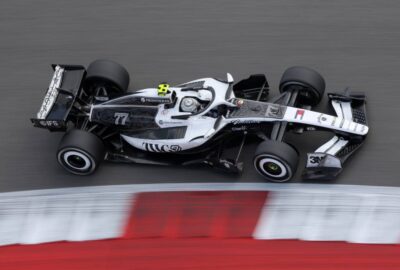
Mercedes had already announced that it would compare the car before and after its upgrade in Singapore, and the specific roles of the two drivers are now clear. On media day, October 8, Russell said he would return to the version used in Baku. Antonelli will continue with the upgrade introduced at Sepang and add a new front wing in Singapore, making the new package more complete.
The proposal to revert came before the retirement; the other car gains a new front wing
F1’s official website reported that the two W17s would use different aerodynamic packages over the Singapore weekend. The Sepang result had not given Mercedes a clear conclusion about the upgrade’s benefits. Antonelli finished second and Russell also had a chance of a podium before retiring, but the team felt the new parts had not delivered the expected improvement in lap time.
Russell clarified an important sequence of events: he had proposed using Singapore for the comparison before Sunday’s Grand Prix at Sepang. The subsequent failure left him facing a power-unit-related grid penalty this weekend, which then made an otherwise still-debatable choice easier.
Russell also stressed that there was currently no indication that the upgrade was ineffective. Citing his experience of fluctuating performance with the older car at different circuits, he explained that competitiveness could vary considerably from one round to another. He was therefore willing to take the risk of reverting to the old configuration to help the team understand the new parts. The Baku version has a clear record of previous use and can serve as a reference for this week’s comparison.
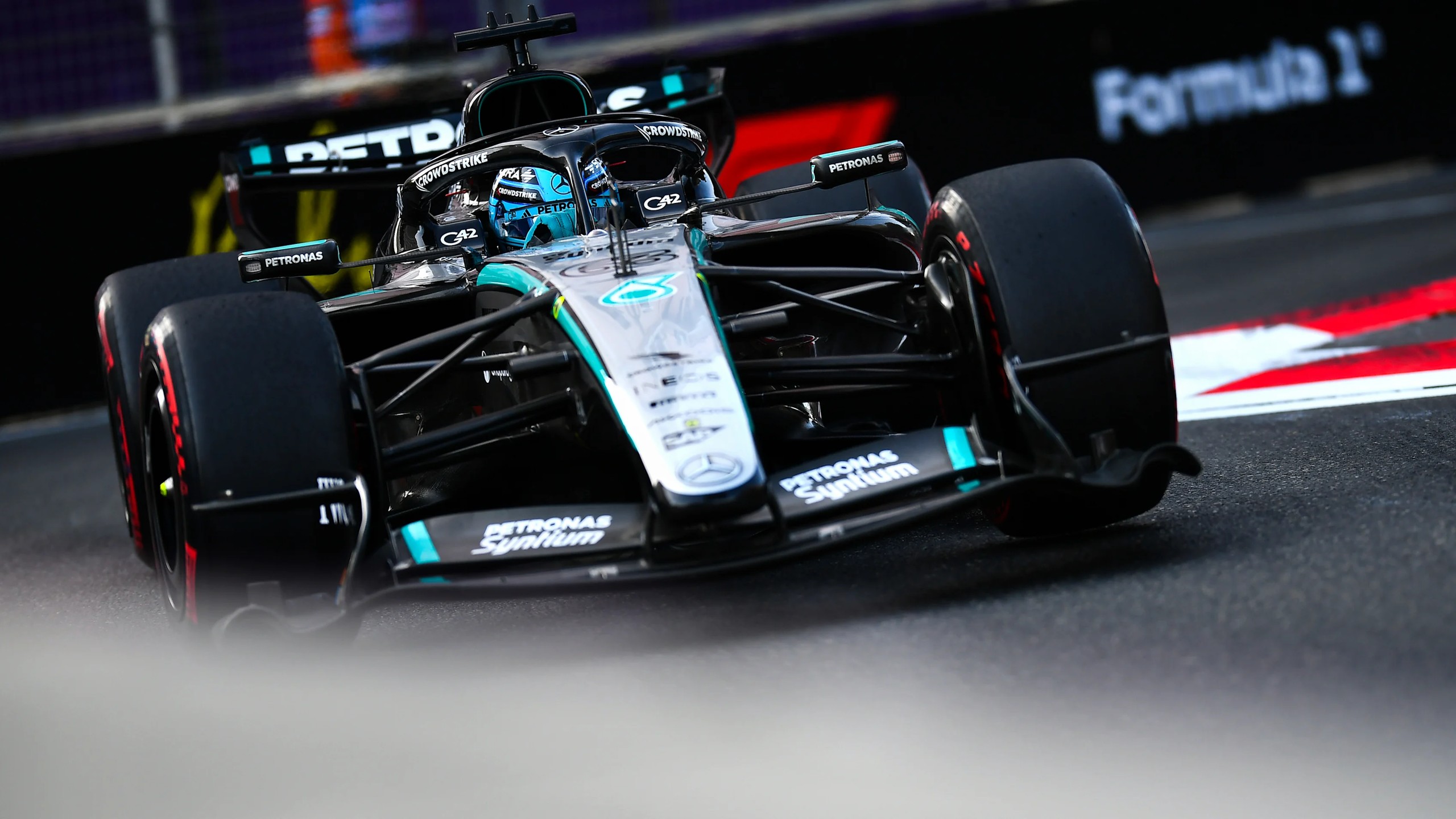
Antonelli, meanwhile, felt that Sepang’s rough surface and high temperatures might have made the previous round an unusual case. He believed Singapore’s better surface condition and lower temperatures would be more suitable for testing the package again. Both circuits also have many low-speed corners, which could help the team investigate the problems revealed at Sepang. Through this week’s comparison, he hoped to find a set-up better suited to the new configuration.
The roles of the two configurations
| Driver | Configuration for Singapore | Role in the comparison |
|---|---|---|
| Russell | Returns to the pre-upgrade version used in Baku | A reference configuration with established experience |
| Antonelli | Retains the Sepang upgrade and adds a new front wing | Continues the work to understand the more complete new package |
INKA SPORTS analysis: can this comparison establish the upgrade’s effect?
The most useful aspect of this comparison is that both configurations will be tested at the same circuit on the same weekend. Simply comparing the final positions at Baku and Sepang would also include differences in the circuits, weather and how the races unfolded. Running different packages on the two cars in parallel can help the team reduce those differences and identify recurring performance characteristics.
However, Antonelli is also adding a new front wing, meaning that the comparison is between two complete configurations. Even if the new specification is faster, the final lap-time difference between the drivers cannot by itself justify attributing all the gain to a particular part introduced at Sepang. Differences between the drivers, tyre condition, fuel load and the timing of the runs must also be accounted for in the team’s data analysis.
Conclusion
The value of Mercedes’ decision to revert one car lies in finding a useful reference for the new configuration. If the new package consistently performs better under comparable running conditions, the team will have reason to keep exploring its set-up potential. If the advantage still does not appear, it will need to reassess how the new parts work in combination.