Mercedes did consider the flipping rear wing known as “Macarena.” Deputy Technical Director Simone Resta said the team studied the concept in detail on drawings more than a year ago, but judged its overall benefit insufficient for further development and manufacture then.
Why drag reduction is not the only criterion
Motorsport.com reported the comments late on October 17 China Standard Time (UTC+8), quoting Mercedes' Nu Silver Arrows Radio Show. Resta said the wing reduces drag but also loses downforce in Straight Mode. The assessment therefore concerns whether benefits and costs together form the best overall compromise, rather than one benefit existing.
The design's conspicuous feature is its main rear-wing flap flipping when Straight Mode is engaged. Part of 2026 active aerodynamics, that mode changes wing states to reduce straight-line resistance. A larger visible movement does not mean better overall performance for every car.
No manufacturing investment then, with reassessment possible
Resta confirmed extensive research. Mercedes did not consider it the best complete compromise and proceeded with neither corresponding development nor manufacture.
He did not call that permanent. The conclusion may not remain valid, and the team could revisit its view while continuing to examine rivals' solutions for useful ideas.
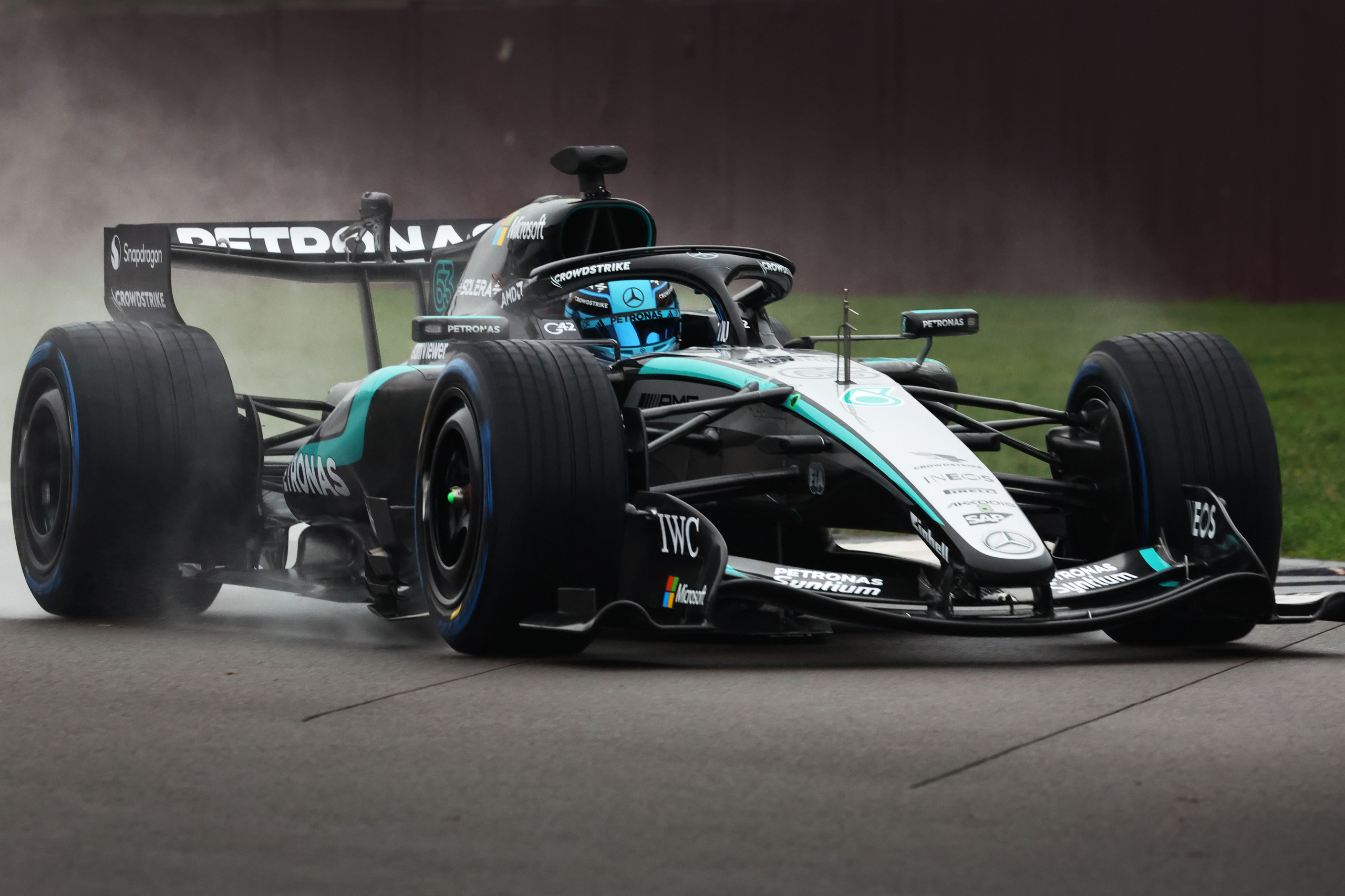
This discussion differs from Singapore's comparison of old and new front wings, involving another part and question. The front-wing comparison concerned configurations already at the circuit; this concerns whether a rear-wing concept merited further development then. One weekend's configuration cannot directly establish the rear concept's merits.
INKA SPORTS analysis: Why reducing drag may not justify adoption
Mercedes acknowledged drag reduction without making it the sole release criterion. Straight Mode downforce change is a cost within the same proposal. Both must meet whole-car needs before a concept merits development. Not adopting a conspicuous design does not establish that the team failed to identify the route.
Reassessment fits Resta's iterative research: the team keeps examining existing solutions for useful content. Knowing a design, deciding it merits development and manufacturing it are separate decisions. The comments locate where Mercedes stopped then.
Conclusion
Mercedes judged the overall compromise insufficient for continued investment at that time. Resta's openness to reassessment makes it a judgment capable of changing with development understanding and whole-car needs.