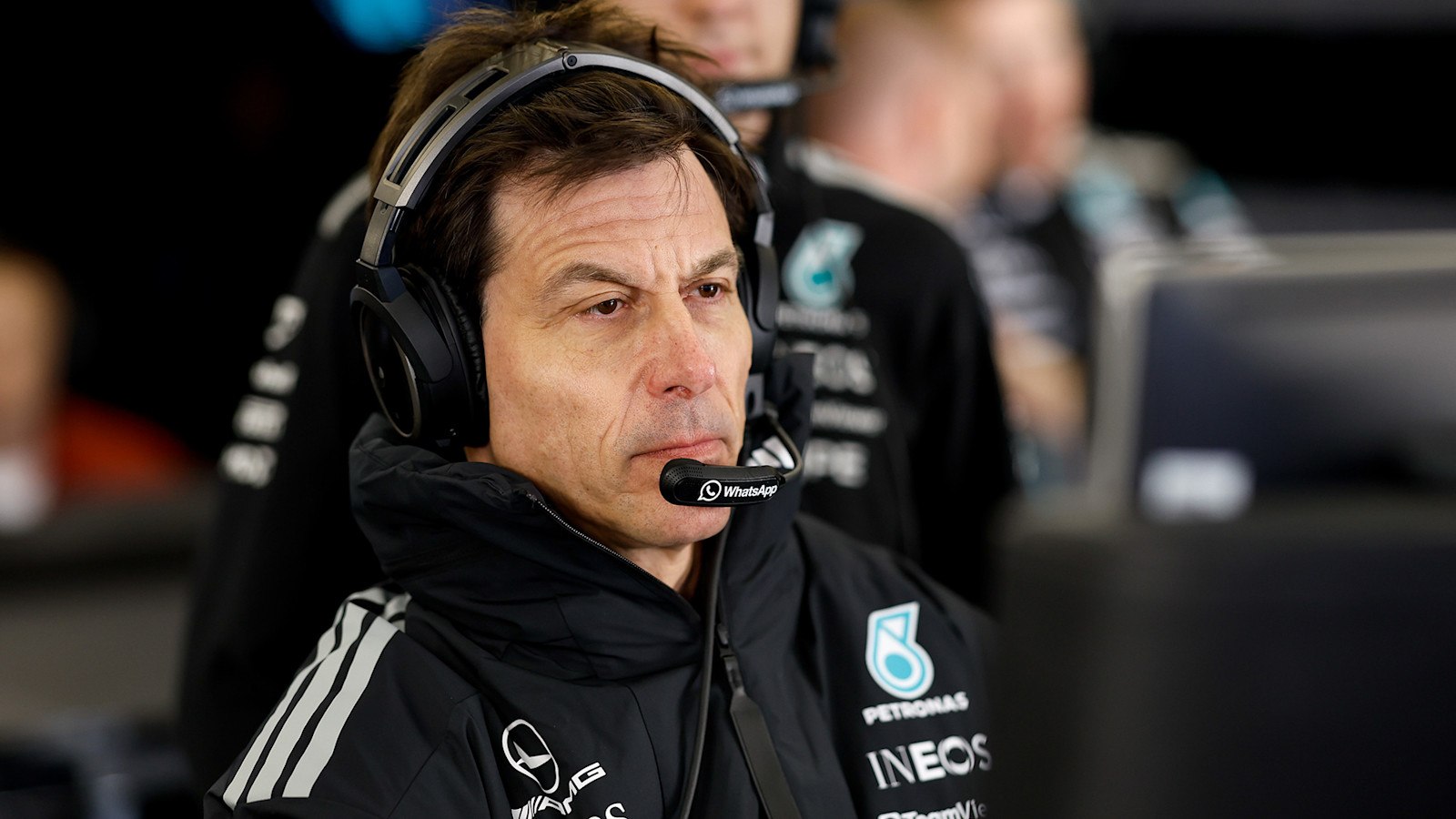
Mercedes confirmed on 30 September that it will bring an upgrade package to the F1 Bahrain Grand Prix, to be held at Sepang in Malaysia from 2 to 4 October. The team has just won in Baku, but Toto Wolff still wants to improve the car’s performance at more representative circuits. What pace has the team already shown across the previous four qualifying sessions, and what new demands does Sepang present?
Wolff’s upgrade objective: improving performance at more conventional circuits
In the team’s preview, Wolff said Monza and Baku had distinctive circuit requirements, while the team had recently fallen short of expectations at more conventional venues. He identified fighting for pole as an objective and hoped the new package would move the car forward. Wolff also stressed that there was no guarantee the upgrade would work: the team needed to understand it quickly to bring the car into contention at the front.
Baku’s result and four qualifying sessions: interpreting the lap-time gaps
The official F1 Baku race results show George Russell winning and Kimi Antonelli finishing fifth. In qualifying, Russell took pole and Antonelli was 16th. Russell won qualifying and the race on the same weekend, while Antonelli’s qualifying position and eventual result differed considerably: the two cars followed different paths through the weekend.
The table below uses regular qualifying results from Hungary, the Netherlands, Italy and Azerbaijan. Q3 is the final segment of qualifying. For each event, INKA SPORTS subtracts the pole time from the faster of the two Mercedes Q3 times in that same session. A smaller gap means Mercedes was closer to first place in that particular qualifying session; Baku’s 0.000 seconds means Russell himself took pole.
Sepang’s demands: high-speed corners, traction and tyre management in the heat
Pirelli’s circuit guide notes that Sepang is 5.543 km long, combining long straights with high-speed corners in the middle sector. Ambient and track temperatures make thermal degradation, the loss of tyre performance at high temperatures, an important variable for the weekend. Wolff also highlighted traction, or grip when accelerating out of corners, and consistency in the heat. The car needs to carry speed through corners while maintaining pace on corner exits and over consecutive laps.
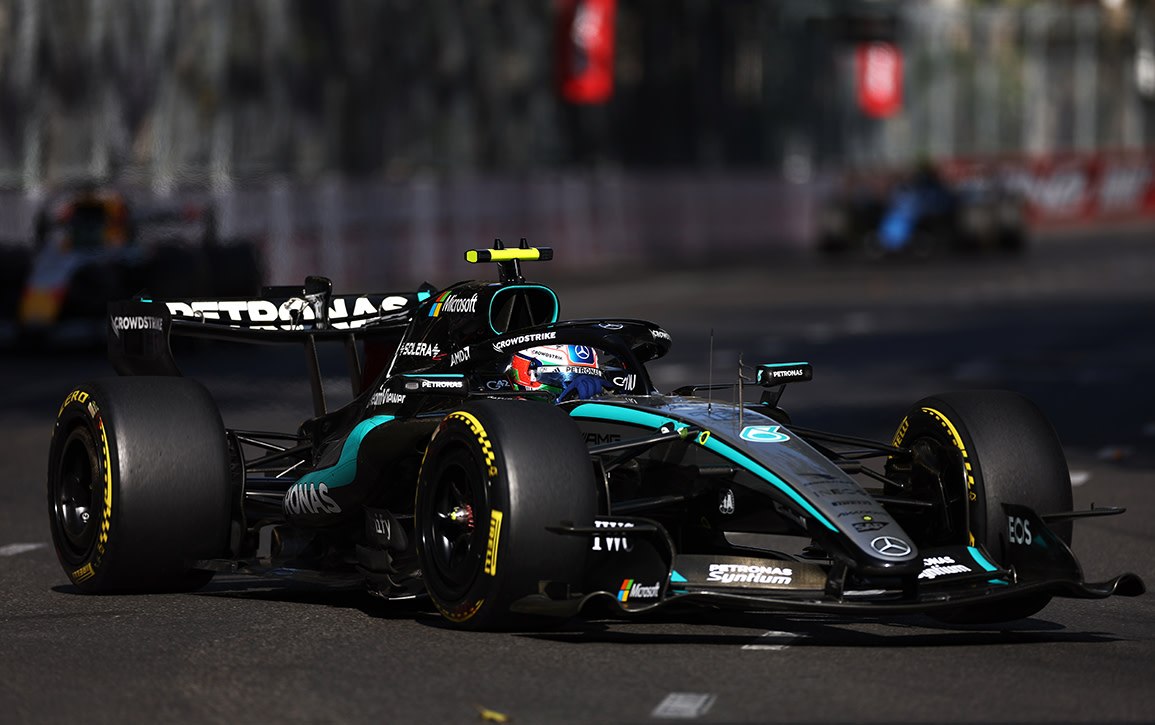
Pirelli also expects low grip at Sepang on Friday, followed by a gradual improvement as the track evolves. With no useful race reference for this generation of car at Sepang, important tasks in Friday practice include learning how the current car responds to the circuit, finding the right balance and understanding tyre performance.
Q3 results compared across four rounds
| Event | Faster Mercedes driver | Q3 lap time | Pole lap in the same session | Gap to pole |
|---|---|---|---|---|
| Hungary | Kimi Antonelli | 1:17.479 | 1:17.207 | +0.272 |
| Netherlands | George Russell | 1:11.265 | 1:11.163 | +0.102 |
| Italy | George Russell | 1:21.846 | 1:21.786 | +0.060 |
| Azerbaijan | George Russell | 1:42.526 | 1:42.526 | +0.000 |
INKA SPORTS analysis: which strengths must the upgrade carry to Sepang?
Both cars close to pole in the Netherlands, then pole and victory in Baku
The Dutch round provided an example of both cars approaching the front: Russell and Antonelli qualified second and third, respectively 0.102 and 0.133 seconds behind Norris. Russell was 0.060 seconds off pole at Monza, then took pole and victory in Baku. Against those results, Wolff’s objective can be understood as carrying the team’s existing front-running performance to more circuits and enabling both cars to compete consistently at the front. The Dutch performance offers evidence of a shared pace foundation, while Russell’s Baku pole and victory demonstrate a weekend spent ahead over both a single lap and a race.
How yellow flags and late rain shaped the qualifying context
The four-round comparison also needs to be placed in the context of each session. F1’s report on the Hungarian yellow-flag incident confirms that Verstappen spun in Q3, bringing out yellow flags, and that Antonelli received a three-place grid penalty for failing to slow sufficiently. The table retains his qualifying lap time. F1’s Dutch qualifying report records rain arriving with five minutes of Q3 remaining, lowering temperatures and grip, although Russell and Norris still improved on their final attempts. Hungary’s penalty explains why the lap-time ranking differed from the starting position; the Dutch fight at the front also involved the ability to deliver a crucial lap in changing conditions.
High-speed cornering and tyre management must serve both qualifying and the race
Sepang’s demands on the new package arise from the combination of high-speed corners, acceleration on corner exits and tyre management in high temperatures. Qualifying pursues the fastest single lap, while a race requires speed to be sustained over many consecutive laps. Tyres losing performance in the heat affect grip and pace on subsequent laps. The team therefore needs to address cornering speed and tyre use together so that qualifying competitiveness can carry into the race.
Conclusion
Mercedes arrives at Sepang with evidence of both cars close to pole in the Netherlands, Russell close to first at Monza, and pole and victory in Baku. Wolff hopes the upgrade will help the team challenge at the front at more circuits. Sepang turns that objective into three concurrent tasks: speed through high-speed corners, grip on corner exits and tyre management in the heat. Qualifying and race preparation must address those demands together if single-lap competitiveness is to extend over a sustained run.