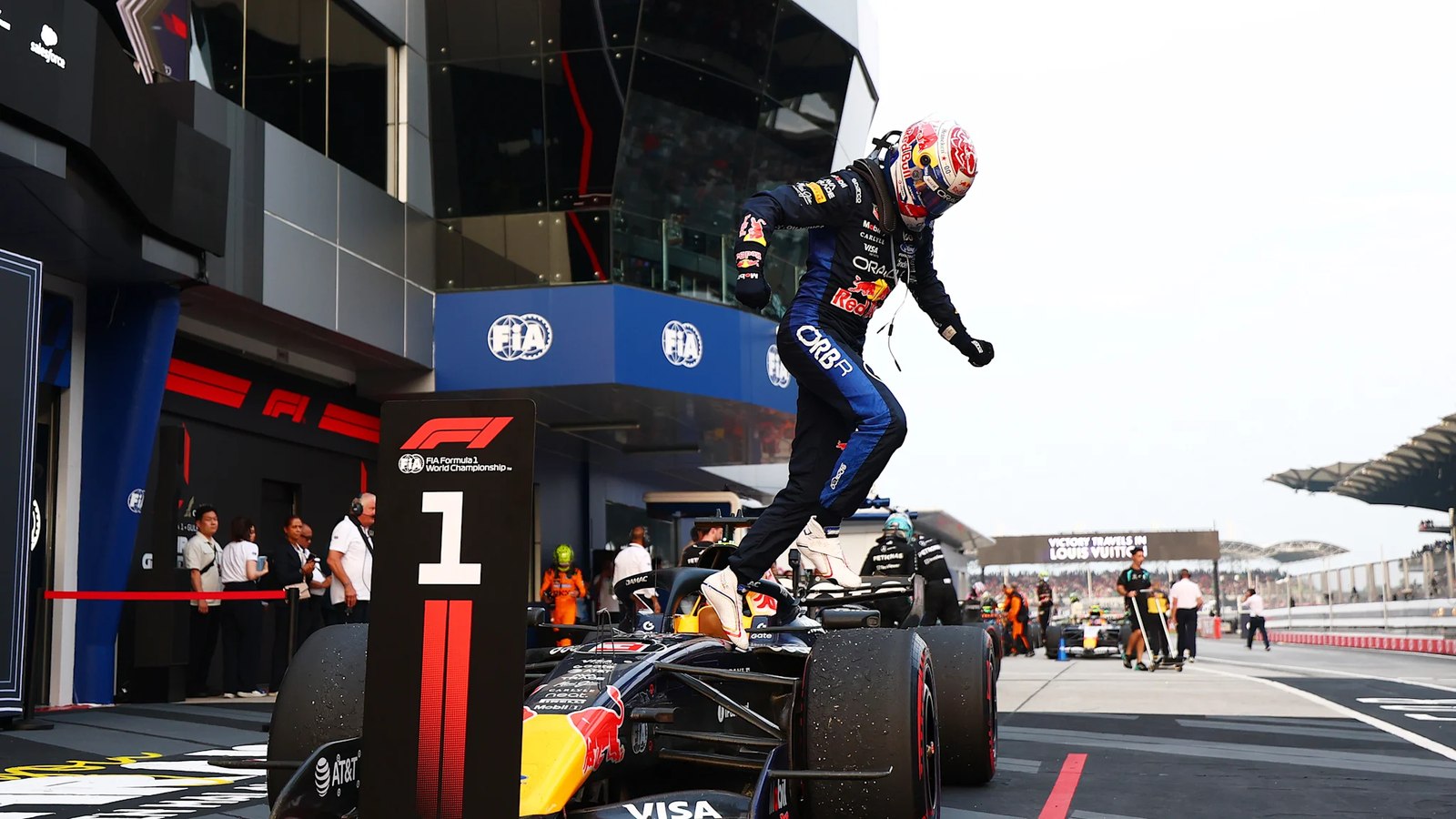
Round 16 of the 2026 Formula 1 season, the Bahrain Grand Prix, concluded at Malaysia’s Sepang circuit on October 4. Max Verstappen completed 55 laps in 1 hour 47 minutes 14.808 seconds to take his and Red Bull’s first win of the season. Kimi Antonelli finished second, 2.307 seconds behind, with Lewis Hamilton third. Heavy-rain delays, a suspended starting procedure and the transition from intermediates to slicks made tyre decisions and Safety Car restarts recurring themes.
How the race unfolded
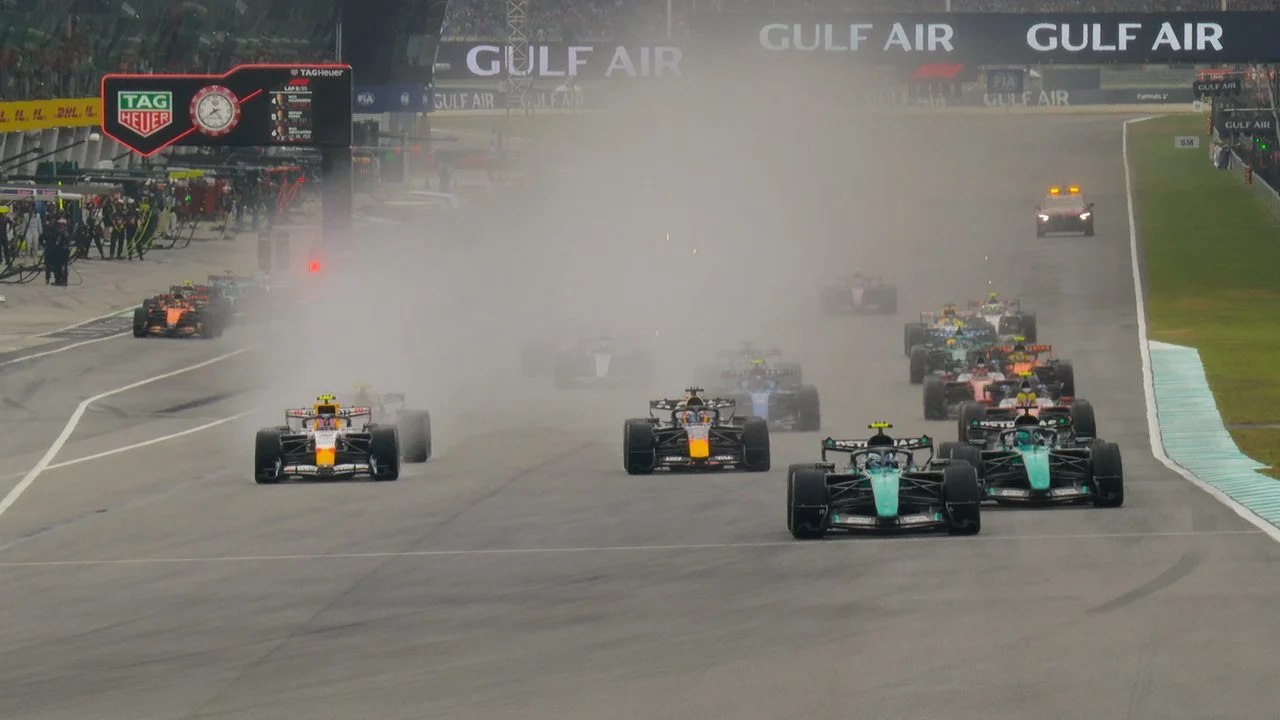
A wet start and the first restart on slicks
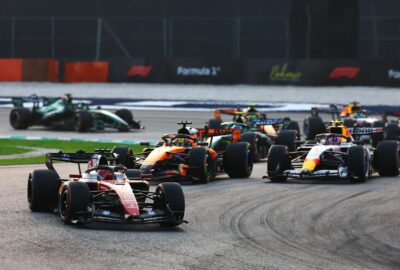
Starting on intermediates, Antonelli and George Russell both passed polesitter Verstappen to establish a Mercedes one-two. Verstappen subsequently overtook Russell. A Safety Car triggered by Bottas spinning then offered drivers on intermediates a common opportunity to switch to slicks. Both Ferraris had started directly on slicks and fell towards the back in the slippery opening phase before recovering as the track dried.
At the first switch to slicks, Verstappen chose softs while both Mercedes drivers took mediums. In the team’s post-race report, Russell said he had struggled somewhat on the mediums and felt markedly better once he switched to softs.
After the lap 13 restart, Verstappen attacked Antonelli around the outside of Turn 1 and completed the pass by the exit of Turn 2. Russell briefly took second before Antonelli reclaimed it on lap 21. By lap 19, Verstappen was more than 3 seconds ahead of Russell; when Antonelli returned to second, Verstappen was about 5 seconds up the road.
A late Safety Car reshuffles the podium
Albon stopped on lap 43, triggering a Virtual Safety Car and requiring the field to slow. Verstappen used the opportunity to pit again, briefly handing Antonelli the lead. Both Mercedes drivers changed tyres a lap later and Verstappen regained first. Difficulties recovering Albon’s car then prompted a full Safety Car, bunching the field and erasing the established gaps.
During the final Safety Car period, Russell stopped on the start-finish straight. Speaking to Sky Sports F1, Wolff confirmed a power-unit failure, although the precise problem had not yet been fully assessed. Russell did not reach the finish but was officially classified twentieth as a retirement after completing 49 laps. Albon completed 41 laps and Bottas 7; both retired and were not classified.
Russell’s retirement promoted Hadjar to third, but Hamilton and Leclerc passed him in succession after the final restart, leaving him fifth. Hamilton finished 4.919 seconds behind the winner, with Leclerc another 2.339 seconds behind to give Ferrari third and fourth. Red Bull scored 35 points, Ferrari 27 and Mercedes 18; Ferrari outscored Mercedes by 9 points at this round.
The points battle and post-race decisions
Piastri finished sixth, Lawson seventh and Alonso eighth. After getting both cars into Q2 on Saturday, Aston Martin made further progress as Alonso brought home 4 points and Stroll finished twelfth. Norris ran through the gravel before the final restart and rejoined eleventh, then recovered to ninth. Lindblad took the final point in tenth; Hülkenberg was again just outside the points in eleventh.
Post-race matters produced specific decisions. FIA document 52 found that Bortoleto had caused a collision with Sainz while overtaking at Turn 2 and imposed a 10-second penalty. A subsequent F1 website report confirmed that Norris received a reprimand for a driving incident under the Safety Car. The table below uses the official post-race results, including the announced penalties.
Upgrades and driver feedback: race day tests the pre-race assessment
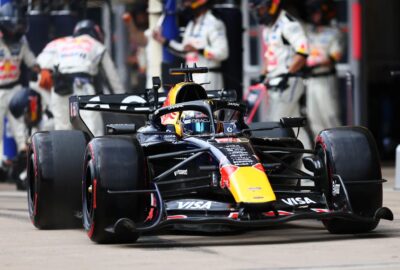
At the Spanish Grand Prix, Verstappen had already finished second. In Baku, he and Hadjar then took second and third for Red Bull, missing victory by just 0.196 seconds. In the earlier Friday report, Technical Director Pierre Waché said Sepang would test whether the Baku upgrade worked through different types of corner, and judged the new package better than the old one. In his subsequent qualifying interview, Verstappen attributed the improvement to new parts and the team’s better understanding of the car’s behaviour.
Hadjar qualified third in 1 minute 35.558 seconds, just 0.428 seconds slower than his team-mate, but started eighth after a five-place power-unit component penalty. In a post-race interview with F1’s website, he separated his difficulties into two parts: a lack of grip during the race, and insufficient battery energy during the first two laps of the final restart, making it hard to defend on the straights. The energy situation later stabilised, but the cause of the earlier grip shortage remained to be established.
Race data: pit stops and full classification
Pit-stop records for the leading three
The official pit-stop summary shows that all three leading drivers stopped three times: Verstappen on laps 9, 33 and 43; Antonelli on laps 9, 33 and 44; and Russell on laps 9, 32 and 44. All lap numbers in the table follow that official summary.
| Driver | First stop | Second stop | Third stop | Race result |
|---|---|---|---|---|
| Max Verstappen | 9 | 33 | 43 | First |
| Kimi Antonelli | 9 | 33 | 44 | Second |
| George Russell | 9 | 32 | 44 | Retired, classified twentieth |
Bahrain Grand Prix full race classification
Verstappen set the fastest lap, 1 minute 38.220 seconds, on lap 55 as he ended his wait for a first win. Full results for all 22 drivers are below: nineteen completed 55 laps, Russell was a classified retirement, and Albon and Bottas were not classified.
| Position | Car number | Driver | Team | Laps | Time / Status | Points |
|---|---|---|---|---|---|---|
| 1 | 3 | Max Verstappen | Red Bull | 55 | 1:47:14.808 | 25 |
| 2 | 12 | Kimi Antonelli | Mercedes | 55 | +2.307 seconds | 18 |
| 3 | 44 | Lewis Hamilton | Ferrari | 55 | +4.919 seconds | 15 |
| 4 | 16 | Charles Leclerc | Ferrari | 55 | +7.258 seconds | 12 |
| 5 | 6 | Isack Hadjar | Red Bull | 55 | +8.571 seconds | 10 |
| 6 | 81 | Oscar Piastri | McLaren | 55 | +9.454 seconds | 8 |
| 7 | 30 | Liam Lawson | Racing Bulls | 55 | +12.753 seconds | 6 |
| 8 | 14 | Fernando Alonso | Aston Martin | 55 | +13.372 seconds | 4 |
| 9 | 1 | Lando Norris | McLaren | 55 | +13.993 seconds | 2 |
| 10 | 41 | Arvid Lindblad | Racing Bulls | 55 | +15.928 seconds | 1 |
| 11 | 27 | Nico Hülkenberg | Audi | 55 | +17.404 seconds | — |
| 12 | 18 | Lance Stroll | Aston Martin | 55 | +18.052 seconds | — |
| 13 | 43 | Franco Colapinto | Alpine | 55 | +18.997 seconds | — |
| 14 | 87 | Oliver Bearman | Haas | 55 | +22.305 seconds | — |
| 15 | 31 | Esteban Ocon | Haas | 55 | +22.532 seconds | — |
| 16 | 10 | Pierre Gasly | Alpine | 55 | +23.315 seconds | — |
| 17 | 55 | Carlos Sainz | Williams | 55 | +25.431 seconds | — |
| 18 | 5 | Gabriel Bortoleto | Audi | 55 | +28.233 seconds | — |
| 19 | 11 | Sergio Pérez | Cadillac | 55 | +29.310 seconds | — |
| 20 | 63 | George Russell | Mercedes | 49 | Retired (classified) | — |
| Not classified | 23 | Alexander Albon | Williams | 41 | Retired | — |
| Not classified | 77 | Valtteri Bottas | Cadillac | 7 | Retired | — |
INKA SPORTS analysis: what Red Bull’s first win shows, and why Hadjar lost the podium
After a double podium in Baku, another front-running performance at Sepang
Red Bull’s victory continued its recent improvement in competitiveness. Verstappen finished second in Spain, shared the podium with Hadjar in Baku, then took pole and victory at Sepang. Waché’s main question was whether the Baku upgrade would continue to work through different types of corner. On Friday he said the new package was better, and Verstappen subsequently praised both the new parts and the team’s understanding of the car. The team’s assessment and successive race results support one another, indicating that the improvement has helped Red Bull contend for victory at two different circuits.
That improvement also showed in Hadjar’s results: third in the Baku race and third in Sepang qualifying, ahead of both Mercedes and both McLarens. Front-running performances at two consecutive rounds show that Red Bull’s recovery is supported by both drivers. His power-unit penalty, however, put Hadjar eighth on the Sepang grid, requiring him to recover positions before using his qualifying pace to fight for the podium.
Hadjar’s two difficulties arose at different stages
After climbing to fourth early in the race, Hadjar could not follow the leading three because of insufficient grip, and Hamilton had reached him before the final Safety Car. A lack of energy during the first two laps of the late restart then made it difficult to keep the Ferraris behind on the straights. The first problem affected sustained race pace; the second directly compromised short-term defence. According to Hadjar, energy levels later stabilised, while the grip problem’s cause remained unknown. Red Bull has put both cars near the front in qualifying. Its next task is to help Hadjar sustain that pace over a race distance and determine why he lacked energy during those first two restart laps.
Tyre choices shaped the victory fight; retirement changed the points
Verstappen also needed the right tyre decisions on the day to convert speed into victory. At the first switch to slicks, Red Bull fitted softs while Mercedes chose mediums. His pass at the lap 13 restart gave him the lead, and he continued to extend the gap. Pirelli explained afterwards that cooler conditions following the rain reduced performance loss from overheating, allowing the soft tyre to remain competitive over longer stints. Together with Russell’s feedback on the compounds, that explains why pre-race expectations about heat and wear needed reassessment as Sunday’s conditions developed.
Ferrari’s recovery began with a tyre-selection error. Vasseur acknowledged that the team had not understood how wet the entire circuit was from the grid and was wrong to start on slicks. Subsequent pace, tyre changes and late overtakes recovered the early losses to produce third and fourth. A useful priority in Ferrari’s review is improving its assessment of track information before the start: fewer initial losses would let its later recovery pace be used sooner against the leaders.
Mercedes faced both a lack of winning pace and a reliability problem. Antonelli felt second was the best result available, while Russell said he felt better on softs but never entered the victory fight. Verstappen had already retaken the lead and opened a gap before Russell’s failure, which then cost Mercedes another podium opportunity. The team needs to match Red Bull’s race pace and carry the positions it earns to the finish. The former determines whether it can fight for wins; the latter determines whether those points come home.
Conclusion
The first win at Sepang shows that Red Bull’s recent improvements can produce a challenge for victory, supported by Hadjar’s front-running results at two successive rounds. Yet his race reminds the team that qualifying speed, long-run grip and restart defence remain separate demands. Ferrari recovered the losses caused by its tyre error, while Mercedes added retirement to its pace deficit. The outcome was shaped jointly by car development, decisions on the day and race execution. Red Bull’s next priority is to let both cars maintain their front-running speed consistently to the finish.
Post-race championship standings
Drivers’ standings
| Position | Driver | Team | Points |
|---|---|---|---|
| 1 | Kimi Antonelli | Mercedes | 320 |
| 2 | George Russell | Mercedes | 236 |
| 3 | Lewis Hamilton | Ferrari | 214 |
| 4 | Charles Leclerc | Ferrari | 191 |
| 5 | Lando Norris | McLaren | 188 |
| 6 | Max Verstappen | Red Bull | 188 |
| 7 | Oscar Piastri | McLaren | 128 |
| 8 | Isack Hadjar | Red Bull | 96 |
| 9 | Liam Lawson | Racing Bulls | 65 |
| 10 | Pierre Gasly | Alpine | 41 |
| 11 | Arvid Lindblad | Racing Bulls | 38 |
| 12 | Franco Colapinto | Alpine | 27 |
| 13 | Oliver Bearman | Haas | 20 |
| 14 | Gabriel Bortoleto | Audi | 10 |
| 15 | Nico Hülkenberg | Audi | 7 |
| 16 | Esteban Ocon | Haas | 7 |
| 17 | Fernando Alonso | Aston Martin | 7 |
| 18 | Carlos Sainz | Williams | 7 |
| 19 | Alexander Albon | Williams | 5 |
| 20 | Yuki Tsunoda | Racing Bulls | 1 |
| 21 | Lance Stroll | Aston Martin | 0 |
| 22 | Valtteri Bottas | Cadillac | 0 |
| 23 | Sergio Pérez | Cadillac | 0 |
Constructors’ standings
| Position | Team | Points |
|---|---|---|
| 1 | Mercedes | 556 |
| 2 | Ferrari | 405 |
| 3 | McLaren | 316 |
| 4 | Red Bull | 298 |
| 5 | Racing Bulls | 90 |
| 6 | Alpine | 68 |
| 7 | Haas | 27 |
| 8 | Audi | 17 |
| 9 | Williams | 12 |
| 10 | Aston Martin | 7 |
| 11 | Cadillac | 0 |