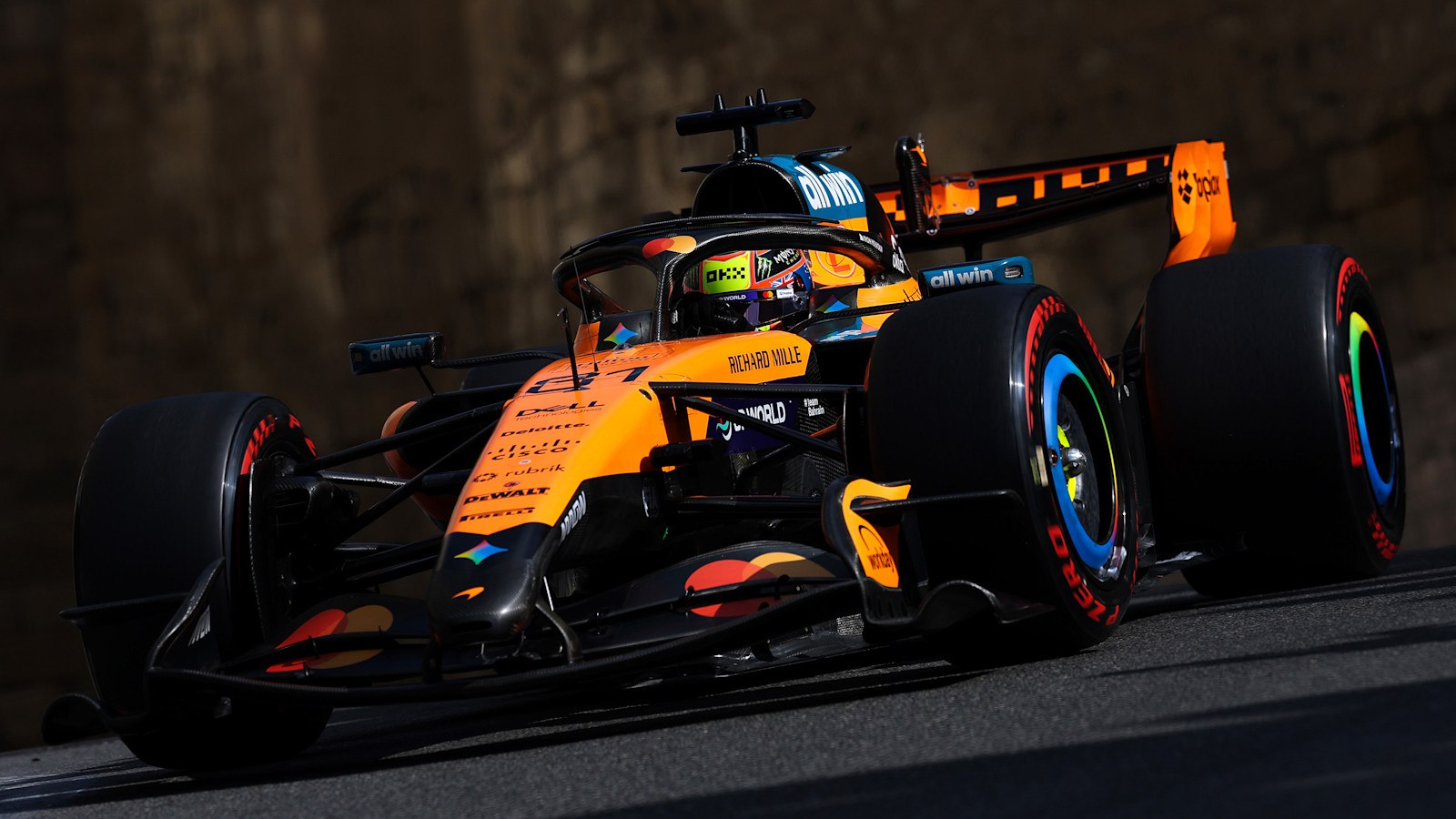
In its pre-event preview of 29 September, McLaren said it expected to prepare a small number of circuit-specific bodywork parts for the F1 Bahrain Grand Prix, to be held at Sepang in Malaysia from 2 to 4 October. Neither Lando Norris nor Oscar Piastri has previously raced here, and both have used the simulator to learn the layout. The team’s Friday work will address the surface, tyres and the car’s performance through corners and along straights.
Simulator preparation and changes to the actual surface
McLaren senior director of racing Randy Singh noted that recent Sepang data usable for the current generation of cars was limited, leaving uncertainties over the accuracy of the circuit model and understanding of the surface. Pirelli’s pre-event information explains that the section between Turns 6 and 12 was resurfaced in 2023, with local work also carried out around Turn 9. Further surface levelling and cleaning began in September 2026. The tyre supplier considers the overall surface characteristics to remain similar to those of 2017.
Compound choices and the demands of managing heat
The C2, C3 and C4 compounds will serve as hard, medium and soft respectively. Pirelli hopes this choice will narrow the time difference between one-stop and two-stop strategies, meaning one or two tyre-change pit stops during the race. Thermal degradation, the loss of tyre performance at high temperatures, and management of front and rear tyre temperatures will be important tasks throughout the weekend.
Circuit-specific parts and car balance
Singh believes Sepang requires a balance between downforce and aerodynamic drag. Downforce is the force of airflow pressing the car towards the track, helping it corner; drag resists its forward motion. Sepang’s varied corners require sufficient downforce, while its long straights place importance on power and the use of available energy. The team needs to find an appropriate configuration between those demands.
After the major Baku upgrade, McLaren expects fewer changes for Sepang, principally circuit-specific bodywork. The team preview noted that Baku exposed the McLaren MCL40’s weakness in straight-line speed. Singh also cautioned that if overtaking proved more difficult under the new power-unit regulations, retaining track position could become more important.
Friday practice times and weather variables
The two practice sessions on 2 October begin at 12:30 and 16:00 China Standard Time (UTC+8), the same as local time at Sepang. Pirelli warns that October afternoon thunderstorms could affect any session and expects dry-track grip to improve as the weekend progresses.
INKA SPORTS analysis: how tyres, pit-stop position and straight-line weakness connect
The simulator teaches the layout; the real car reveals the surface and tyres
The simulator allows Norris and Piastri to learn the corner layout in advance, while Friday’s on-track running will show them how the current surface actually responds. Sepang’s overall surface characteristics may resemble 2017, but work has been carried out in specific areas and both cars and tyres have moved to a new generation. Singh identified understanding the tyres and adjusting the set-up as Friday priorities. The team needs to connect driver feedback with tyre performance to find a configuration suited to the current car.
How slowing tyres and pit-stop time alter the choice to stop
The choice of how many stops to make depends on how long the speed difference between new and old tyres lasts. If old tyres become progressively slower, the time saved by making one fewer stop may be cancelled out by time lost over subsequent laps. Fresh tyres offer faster lap times, but changing them incurs the time needed to enter and leave the pit lane and complete the stop. Long runs help establish tyre pace after many laps, allowing a comparison of the total time required to stay out or stop for new tyres.
The overtaking issue Singh raised also affects whether fresh-tyre speed can be used. If an extra stop drops the car back into traffic, it may be held up despite faster new tyres, losing the expected time benefit. Making one fewer stop preserves position, but the old tyres still need enough pace to resist cars behind. Tyre degradation, pit-stop time and the position in which the car rejoins therefore all need to be considered together.
Taking the major Baku package to Sepang’s greater variety of corners
McLaren’s assessment of Baku was that its combination of slow corners and an extremely long straight exposed the MCL40’s straight-line weakness. Sepang has a wider range of corners, and the team expects the previous major package to suit it better, with more practice helping to refine the car further. This smaller set of new parts must work with the existing package to suit Sepang’s mix of corners and straights: cornering speed affects the whole lap, while performance on the long straights affects the ability to close on another car, attack or defend a position.
Conclusion
McLaren’s Friday preparation comes down to three connected tasks: adapting to the current surface, understanding tyre pace after many laps and managing the balance between cornering performance and straight-line speed. The benefit of changing tyres must also be weighed against pit-stop time and the position in which the car rejoins. The team expects to add a smaller number of circuit-specific parts to the major Baku package, addressing the existing upgrade, tyre use and racecraft through the same Sepang configuration.