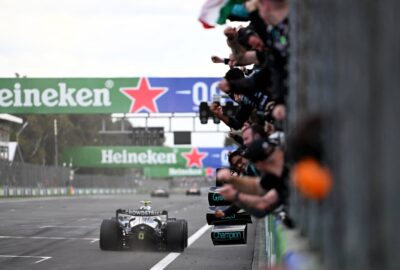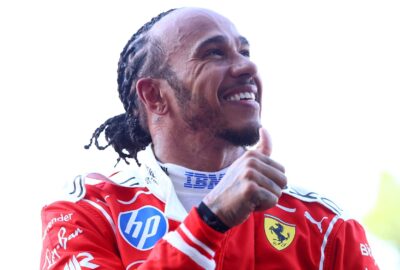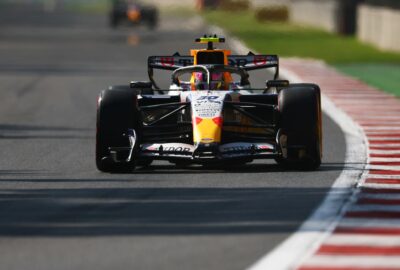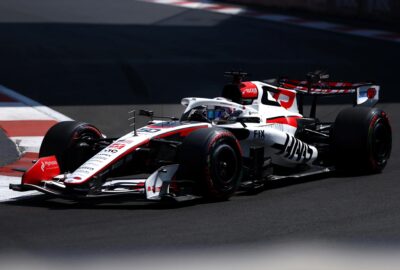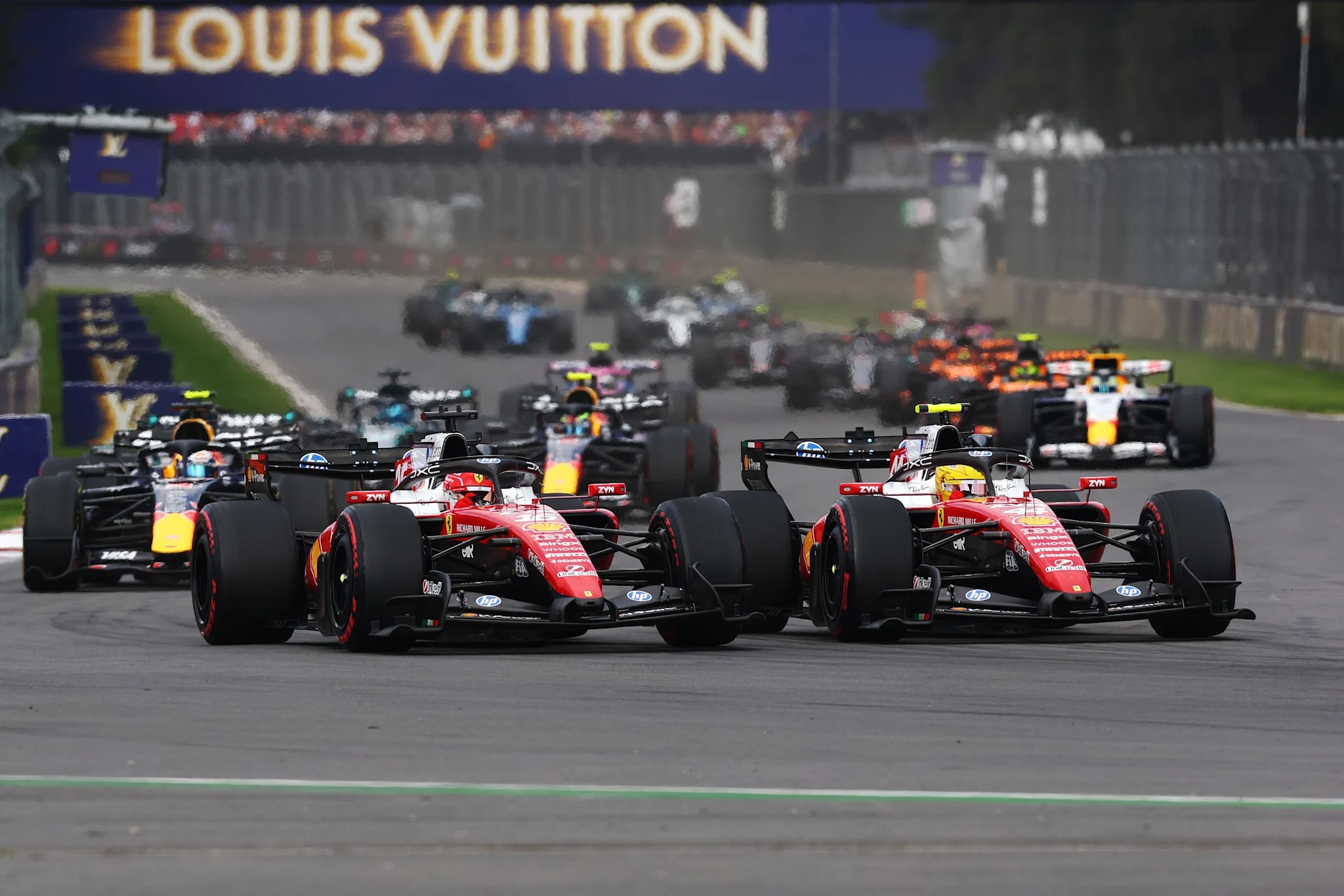
Ferrari started the 2026 Mexico City Grand Prix from first and third, but Lewis Hamilton finished second, 0.799 seconds behind Max Verstappen. Afterwards, Hamilton called for “serious talks” within the team, while Verstappen explained how the Ferraris’ battle created an opportunity he could exploit.
Hamilton questions the handling of the first lap
In post-race comments published by F1i, Hamilton said Ferrari had the pace to win but that the opening-lap dispute with Charles Leclerc had damaged its opportunity. He said the issue would be discussed privately and explicitly called for serious talks. That is Hamilton’s assessment of why the win was lost.
The dispute began as the Ferraris ran side by side through the opening lap before both went off the circuit. Leclerc crossed the grass and emerged ahead; Hamilton lost momentum on rejoining and Verstappen passed him. Leclerc later received five seconds for leaving the track and gaining an advantage, rather than immediately handing the position back.
In radio messages reported by F1i, Hamilton demanded that his team-mate return the place and complained that the leader enjoyed clean air while those behind had to manage. Afterwards, he also referred to a drivers’ briefing discussion about returning positions after going off. Whether Ferrari should have rearranged its cars at the time is a central part of the discussion he wants.
Verstappen takes opportunities at two different stages
Verstappen started fifth, gained ground at the launch and then reached second by taking advantage of the Ferraris’ off-track moment. Speaking to Formula1.com, he said their fighting had made matters more difficult for themselves and that he was always looking for opportunities to capitalise.
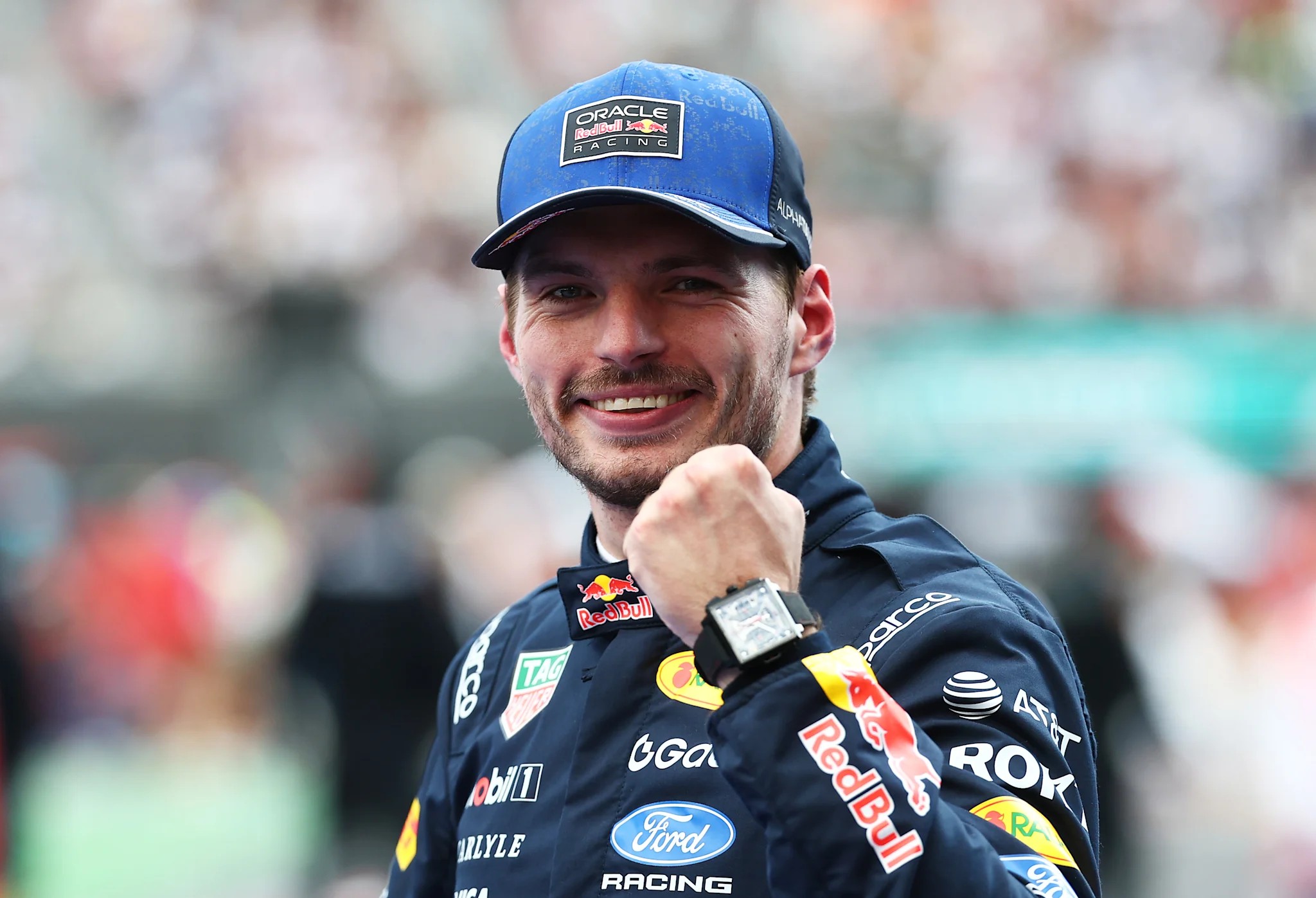
A second opportunity came at the stops. Red Bull brought Verstappen in on lap 27, the same lap as Leclerc, enabling him to pass the Ferrari while its five-second penalty was served. Verstappen praised that decision as the right strategy from his team.
That stop initially changed the relative order of Verstappen and Leclerc. Hamilton stopped on the following lap, handing the lead to the yet-to-stop Kimi Antonelli. Verstappen took the overall lead only when Antonelli pitted on lap 43; passing Leclerc in the pits on lap 27 was not the same as leading the entire race at that moment.
The late restarts did not end the contest. Verstappen acknowledged Ferrari’s speed and said Hamilton was close enough that he could not afford a mistake. The final 0.799-second margin reflects pressure sustained to the finish and explains his description of the win as “fantastic”.
INKA SPORTS Analysis and Summary: Pace, penalties and team decisions
The two accounts address different questions. Hamilton is asking how Ferrari should manage a fight between its own drivers and its consequences. Verstappen is explaining how his start, a rival’s loss of position and a penalty window became advantages. A stewards’ penalty and a team decision to swap positions are separate interventions.
Ferrari therefore has more to examine than outright pace: it must consider how to contain the consequences of an opening-lap confrontation. Verstappen’s result shows that an opponent’s dispute becomes useful only when combined with his own launch, stop timing and defence at the end. The sequence does not establish that a different Ferrari intervention would certainly have delivered a Ferrari victory.