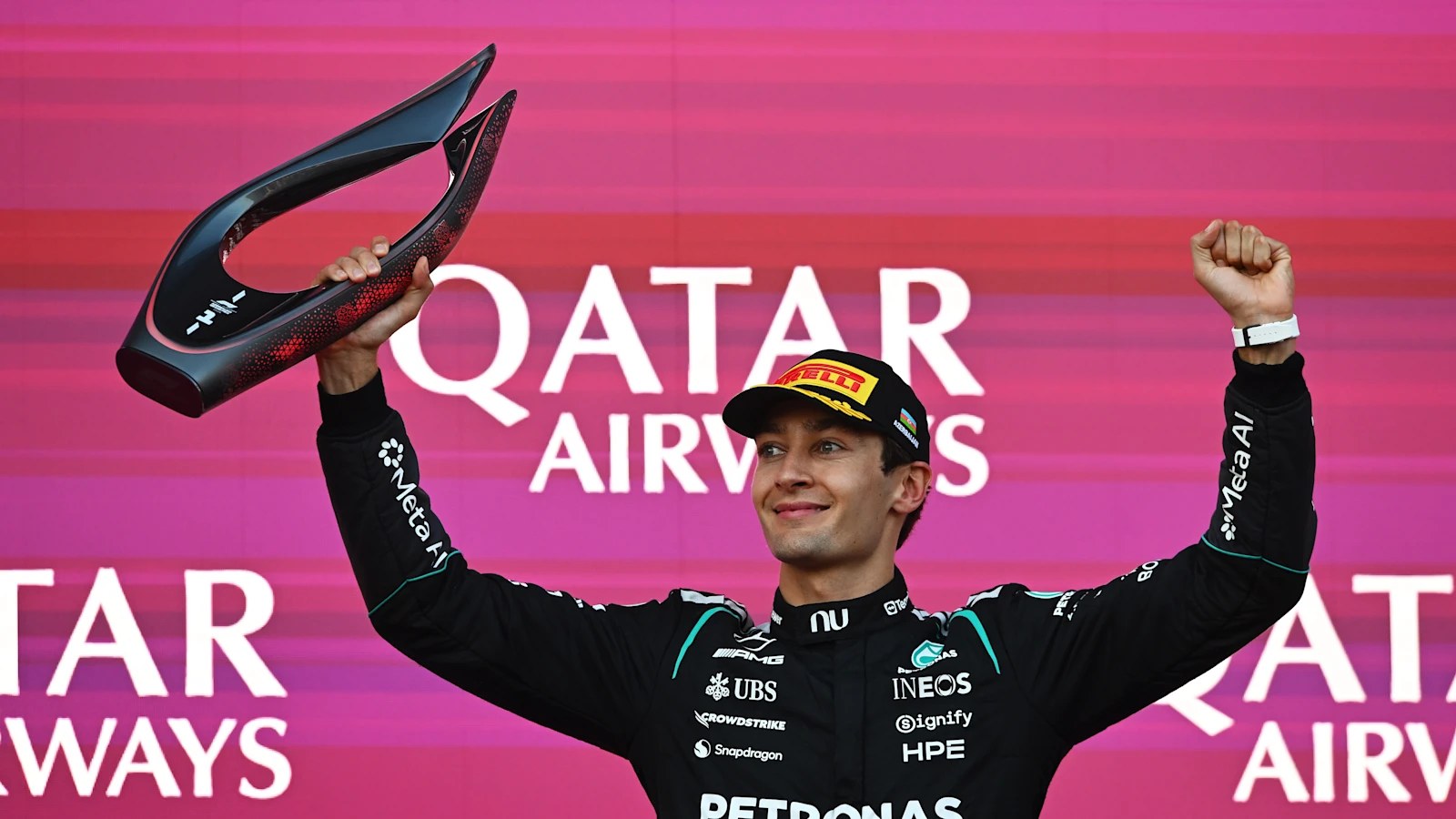
George Russell won the F1 Azerbaijan Grand Prix from pole on 26 September, while Max Verstappen recovered from eighth to second. The FIA’s final classification records their times over 51 laps as 1 hour 38 minutes 02.143 seconds and 1 hour 38 minutes 02.339 seconds, a difference of 0.196 seconds. Post-race interviews revealed that the sudden closure before the line was linked to the power response after final-lap yellow flags.
Final-lap yellows: reacceleration after lifting changes the contest at the line
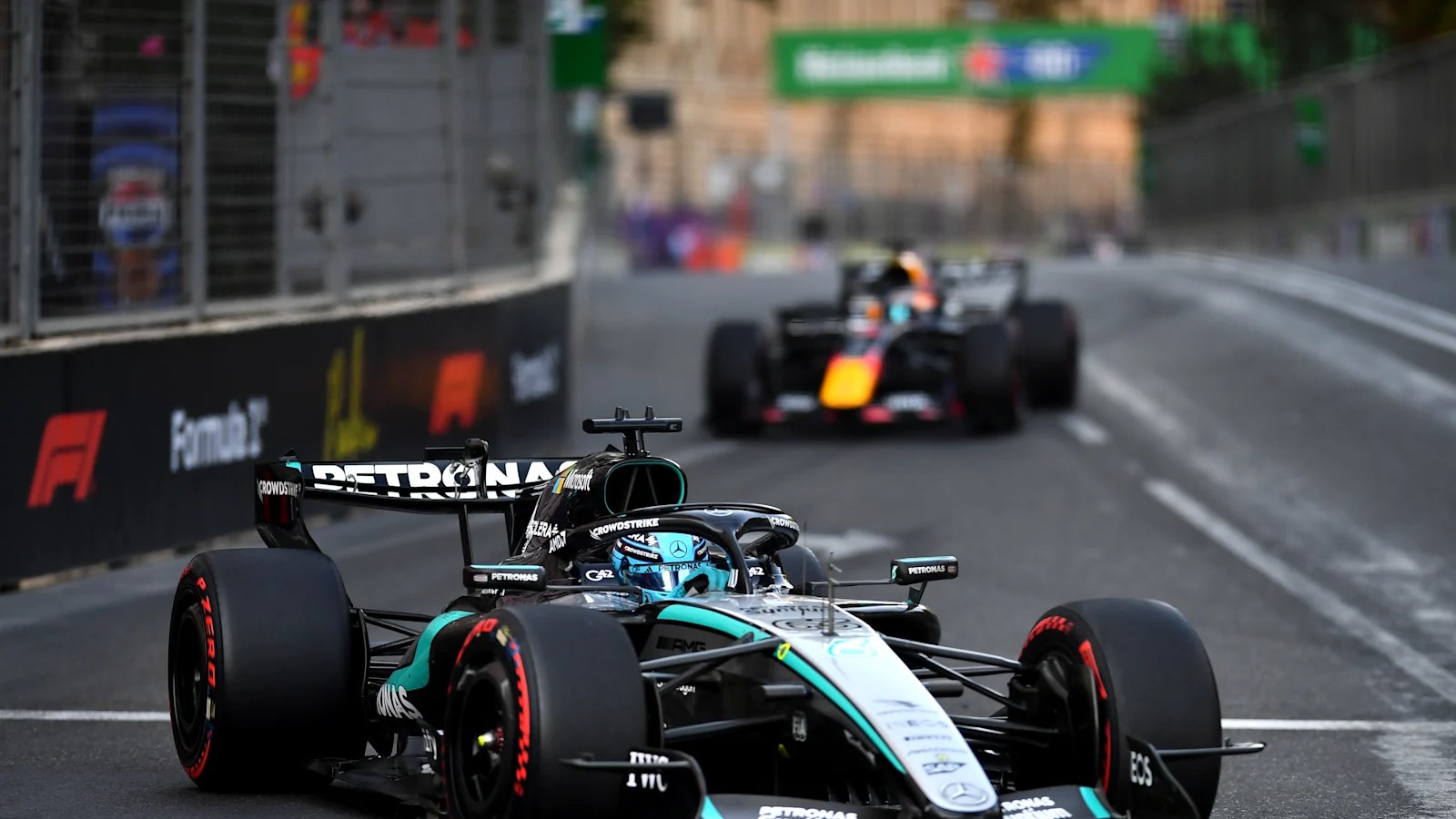
According to his interview on F1’s official website, Russell lifted and slowed when Valtteri Bottas’s crash triggered yellow flags. When he reapplied the throttle, he felt the turbo was not delivering power, allowing Verstappen almost to catch him at the line. He said he could build a gap in the first half, with pressure increasing markedly once the Red Bull appeared behind in the second half.
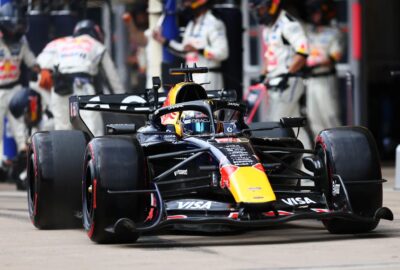
Verstappen also attributed the late closure to turbo lag after Turn 15. Russell’s compromised acceleration on exit gave him a better tow. In Verstappen’s account, the gap during the preceding chase had remained around 1 to 1.1 seconds. He had pushed as close as possible to the track limits but still could not complete the pass on the final run to the line.
Safety-car restarts: chasing on softs and the leader’s acceleration preparation
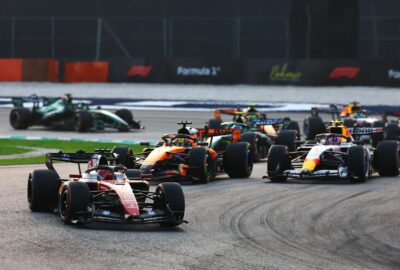
Verstappen said the mediums offered less grip than expected in the opening stint and he had mainly been trying to keep up. The safety car gave him a chance to switch to softs, significantly improving the car. At the first restart, he overtook Oscar Piastri for second. He and Russell then gradually pulled away from the pack, turning the victory fight into a direct contest.
In the FIA post-race press conference, Russell explained that a restart requires advance preparation of battery state and turbo speed. Watching his mirrors, he waited for the gap to Verstappen to open slightly before accelerating, denying his rival a chance to attack the inside. It was his first safety-car restart from the lead this season, and he was pleased with the execution.
Weekend figures: pole by 0.837 seconds and a third win of the season
Russell led practice on Thursday, took pole on Friday with 1 minute 42.526 seconds, 0.837 seconds faster than second-placed Charles Leclerc, and won the race on Saturday. It was his first victory since Austria in June and his third of the season. Afterwards, he stood on 236 points, 66 behind Kimi Antonelli. Russell linked his return to form to gradually adapting to a new driving approach, saying he felt more confident under braking and close to the barriers.
INKA SPORTS analysis: defending the advantage required sustained speed and restart execution
Russell’s restart preparation explains how the advantage earned from pole survived into the second half. A safety car removes the previously established time gap. Staying ahead then depends on accessing the car’s performance immediately on reacceleration and controlling when the following car enters attacking range. Preparing the power state and accelerating when his rival was slightly farther away jointly reduced the chance of an immediate first-corner attack.
After switching to softs, Verstappen could follow the leader closely but had not broken the roughly one-second gap before the final-lap yellows. That phase differs from the sudden reduction to 0.196 seconds at the finish. The final margin reflects an opportunity created by one compromised acceleration; it cannot establish that Russell was rapidly losing pace throughout the stint. Verstappen also felt that even starting second would have made overtaking difficult given Russell’s speed that day, so his low grid position was not the only explanation.
A clear qualifying advantage and sustained race lead support Russell’s account of improved driving adaptation through this event’s performance. Greater confidence braking near the barriers helps him repeatedly approach the pace limit, but that confidence works alongside the car’s suitability for the circuit. Russell specifically highlighted Mercedes’ strength at low-drag venues. Baku’s success therefore still needs testing on different layouts, and the forthcoming upgrade must be judged on its actual effect.
Conclusion
The narrow win was built on gaining the initiative in qualifying, preserving position at restarts and sustaining late-race speed. One final delay in power delivery nearly prevented the earlier advantage from producing the result. Russell has converted driving adaptation into victory over a complete weekend. The next questions are whether that performance carries to different circuits and whether it can be delivered consistently at restarts and when accelerating again after slowing.