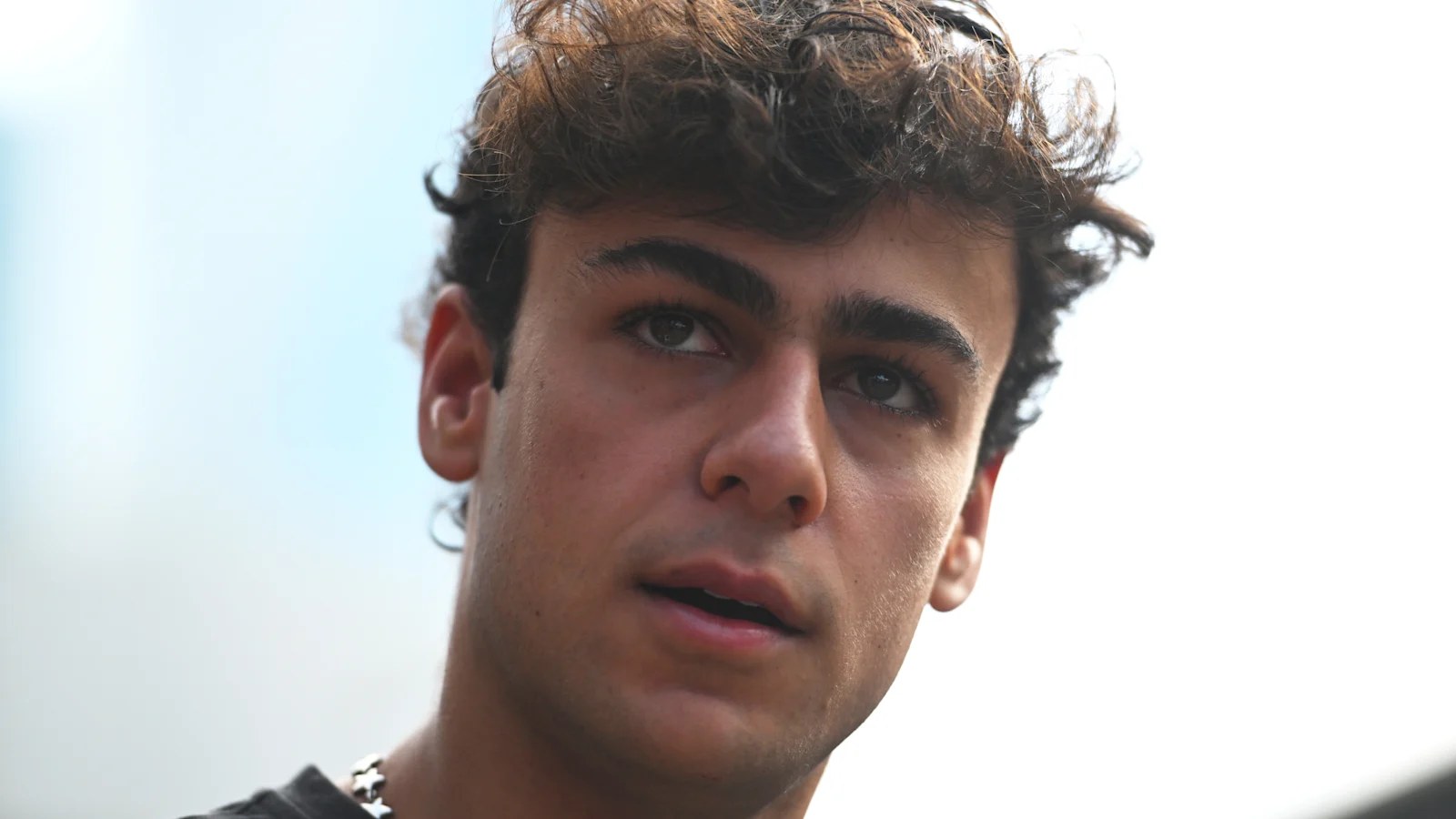
Arvid Lindblad qualified 15th for the F1 Azerbaijan Grand Prix on 25 September, with team-mate Liam Lawson 12th. In an interview with F1 afterwards, he attributed his disappointment to two compounding difficulties: the brakes’ response left him short of confidence, while a practice crash interrupted his preparation.
Inconsistent brake feedback and reduced practice mileage
Asked whether gusts in Baku were affecting the car, Lindblad made clear that the brakes were troubling him. He felt that different problems could arise on each lap and at each corner. In heavy braking zones close to the walls, that made it hard to build speed gradually. This was the driver’s description of his experience at the wheel; he did not identify a specific failed component.
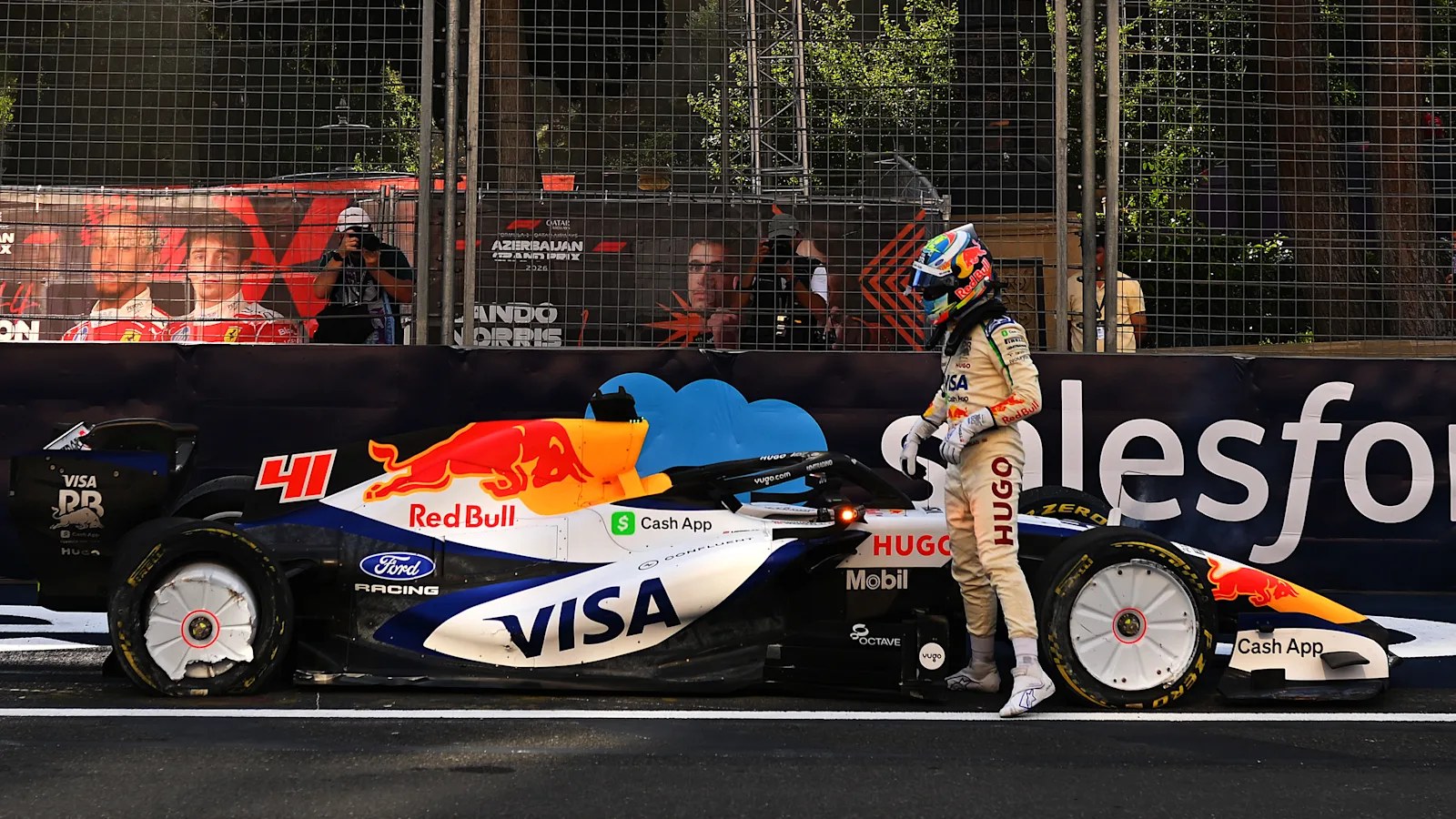
He also said he had missed the start of FP1 and the opening part of FP2, before crashing in Thursday’s FP2 and losing most of the remaining mileage in that session. An FP2 accident at the previous round in Madrid meant his preparation had been compromised on two successive street-circuit weekends. That prompted him to reflect on his approach to practice, rather than focus only on the final qualifying lap.
The FIA’s final qualifying results quantify his distance from the next stage. Lindblad’s Q2 lap was 1:45.106, 0.246s slower than Lawson and 0.423s slower than Colapinto, the slowest driver to advance to Q3. Both comparisons use times from the same session; they cannot directly identify how much time was lost separately to the crash or the brake issues.
| Driver | Final qualifying position | Q2 time | Gap to slowest Q3 qualifier |
|---|---|---|---|
| Franco Colapinto | P10 | 1:44.683 | 0.000s |
| Liam Lawson | P12 | 1:44.860 | +0.177s |
| Arvid Lindblad | P15 | 1:45.106 | +0.423s |
Results source: FIA Azerbaijan Grand Prix final qualifying classification, Document 51.
INKA SPORTS analysis: protect preparation before chasing the decisive lap
Practice laps serve not only to familiarise a driver with the circuit but also to confirm repeatedly how the car responds to the same inputs. If the brakes already feel inconsistent and a crash ends practice early, it becomes harder to judge how to adjust the next corner entry. Lindblad’s reflection on FP2 crashes at two consecutive rounds is therefore more specific than a general demand to produce a special qualifying lap: that lap requires repeatable feedback at the wheel.
His team-mate’s time cannot simply be treated as the performance ceiling of his own car, however. Lindblad said that after the accident, his car and Lawson’s were not exactly the same, but the interview did not detail the differences. The 0.246s intra-team gap shows who was faster in that qualifying session. It does not establish that the entire gap came from driving, or that recovering the lost practice mileage would certainly have put him into Q3.
Summary
Lindblad’s Baku qualifying difficulties combined the lack of braking confidence he described with the preparation lost through interrupted practice. P15 and the 0.423s gap to the Q3 threshold are verifiable results; there is still insufficient information to isolate each factor’s contribution. His criticism of himself should be considered alongside his feedback on the car.
For the rookie, the next weekends will test whether he can complete more of practice, build a consistent understanding of the brakes through continuous running and carry that speed into qualifying. Protecting preparation does not guarantee advancement, but it addresses the problem identified in his self-assessment more directly than placing all hope in the final attempt.