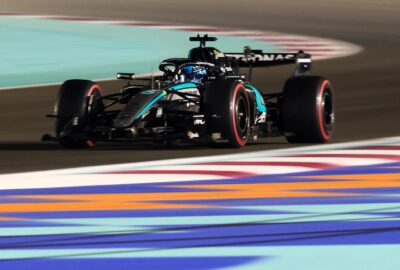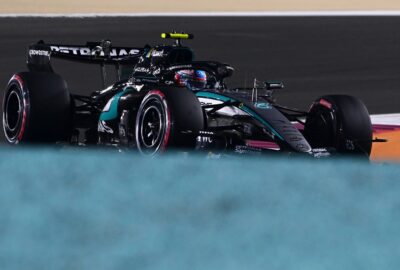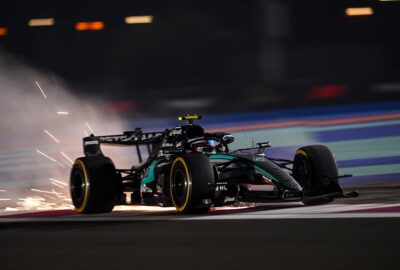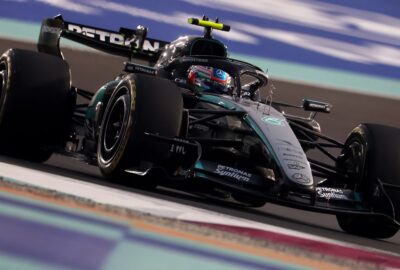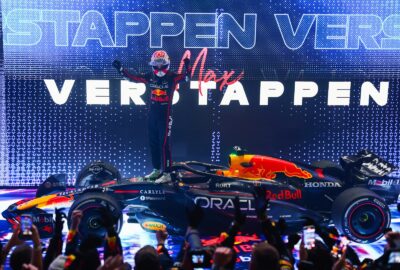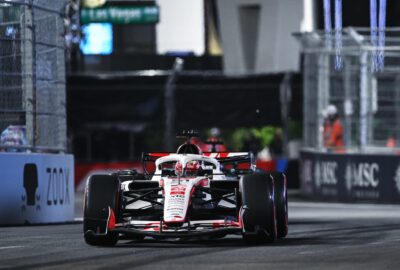
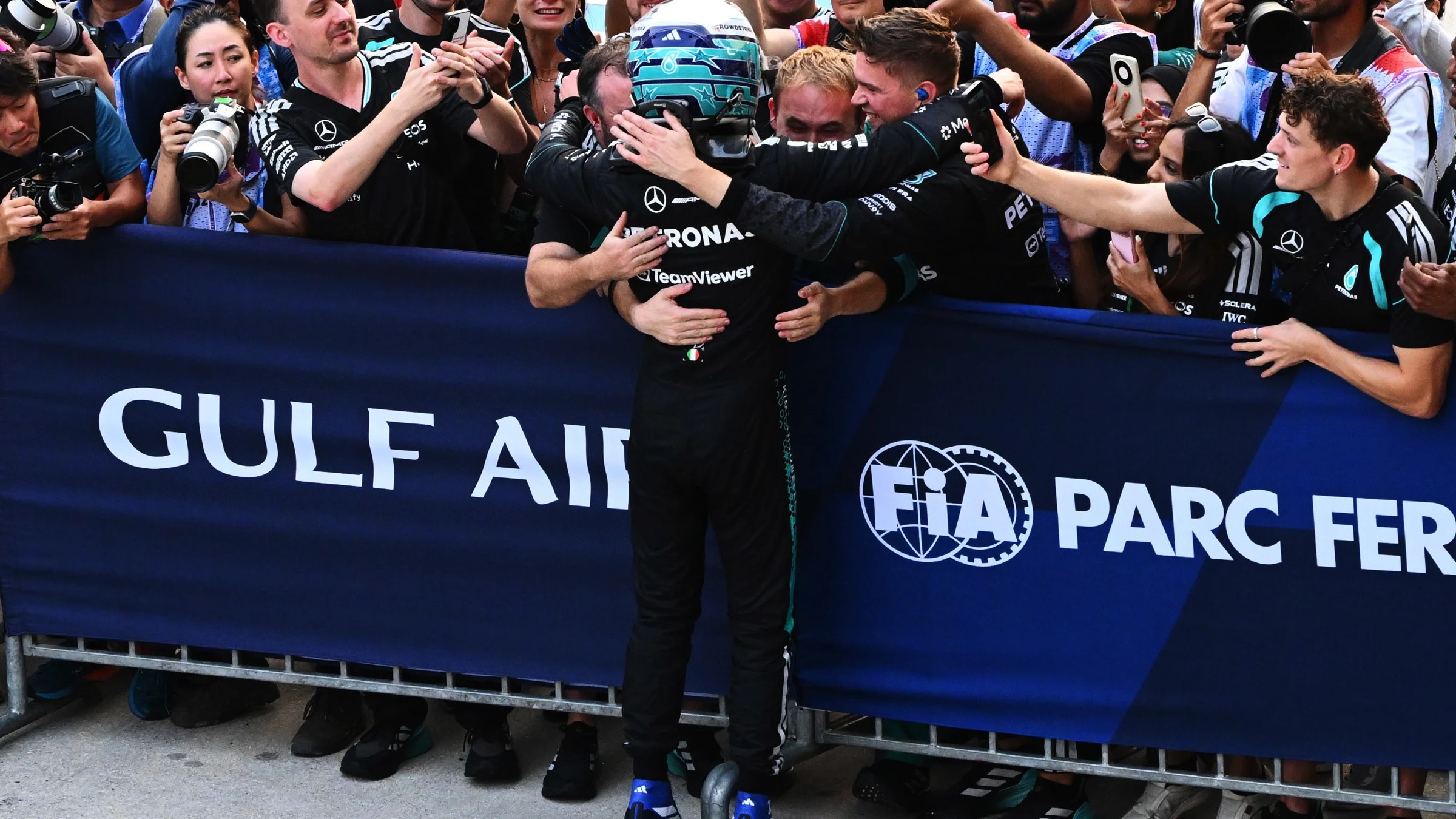
On 4 October 2026, Kimi Antonelli finished second in the Bahrain Grand Prix, Round 16 of the F1 season, held at Sepang in Malaysia. He was 2.307 seconds behind Max Verstappen. Antonelli had led after the start, dropped to third and recovered second, yet regarded the runner-up result as the maximum available that day. How did the slippery restart change the contest, and what happened later? The full result is in our full race report.
From leading on intermediates to losing ground at the slick restart
Starting third, Antonelli used intermediate tyres for the damp track and passed Verstappen on the run to Turn 1 to lead. At the end of Lap 8, heading onto Lap 9, Valtteri Bottas spun into the gravel and brought out the Safety Car. Antonelli switched to medium slicks while Verstappen took softs, with the Mercedes still ahead after the stops. A restart is the return to normal racing speed when the Safety Car leaves the track.
Heading onto Lap 13, Verstappen attacked around the outside of Turn 1 and completed the pass at the exit of Turn 2. George Russell then passed his team mate through Turn 5, dropping Antonelli to third. At the start of Lap 21, Antonelli reclaimed second from Russell at Turn 4. Verstappen was about five seconds ahead by then.
Antonelli subsequently ran wide at the final corner, clipped the pit-entry bollard and asked the team over the radio to check his front wing. Verstappen’s lead grew to about eight seconds. The excursion further complicated his attempt to close on the leader.
Reviewing the first restart on slicks, Antonelli said the track remained slippery and Verstappen had a better understanding of where to place the car to find grip. That allowed the pass through the opening two corners. He admitted being annoyed at losing the position, while also treating his rival’s line choice as a learning opportunity. Even after fitting slicks, drivers needed to judge how to negotiate the remaining damp sections and accelerate cleanly.
The late Safety Car brought the field close again
Late in the race, Alexander Albon’s stopped car brought out a Virtual Safety Car, a period in which each car’s speed is restricted, followed by a full Safety Car. The front runners made further tyre stops and the field regrouped. Verstappen kept the lead at the final restart, Antonelli remained second, and they finished in that order.
The day’s pace and an upgrade still being understood
Antonelli said afterwards that Verstappen had been very quick throughout the weekend, while Mercedes struggled more than at previous events. The team was still trying to understand its new upgrade package, with rough asphalt and high temperatures making that work harder. It had yet to establish whether the package had improved or worsened performance. Given the car’s pace that day, he considered second the maximum achievable result.
INKA SPORTS Analysis and conclusion, why second remained the maximum after leading
The intermediate-tyre start and the restart on slicks required different responses to the available grip. The position Antonelli gained at the start then had to be defended on slicks, on a still-damp surface and in close company. His description of Verstappen’s better car positioning in the first two corners explains the specific loss of position. Their medium and soft compounds also gave the contest different tyre conditions. Antonelli then had to repass Russell before returning to the position from which he could chase the leader directly.
The approximately five-second gap formed by the time Antonelli recovered second on Lap 21. The late Safety Car brought the field close again and renewed the contest at the front, with Verstappen still leading the restart. Antonelli gained another attacking opportunity at reduced distance, then needed to turn the restart acceleration and subsequent pursuit into an overtake. Verstappen defended the restart and held the lead to the flag. The final 2.307-second margin records the outcome after that regrouping.
Antonelli’s acceptance of second rested on his and the team’s assessment of Mercedes’ ability to challenge Red Bull that day. Losing position in the first two corners provided a specific lesson in line choice. The late Safety Car offered another chance to get close to the leader, yet Verstappen remained first after the final restart. Together, those phases explain the context in which Antonelli could be annoyed at being passed and still value second place.