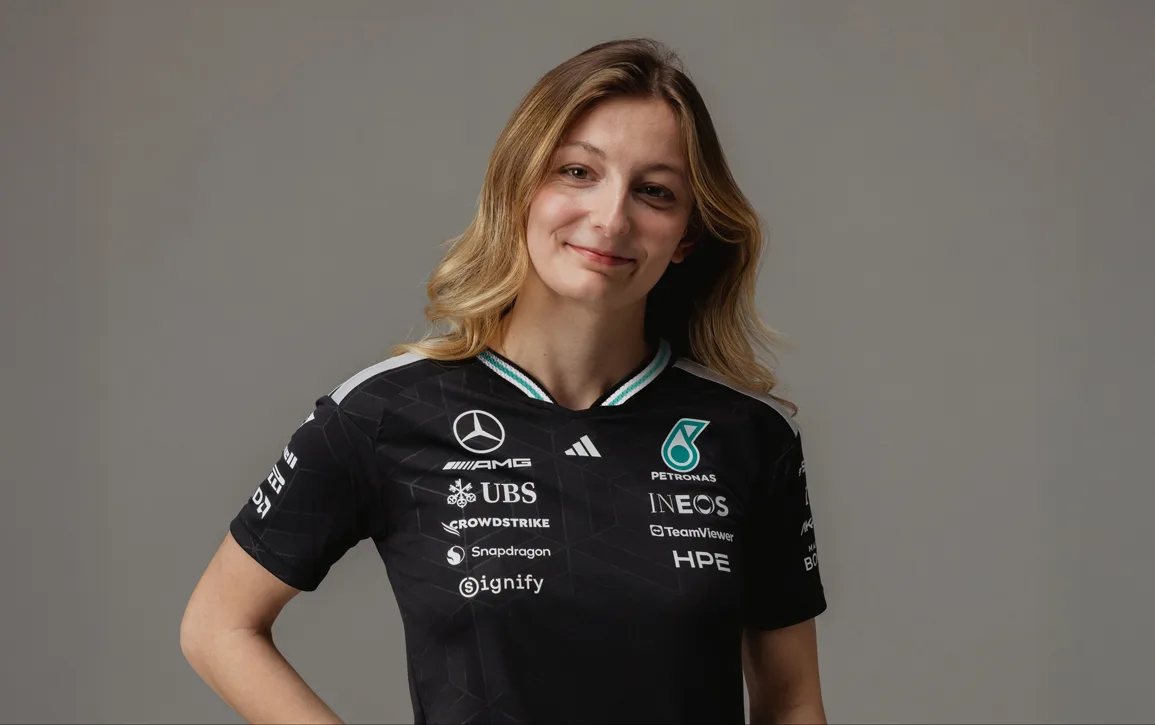
Doriane Pin, the 2025 F1 Academy champion, has made securing an F1 race seat her goal for the next five years. According to Motorsport.com, the 22-year-old French driver answered F1 when asked where she hoped to be in five years during Mercedes’ In Convo With Kids interview. She also hoped her progress could open opportunities for girls with the same dream. This is the driver’s personal ambition; it does not constitute a team commitment to a race seat or promotion date.
Development-driver duties and a first F1 test
Mercedes announced in January that Pin would become a development driver for 2026 after two seasons in its junior programme. Official duties include simulator development, factory and track activities, and support for the team’s F1 Academy driver at selected Grands Prix. A further explanation in April specified that she also supports and mentors Payton Westcott, applying her junior-racing experience to help the next driver.
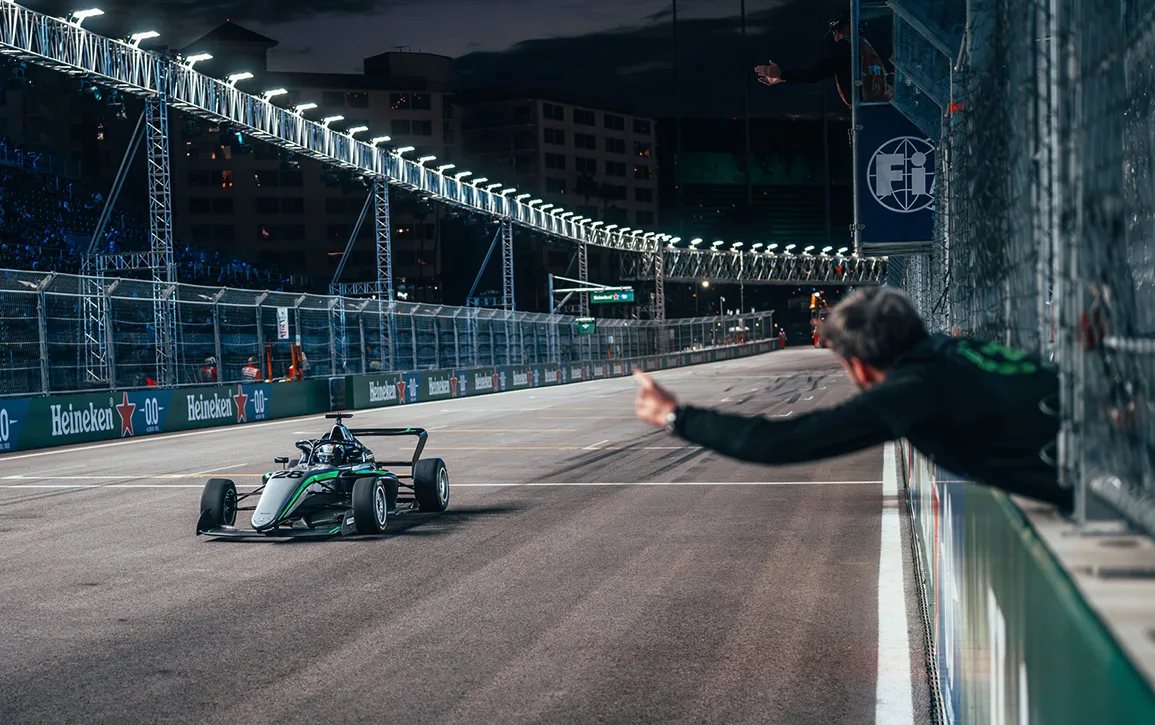
On 17 April, Pin completed her first F1 test on Silverstone’s National Circuit in the 2021 Mercedes W12. The team recorded 76 laps and around 200 kilometres and confirmed her as the first woman to drive a Mercedes F1 car. Before testing, she worked with engineers in the simulator to learn the procedures. Trackside Engineering Director Andrew Shovlin praised her preparation and professionalism. Pin described the W12 as larger and more powerful than the cars she had previously driven, building confidence lap by lap.
Her prior single-seater results provide clear context. Mercedes’ development-driver announcement recalled four wins and four additional podiums in the 2025 F1 Academy season, with the title secured at the final round in Las Vegas. The championship took her from the junior programme into new team duties, while two seasons of F1 Academy experience provide a basis for supporting subsequent drivers.
Endurance racing, Formula E and eligibility
In 2026, Pin also races for Duqueine in the European Le Mans Series LMP2 Pro-Am class while undertaking development work for other manufacturers. Peugeot’s March announcement assigned her 9X8 simulator development and planned a drive in the car at November’s Bahrain WEC rookie test. Citroen’s May announcement included her in its GEN4 Formula E development programme. Pin said in that announcement that she had already begun GEN4 simulator work to understand the car’s systems and driving approach.
Entering an F1 Grand Prix also requires meeting FIA Super Licence criteria and obtaining a team seat. The June 2026 edition of Appendix L sets conditions including licence grade, single-seater experience for first-time applicants and points. Its points table includes several championships beyond F2. F2 is therefore a common route for relevant experience and qualification points, rather than a mandatory step for every driver. One test in an older F1 car cannot by itself establish that Pin meets every application condition.
INKA SPORTS analysis: how development roles relate to the five-year goal
Pin’s progress needs to be considered by task. The F1 Academy title supplies junior-racing results, the Silverstone test adds F1 driving mileage, and simulator and endurance programmes provide further work opportunities. These contribute to a career record but cannot substitute for Super Licence eligibility or a full-time team seat. Assessing progress towards the five-year goal requires following subsequently confirmed race programmes, results and F1 test plans, rather than deriving a scheduled promotion path from the development-driver title alone.
Summary
Pin wants to reach F1 within five years and hopes motorsport will create more opportunities for women. Motorsport.com’s account says her interview addressed not only her own destination but also diversity and opportunity inside and outside sport. What is currently confirmed is her F1 Academy title, Mercedes development role, first W12 test and other ongoing programmes. A future race seat still depends on subsequent results, eligibility and team decisions.
Team background: Mercedes F1 team profile.