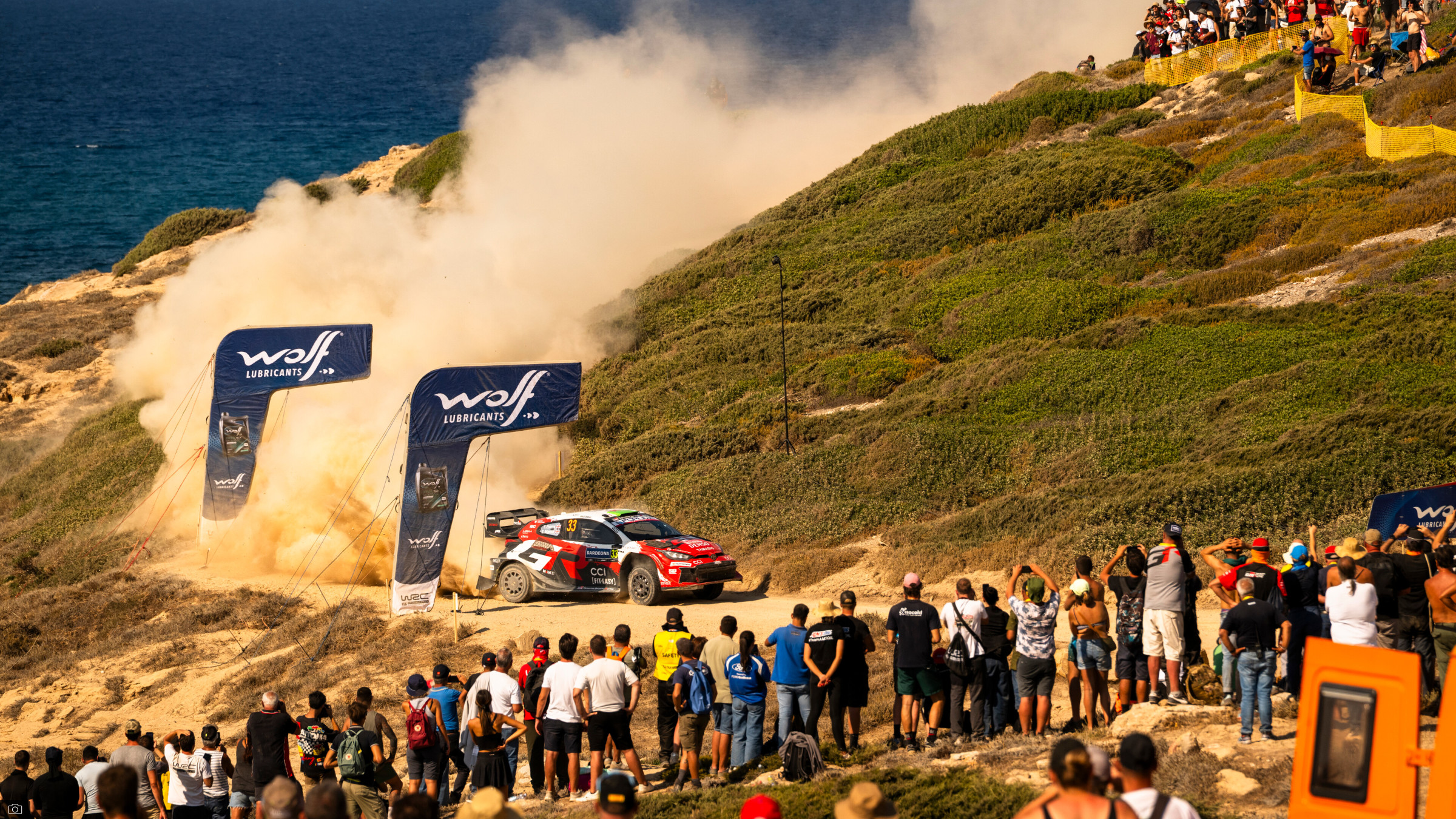
Round 13 of the 2026 WRC season, Rally Sardinia, concluded on October 4 with Solberg winning the rally and Evans taking the championship. Solberg still finished 57.6 seconds ahead of Ogier overall, yet lost his title chance on the final stage. That stage, the Power Stage, awards extra points to the top five, while the five fastest crews across all of Sunday’s stages also earn additional points. Protecting the overall lead was therefore insufficient: he still had to contest the final-stage points with Evans.
Stage times: the finale changed two sets of points at once
Sunday’s four timed stages were numbered SS14 to SS17. Adding the FIA times published to 0.1 seconds, Solberg completed SS14–SS16 in 37 minutes 15.1 seconds and Pajari in 37 minutes 23.8 seconds, a lead of about 8.7 seconds for Solberg. On SS17, Pajari recorded 4 minutes 57.5 seconds to Solberg’s 5 minutes 08.7 seconds, a difference of about 11.2 seconds. The official Sunday classification therefore put Pajari first in 42 minutes 21.3 seconds and Solberg second in 42 minutes 23.8 seconds, separated by 2.5 seconds.
The points document shows the practical impact of the mistake. Solberg dropped from the Sunday lead to second, earning 4 points, 1 fewer than the winner, while eighth on the Power Stage brought no bonus points. His 29 points comprised 25 for the rally win and 4 for second on Sunday. Time lost on one stage changed both bonuses without costing him the rally victory.
Evans stopped on SS16 to change a punctured tyre. His 18 minutes 14.1 seconds was 126.6 seconds slower than Solberg, costing him Sunday bonus points. That loss did not carry into the separate Power Stage classification, however. Third on SS17 still earned him 3 points, added to the 10 for fifth overall for a total of 13. The two scoring systems kept his title opportunity alive after the puncture.
Driver feedback: split speed and final-stage confidence were different matters
WRC recorded Solberg still running 1.9 seconds faster than the already-finished Evans at a split about 1 kilometre from the finish. In Toyota’s post-event report, he explained that he knew he had to push to beat Evans but was unsure whether his pace was enough, so he attacked harder and eventually made a mistake and went off the road. Speaking to WRC afterwards, he said losing the title hurt, but he did not regret trying to the end.
Evans likewise did not describe Sunday as a comfortable exercise in defending his position. He lost time sweeping loose gravel for following crews on the opening stage, recovered time on the second, then encountered a rock and a puncture on the third. He felt his Power Stage had not been clean and had worried it might not be enough. Leading the championship had not removed the pressure to score on the final stage.
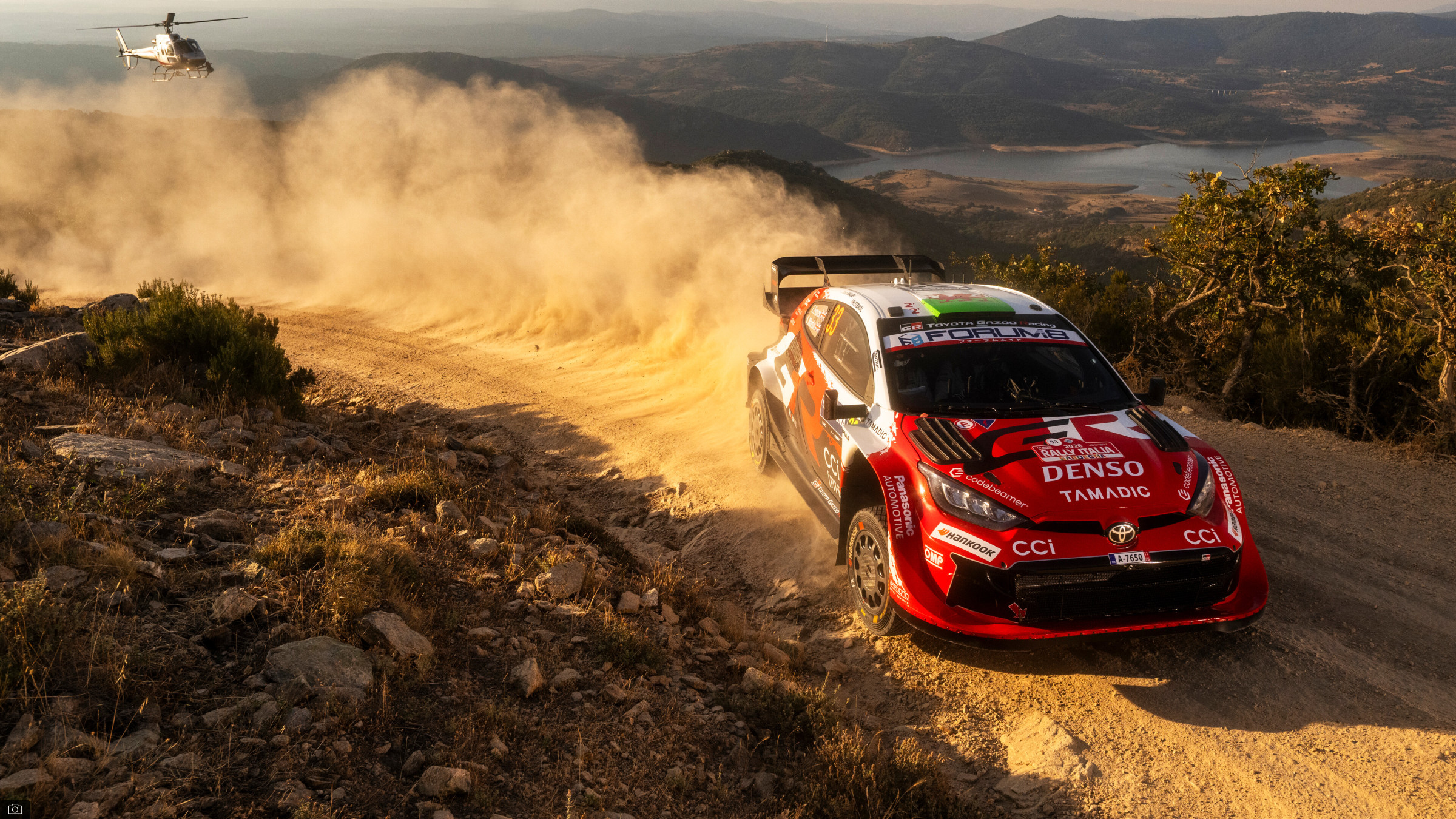
Pajari illustrated a third outcome: 15 points for third overall, 5 for winning Sunday and 4 for second on the Power Stage, making 24 in total. Overall rally positions remained unchanged, but speed on the final day could still alter the points shared among the three drivers.
| Driver | SS14 | SS15 | SS16 | SS17 | Sunday four-stage total |
|---|---|---|---|---|---|
| Oliver Solberg | 16:01.7 | 5:05.9 | 16:07.5 | 5:08.7 | 42:23.8 |
| Sami Pajari | 16:09.5 | 5:07.2 | 16:07.1 | 4:57.5 | 42:21.3 |
| Elfyn Evans | 16:15.7 | 5:03.9 | 18:14.1 | 4:59.8 | 44:33.5 |
INKA SPORTS analysis: why a split-time lead did not remove final-stage pressure
Toyota’s report noted that Evans’s provisional championship lead had fallen to just 1 point before the Power Stage. It grew to 5 after the finale: Solberg’s fall from first to second on Sunday added 1 point to the gap, while Evans’s third on the Power Stage added 3 and Solberg scored none there. That explains why retaining first overall was still insufficient to complete the championship chase.
At the timing point about 1 kilometre from the finish, Solberg was still 1.9 seconds faster than Evans. A mistake in the final corners left him with a slower stage time and no Power Stage bonus. Alongside his explanation that he was still unsure whether it was enough, the pressure on his final-stage decision came from relative stage speed, rather than the overall rally result. He needed to beat Evans over the complete stage; his accumulated lead could not do that job for him.
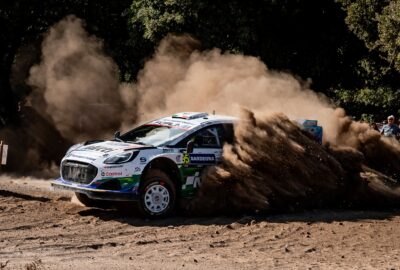
That task also unfolded on a changing surface. Toyota noted a road-sweeping effect on Osilo–Tergu and a gravel downhill finale on Sassari–Argentiera that was more difficult for later crews. Evans’s encounter with a rock and a puncture likewise showed that a second pass did not mean fixed conditions. Even with a short final stage and a lead at the split, grip and line-selection risks remained. Solberg’s eventual excursion into the sand erased his speed advantage before the finish.
Conclusion
The key to the Sardinia showdown was managing a margin against the particular objective being pursued. Solberg’s accumulated lead gave him room to protect the rally win, but the championship battle required speed on the final stage. After losing his Sunday bonus opportunity, Evans’s continued pursuit of a Power Stage placing still had decisive value. The championship gap, the two bonuses and the gravel finale combined to create that pressure: a lead had to survive to the finish to become final points. Full results and championship standings are in the Sunday results report.