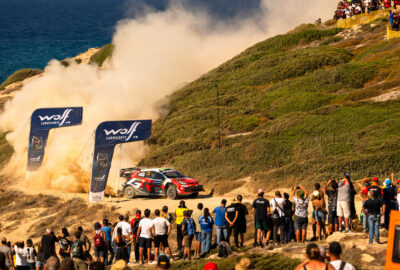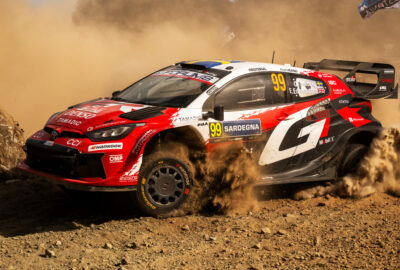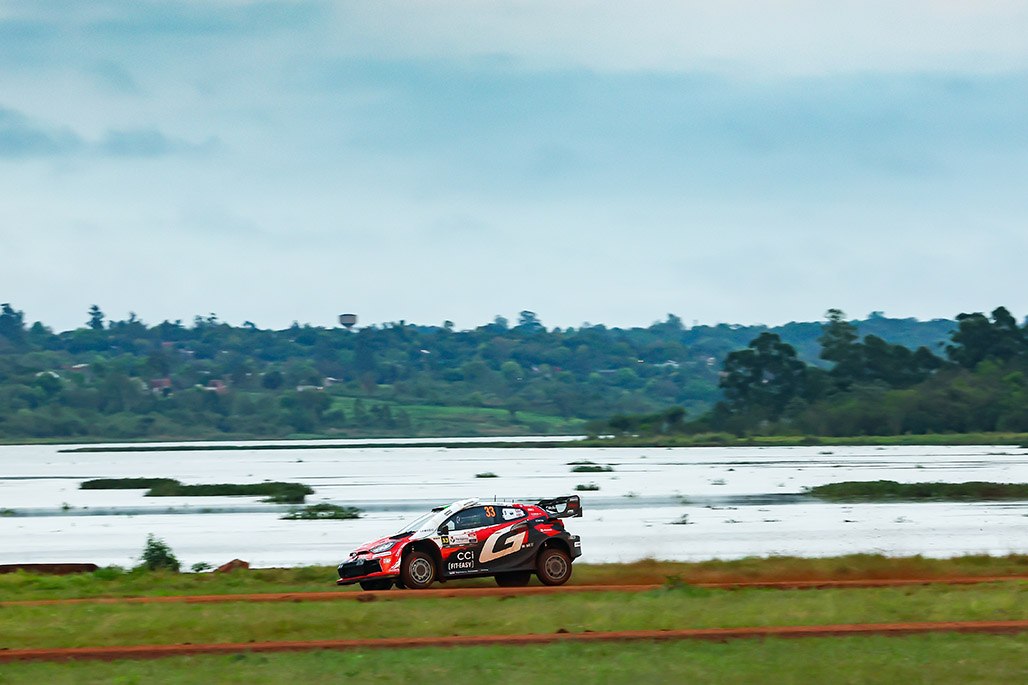
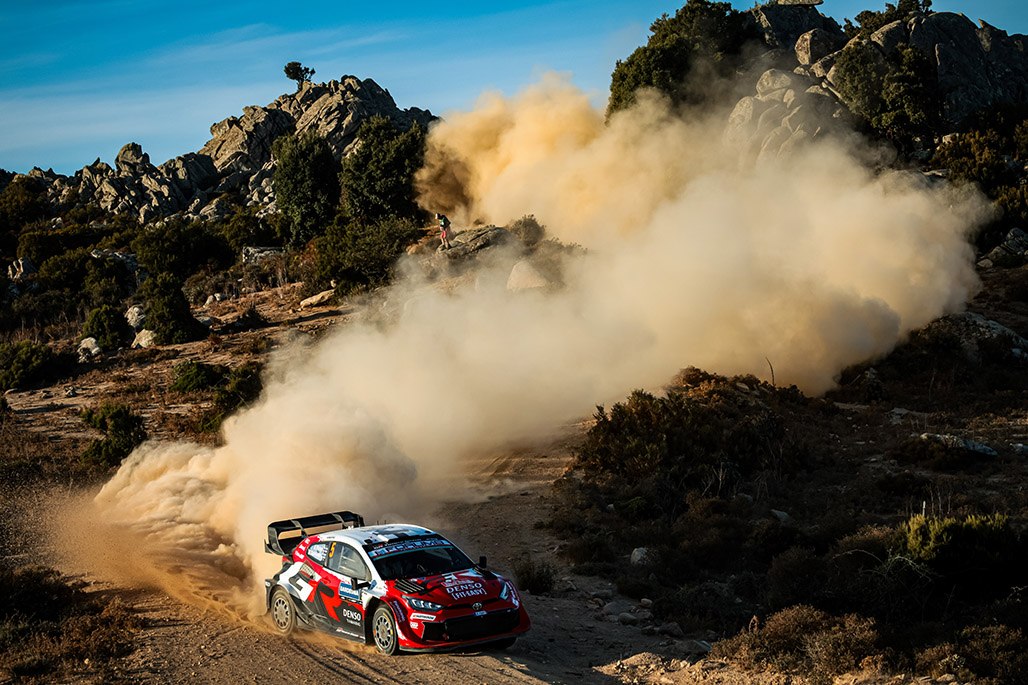
Elfyn Evans and co-driver Scott Martin won their first drivers’ and co-drivers’ world titles as the 2026 WRC Rally Sardinia concluded on October 4. The official WRC championship announcement recorded the final contest after a puncture on the penultimate timed stage, SS16. Evans retained fifth overall but lost the chance of Sunday bonus points, and the championship was not decided until the final Power Stage. Why was a 21-point pre-event lead still insufficient for a straightforward finale?
From Saturday’s title position to the final stage after the puncture
According to the WRC pre-event title guide, Evans arrived on 230 points, 17 ahead of Pajari and 21 ahead of Solberg. His official target was at least 19 points at this rally, a total that would make rivals’ results irrelevant. A maximum of 35 points was available: 25 for the rally win, with the top five across Sunday’s stages, Super Sunday, and on the final Power Stage each receiving 5 to 1 points. Nineteen was the guaranteed title threshold; a lower score could still win it.
At the end of Saturday, Solberg led the rally by 33.6 seconds, with Pajari third and Evans fifth. Toyota’s Saturday report calculated that, on those positions, Evans’s provisional championship advantage over Solberg was down to 6 points, with both sets of Sunday bonuses still unsettled. Evans also acknowledged he may have been too cautious on the first two stages of the rough second pass and failed to retain the fourth place he had just regained on the day’s final stage.
On Sunday’s SS16, Evans suffered a front-right puncture and stopped to change the wheel, losing nearly two minutes. Toyota’s final report noted that he retained fifth overall but was out of the Super Sunday points, entering the final stage with just a 1-point provisional lead over Solberg. The base points for fifth remained, but the bonus he had hoped to earn from Sunday’s aggregate performance was no longer available.
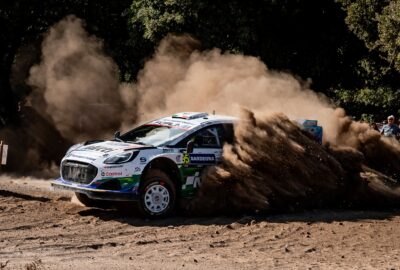
Evans ran first on the final Power Stage. WRC reported Solberg still 1.9 seconds faster at a split a little over 1 kilometre from the finish, before he ran into sand in the final corners and rejoined to finish. Toyota’s report put the final stage difference at Solberg 8.9 seconds slower. His lead at an intermediate split did not become an advantage over the full stage.
The organiser’s points allocation document for the rally showed Evans earning 10 for fifth overall, none from Super Sunday and 3 for third on the Power Stage, a total of 13. Solberg took 25 for the rally win and 4 for second on Super Sunday, with no points for eighth on the Power Stage, totalling 29. Evans won the title on 243 points, with Solberg second on 238. Full rally results are in the Sunday race report.
After five runner-up finishes, what built the first title?
Evans had previously been championship runner-up five times, missing the 2025 title by 4 points. A WRC season review published on October 5 retained his assessment that he was not most satisfied with the final rallies and that the title came from the full year’s work. He also became the first British WRC drivers’ champion since Richard Burns in 2001. Scott Martin took his first co-drivers’ title.
That season review provided specific context. Evans won in Sweden and Japan, regained the championship lead after second in the Canary Islands and retained it to the finish. Even when running first cleared loose gravel and dust for following cars to gain grip, he finished fifth in Greece, sixth in Estonia and fourth in Paraguay. In Chile, tyre damage on the penultimate stage dropped him from second to fifth, but he still brought home points.
INKA SPORTS analysis: how the puncture changed the title task, and season-long scoring kept it alive
The SS16 loss affected two aggregate classifications differently. Evans’s accumulated rally-time cushion allowed him to stop and still retain fifth and its 10 base points. Super Sunday counted only Sunday’s stages, so the delay directly cost him that bonus. The Power Stage used a separate final-stage ranking, meaning falling behind across Sunday did not remove his eligibility to score at the end. He therefore had to protect fifth overall while continuing to pursue final-stage points.
The guaranteed target of 19 was now unreachable by that route. With 10 for fifth and none on Sunday, even the maximum 5 on the final stage would yield only 15. That ceiling shows his position had shifted from seeking a title independent of rivals to maximising final-stage points while awaiting their results. Evans did score 3 at the end, while Solberg’s mistake left him with none from that category. The earlier lead still mattered, but no longer allowed him simply to aim for a clean finish.
The season comparison further explains where that cushion came from. Evans won only twice; Solberg’s finale victory brought him level with Pajari on three wins each, yet the drivers with most rally wins did not take the championship. Evans’s continued scoring despite road-sweeping disadvantages and tyre damage left him a lead to defend after losing one Sunday scoring route. That fits his attribution of the title to the whole year’s work and explains how he retained it after a setback in the finale despite dissatisfaction with his late-season performances.
Conclusion
Evans’s first title combined accumulated season-long points with actual scoring on the final stage. His rally-time margin prevented the puncture from also consuming the base points for fifth, while the separately scored Power Stage left a final route to points. Solberg’s final-stage mistake also affected the outcome. Sardinia shows that an existing lead can cushion losses, but drivers must redefine their task around the position and scoring opportunities remaining after an incident. The breakthrough after five runner-up finishes came from earlier consistent scoring and a final-stage test that still required him to compete.
Final 2026 WRC driver standings: top 10
| Position | Driver | Championship points |
|---|---|---|
| 1 | Elfyn Evans | 243 |
| 2 | Oliver Solberg | 238 |
| 3 | Sami Pajari | 237 |
| 4 | Sebastien Ogier | 189 |
| 5 | Adrien Fourmaux | 183 |
| 6 | Takamoto Katsuta | 175 |
| 7 | Thierry Neuville | 134 |
| 8 | Hayden Paddon | 38 |
| 9 | Josh McErlean | 35 |
| 10 | Esapekka Lappi | 33 |