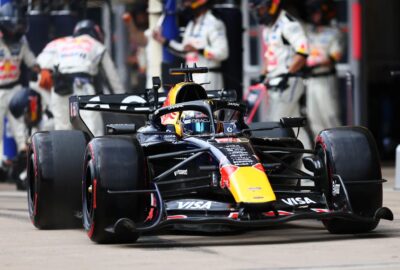
Before the United States Grand Prix, Williams identified the first sector's fast sequence at the Circuit of the Americas as the intersection of two tasks: responding to wind-induced balance changes and controlling electrical energy use. In an October 21 technical briefing, Head of Trackside Engineering Paul Williams said unsuitable pedal inputs through Turns 4–8 could consume excessive energy and weaken deployment for the rest of the lap.
The same fast sequence links corner balance with later straights
The Circuit of the Americas is 5.513 kilometers long, climbing to Turn 1 before descending toward Turn 11. Paul Williams described the first sector as fast, with more slow, technical corners in the other two. Turns 4–8 are particularly wind-sensitive, with wind substantially affecting balance there.
Under the 2026 regulations, he placed Austin's deployment requirements and energy sensitivity around the season average, noting two active-aerodynamics zones. The straights toward Turns 1 and 12 are the key areas for the speed effect of electrical energy. Average overall demand does not mean energy can be used equally everywhere.
Comparing the sequence with Suzuka's first sector, he stressed suitable pedal-input profiles through Turns 4–8. The issue is how the driver controls the pedals through successive corners: excessive consumption there extends its effect to later deployment. The explanation connects fast-corner performance to subsequent straights rather than treating them as independent setup tasks.
Local surface changes as drivers emphasize quickly establishing a baseline
The team confirmed resurfacing from the entry to Turn 9 to the entry to Turn 11, with bumps before Turns 12 and 19 also addressed. Blue track-limit lines have been added at several corners. Surface and boundary changes are separate matters; learning the new surface still requires line control to keep laps valid.

Sainz also noted the wind-exposed circuit in the team's October 22 preview and the need to monitor balance changes throughout the weekend. He likes the climb to Turn 1 and fast Turns 4–8, and believes overtaking opportunities are plentiful. That assessment remains a driver's pre-event judgment.
Albon placed preparations in the triple-header context: after Singapore, the team reviewed its work, replenished spares and reset. He felt Friday needed a quick start to maximize the three consecutive rounds. Their comments concern changing external conditions and preparation efficiency, not an established improvement in this week's pace.
INKA SPORTS analysis: Compare whole-lap gains, rather than one sequence
The technical briefing poses a specific question: how do Turns 4–8 carry their effects into the latter lap? The team says pedal inputs there affect remaining energy, while the approaches to Turns 1 and 12 are deployment-sensitive. Assessing a driving or setup approach therefore requires comparing fast-corner time with subsequent straight-line performance. One faster section alone does not establish an overall lap gain.
Wind also changes fast-corner balance, so practice comparisons need similar conditions. Examining driving adjustments for wind alongside energy distribution in the same testing cycle is more targeted than comparing one fastest lap.
Conclusion
Williams needs an early working baseline that combines fast-corner balance with later electrical deployment. A conventional weekend returns this year, offering three practice sessions to compare approaches. FP1 begins at 12:30 local time on October 23, or 01:30 on October 24 China Standard Time (UTC+8), when the pre-event technical priorities will first be tested in actual laps.