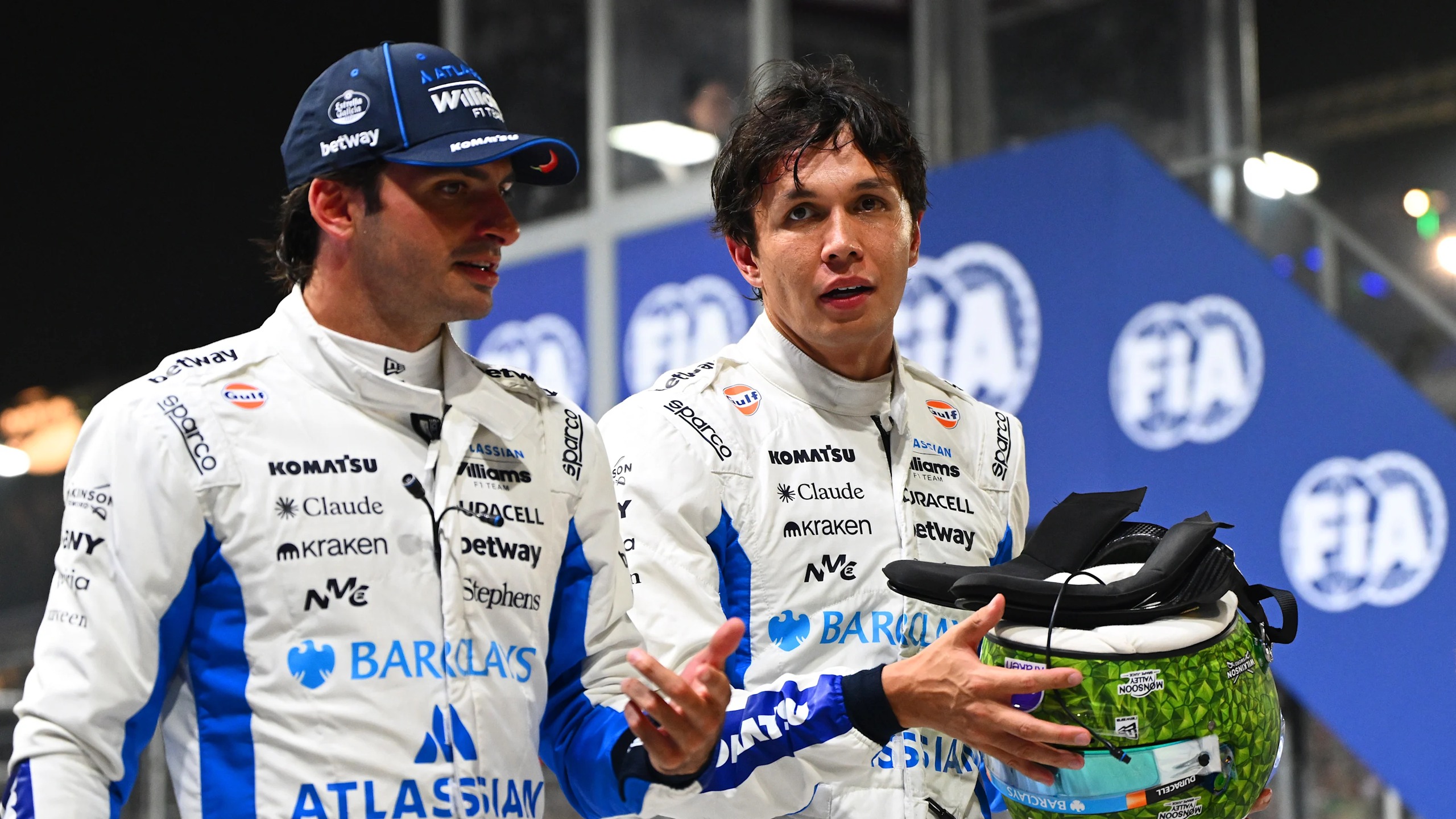
Both Williams cars were eliminated in the opening phase of Singapore Sprint Qualifying on October 9, with Alexander Albon finishing 19th and Carlos Sainz 22nd. The team’s post-session comments indicated that the result involved a brief power problem, braking adjustments and handling difficulties. Team principal James Vowles did not attribute all the blame to external factors.
A disrupted timed lap adds to a day of handling difficulties
In the team’s post-session comments published on F1’s website, Sainz said several cars had been affected by a software problem and that his car had briefly lost power during his timed lap, compromising the attempt. He also said braking problems in first practice had forced the team to make some less-than-ideal adjustments.
Sainz acknowledged that the lap itself had not been clean either, as he had locked up at Turn 8. His final time was 1:37.376. The loss of power and the driving error occurred on the same lap, so the final time alone cannot establish how much each cost him.
Albon ended qualifying with a 1:36.130. He said the car felt very different from first practice and that both he and Sainz had experienced handling problems. The software issue in the opening phase had made those difficulties worse. The team needed to examine the data to understand the change.
Vowles: the mode problem had an impact, but the car was still not fast enough
Vowles said a problem with the activation of overtaking mode after the red flag in the opening phase had affected the team’s lap times. He was confident that the FIA would investigate it thoroughly.
He also acknowledged that Williams had fallen short of expectations even when that issue was set aside. He believed both cars would have had a chance of reaching the second phase without the problem. The full results are available in our Singapore Sprint Qualifying report.
INKA SPORTS analysis: resolving the power interruption addresses only one of the problems
The team faces two different tasks. The brief loss of power requires it to establish whether the relevant function was activated correctly at the time. The handling difficulties mentioned by both drivers require it to look at the car’s condition and setup. Resolving the first issue would not automatically remove Sainz’s discomfort under braking or explain why Albon felt the car was so different from first practice.
In Grand Prix qualifying on the evening of October 10, Beijing time (UTC+8), if both drivers can complete more consistent laps with the power functions operating normally, the team will have clearer evidence with which to assess the effect of its setup.
Conclusion
Friday gave Williams a clear indication of a power interruption, while also exposing handling problems shared by both cars. Understanding this result requires separate investigation of the brief incident and the persistent driving difficulties. The team believed it had a chance of reaching the second phase, but real improvement still needs to show in valid lap times.