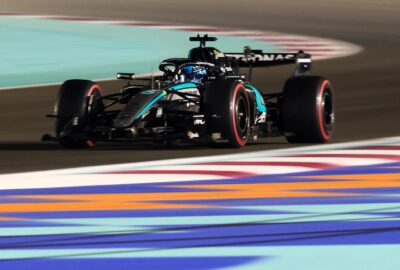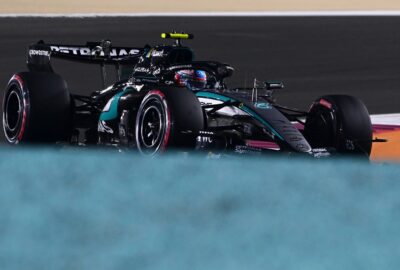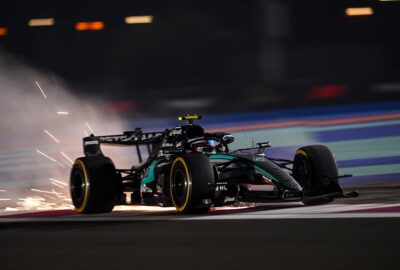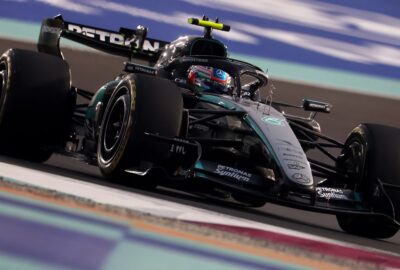
Mercedes compared two specifications of its car at the Singapore Grand Prix on 9–11 October 2026. George Russell used the older package while Kimi Antonelli continued with the upgraded version. By the end of the weekend, the team felt set-up work had begun to reveal the new package’s potential. Antonelli finished third in the Grand Prix, while Russell recovered from 19th to ninth following a power-unit penalty.
Tyre problems followed the Malaysia upgrade
In the team’s preview published on 6 October, Team Principal Toto Wolff described Malaysia as a difficult weekend and said several areas had been identified for investigation. Mercedes planned to assess both specifications throughout Singapore, using a circuit with different characteristics from Sepang to improve its understanding of the car.
The upgrade appeared in practice in Malaysia on 2 October, with changes to the floor edge, sidepods and rear diffuser. Russell said he could feel extra downforce in some corners, but tyre overheating and degradation were having a major impact and set-up changes were needed. Downforce helps a car maintain grip through corners, while tyre condition also affects how much of that performance can be used.
Deputy Team Principal Bradley Lord said the same day that the drivers could feel more downforce in high-speed corners and the team needed to find the settings that suited the updated car. He also explained that reverting to the previous specification was unavailable during that Malaysia weekend, leaving Mercedes to optimise the package it had.
Russell returned to the old specification as Antonelli tested the upgrade
By 8 October, Mercedes had confirmed its split for Singapore. Russell reverted to the Azerbaijan specification, while Antonelli retained the Malaysia updates and tested a new front wing. Running different aerodynamic packages across the same race weekend gave the team an ongoing comparison.
Russell said he had proposed the comparison before the race in Malaysia. His subsequent engine failure meant a power-unit grid penalty in Singapore and made returning to the familiar older car more attractive. He also pointed to the widely differing competitiveness of that same specification at Baku and Budapest, with circuit characteristics an important part of the assessment.

Singapore was the final Sprint weekend of the season. A Sprint is a shorter race with its own points, so Mercedes had to evaluate the cars alongside preparations for both the Sprint and Sunday’s Grand Prix. Before the event, Wolff identified scoring as many points as possible and helping Russell work his way forward as objectives.
Set-up work changed the feedback from Friday to Saturday
In Sprint Qualifying on 9 October, Russell finished second and Antonelli seventh. Wolff subsequently described the newer car as trickier to drive and the older version as more stable, with better grip. He wanted to identify what worked in each package to guide the next development steps.
Mercedes changed Antonelli’s set-up before Grand Prix Qualifying on 10 October. He qualified fourth, with Russell sixth. Antonelli said the car felt better and he was starting to see the upgrade’s potential, although its effective set-up window remained very small and the car reacted differently depending on how he drove it.
Both cars scored as Mercedes saw more upgrade potential
Russell received a 40-place grid penalty on 9 October for exceeding the allocation of four power-unit elements, including the internal combustion engine. On 11 October, further use of an energy store and control electronics unit added 20 places, bringing the total to 60. He had qualified sixth, and the final starting grid placed him 19th.
On 11 October, Antonelli started fourth and finished third in the Grand Prix. Russell began 19th following the power-unit penalty, using Medium tyres before switching to Softs and recovering to ninth to score points.
After the race, Trackside Engineering Director Andrew Shovlin said the team had seen encouraging signs in qualifying and race conditions as it moved closer to the right operating window. By the end of the weekend, he judged Antonelli’s package to be the faster of the two.
Wolff also felt the comparison had helped Mercedes extract more potential from the upgrade, while the new car remained harder to set up. Antonelli said progress since a difficult Friday had given the team information to use in further improvements.