McLaren will bring small upgrades to this weekend’s Brazilian Grand Prix, although Lando Norris cannot yet say whether the changes will make its car easier to drive. Speaking during media day in São Paulo on November 5, he said the team hoped to improve this year’s package, while acknowledging that performance and handling could move in different directions.
After Mexico, McLaren is fourth in the Constructors’ Championship with 365 points, 17 behind third-placed Red Bull. The changes therefore matter to the late-season standings as well as development work. With the Brazilian weekend yet to begin, their benefit has not been demonstrated on track.
A performance gain may bring a handling challenge
In an interview published by Formula 1, Norris said McLaren would add some small changes this weekend in the hope of moving in a better direction. He also acknowledged that he did not know whether they would make the car easier to drive; they could even make it harder.
His hope was that a performance step could then give the team scope to adjust the car and make its behaviour more consistent. He believes it has always had good potential, with the difficulty lying in extracting it.
From the upgrade plan to this weekend’s test
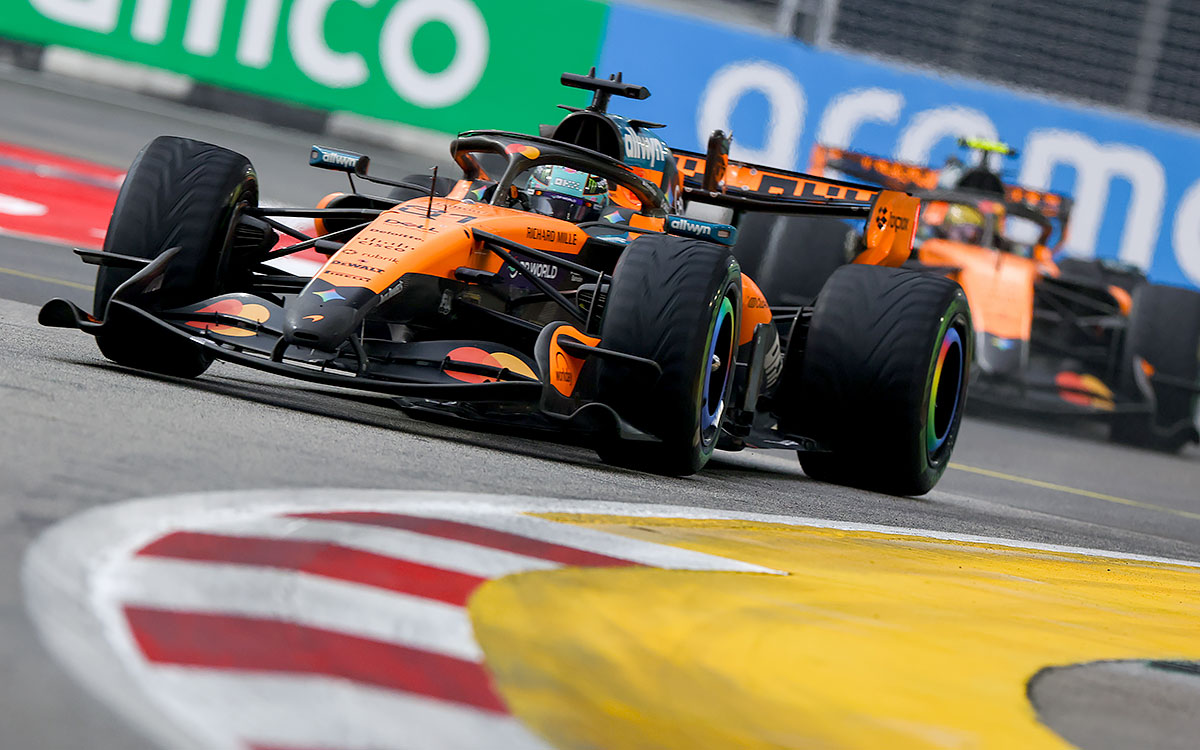
McLaren had already identified Brazil and Las Vegas as destinations for further development. Team Principal Andrea Stella outlined that plan after the United States Grand Prix and said Mexico would bring limited changes. In São Paulo, attention now moves to the parts due to reach the car and whether Norris can use its performance more consistently.
The circuit also holds positive memories for Norris. He won in São Paulo last year and recalled that weekend as a confidence boost in this interview. Brazil returns to a conventional programme of three practice sessions, qualifying and the race this year, making Friday’s two sessions the first test of these changes.
INKA SPORTS analysis and conclusion: practice provides the first test
Under the sequence Norris described, continued difficulty behind the wheel would need to be assessed alongside performance, rather than one negative response deciding the verdict on the package. Equally, the hope of greater performance is not an achieved gain. The 17-point deficit to Red Bull gives McLaren a practical need both to find pace and to turn it into consistent running.