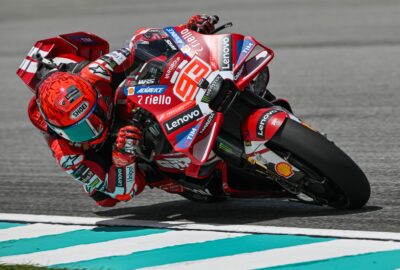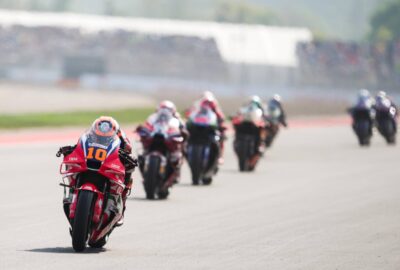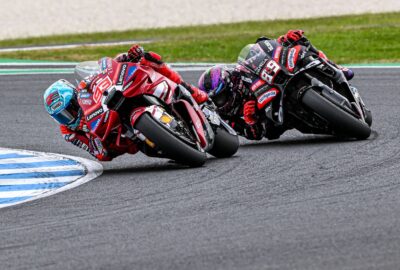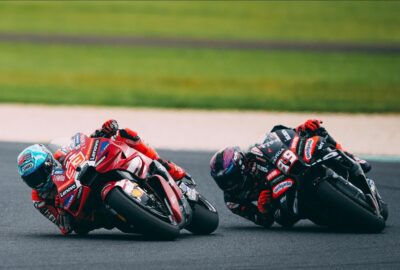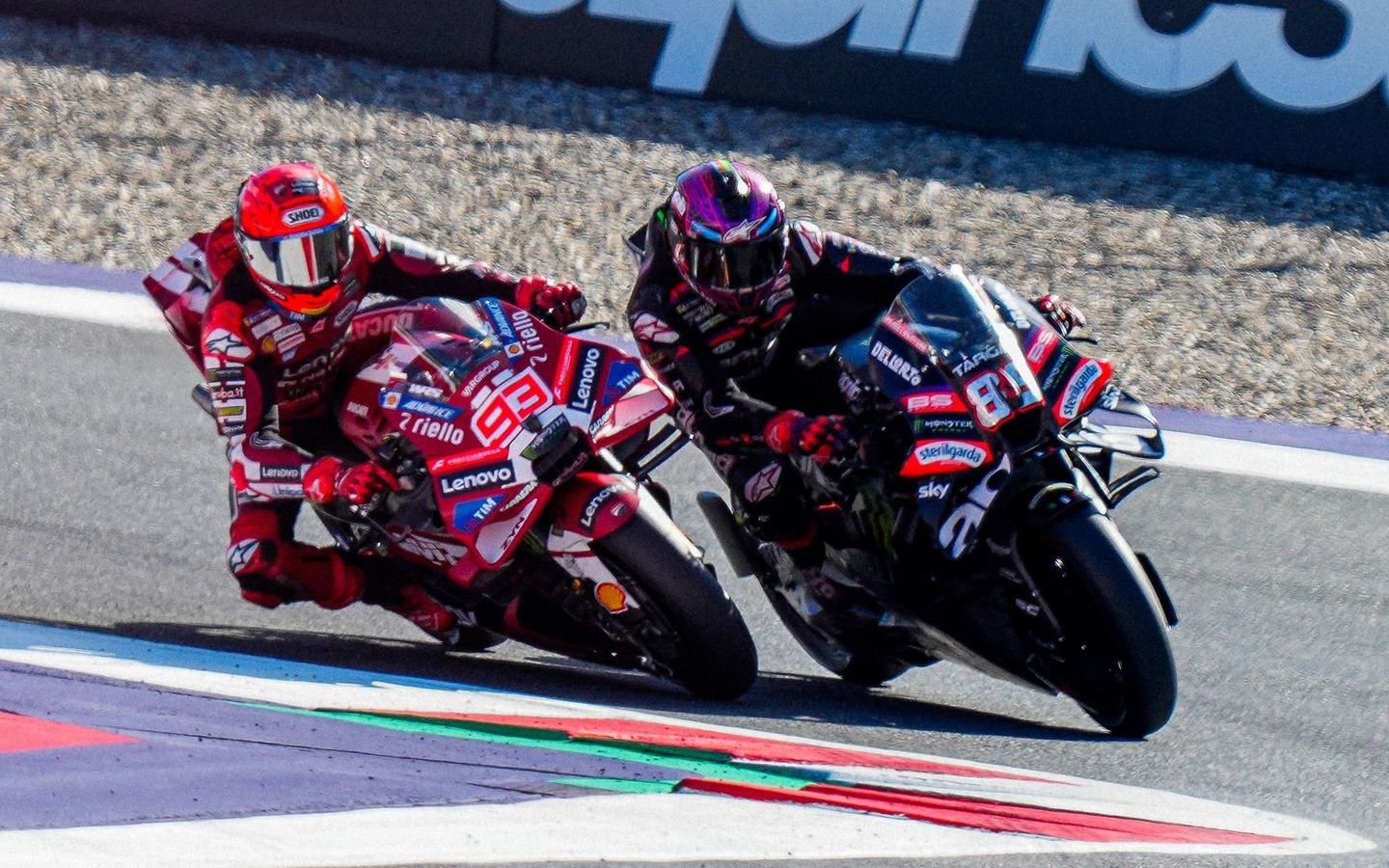
According to Motorsport.com’s post-race report on 19 September, Jorge Martin denied that his pass on Marc Marquez in the Austrian Grand Prix Sprint was revenge for their opening-lap contact. Martin explained that when attacking a rider who can readily repass, it is necessary to slow the bike sufficiently to retain a good exit line. He recovered from eighth on the opening lap to win the 14-lap race, with his move on Marquez a decisive step in reaching second place.
MotoGP’s official report described how Martin lost ground on the opening lap. Starting from pole, he led into Turn 1 but ran wide on the exit, allowing Marc Marquez to attack up the inside at Turn 2a. As the pair contested the line through the sequence of corners, Martin lost mid-corner speed and drive on the outside and was down to eighth by Turn 3. As quoted by Motorsport.com, Martin said he nearly crashed during the change of direction but fortunately stayed on the bike.
Recovering from eighth to second
Martin then regained places one by one. The official report listed passes on Binder, Bagnaia, Ogura and Alex Marquez, putting him back in fourth by lap 5. On lap 7, he passed team-mate Bezzecchi on the inside at Turn 1. A lap later, he overtook Marc Marquez at the same corner to move into second. By reaching second on lap 8, he had recovered six positions.
Explaining that recovery in the response reported by Motorsport.com, Martin credited the rhythm he had built throughout the weekend. He said he had practised long runs riding alone and knew he had the speed to move forward even after dropping to eighth. He had not initially expected to catch Marc Marquez, but as he pushed lap after lap, he found he could brake later while maintaining good mid-corner speed.
Martin explained the attack on Marc Marquez as part of the same approach to overtaking: after passing a rival, he still needed to slow the bike enough to hold a good exit line, or risk being immediately repassed. He said he had used the same approach against Alex Marquez and Bezzecchi, emphasising the importance of protecting the exit line at this circuit. That was Martin’s explanation of the move’s purpose, rather than an account of a forceful attack motivated by a personal dispute.
Holding the position after making the pass
Once Martin reached second, pursuit and defence had to be managed together. The official report recorded Acosta still holding a 2.8-second lead at that point, while Martin needed to keep Marc Marquez and Bezzecchi behind him. He had also received a track-limits warning, with another infringement potentially bringing a Long Lap penalty. Retaining his position therefore required control of his line to avoid the additional cost of a penalty.
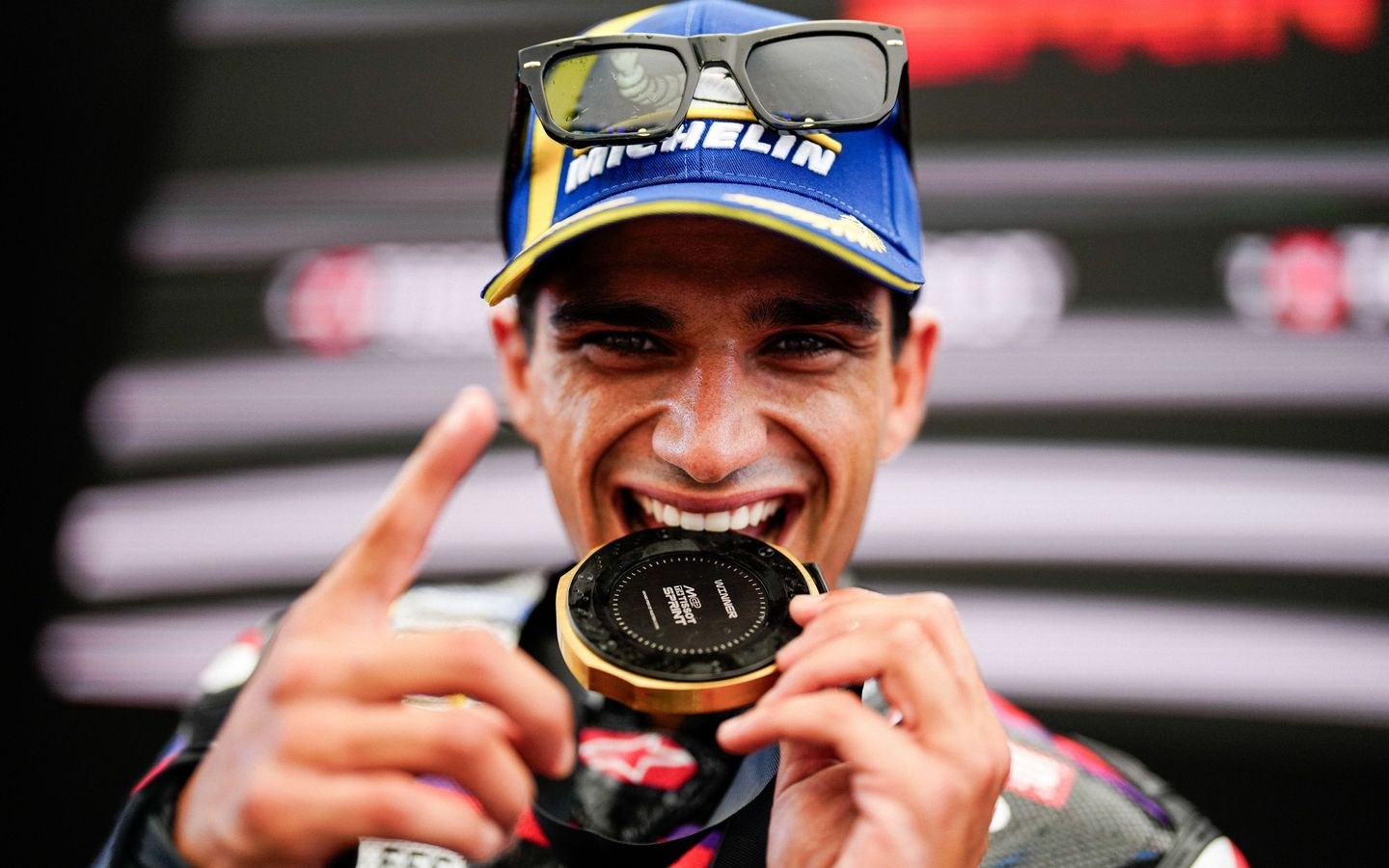
Only when Acosta crashed at Turn 2a with three laps remaining did Martin inherit the lead. The official Sprint results showed Martin beating Marc Marquez by 1.026 seconds, with Bezzecchi third. The top two scored 12 and 9 points respectively, leaving Martin three points ahead in the championship. His own overtaking took him from eighth to second; the change to first place came after the leader retired.
INKA SPORTS Analysis: Why an overtake must be judged beyond the corner exit
This race showed why assessing an overtake requires looking at the contest beyond the exit. Although Martin entered Turn 1 first on the opening lap, he did not retain the advantageous position through the following sequence. After taking second on lap 8, he again had to keep his rival behind. Alongside Martin’s explanation of slowing the bike and protecting his exit line, this shows that the value of an attack lies both in gaining a position and in making it last through the subsequent contest. Looking only at who is ahead at corner entry does not establish whether the move has truly been completed.
Holding second also had a clear bearing on the result. When Acosta led by 2.8 seconds, Martin had not yet secured victory, but he had placed himself immediately behind the leader. He still faced pressure from the riders following him and the risk of a track-limits penalty. Remaining second when Acosta crashed made him the new leader. His victory combined the proactive recovery of six positions with the opportunity created by the rider ahead making a mistake. Those two elements cannot be reduced to a single pass on Marc Marquez.
Conclusion
Martin explained his forceful pass as a racing necessity to protect his position on corner exit. The official report and classification set out the full sequence: a recovery from eighth to second, followed by inheriting the lead. The Sprint gave him a three-point championship advantage. The front row for the Grand Prix on 20 September remained Martin, Marc Marquez and Acosta. The Sprint had shown how significant the fight for position after corner exit could be in the longer race to come; the Grand Prix’s result was still to be decided.