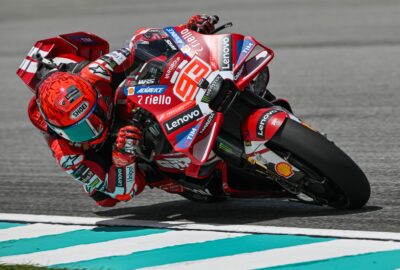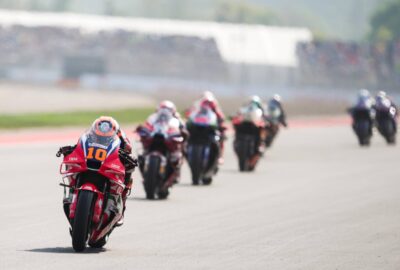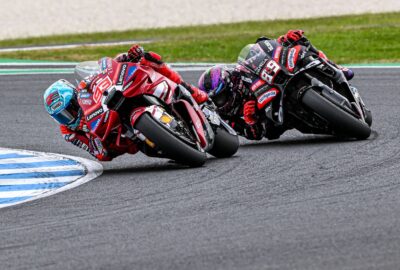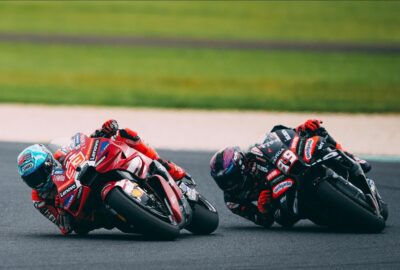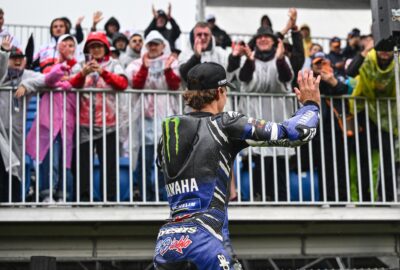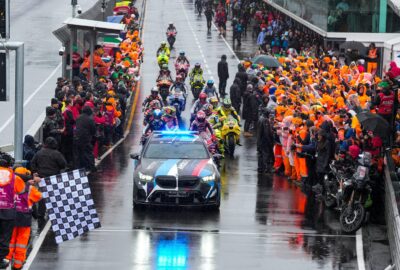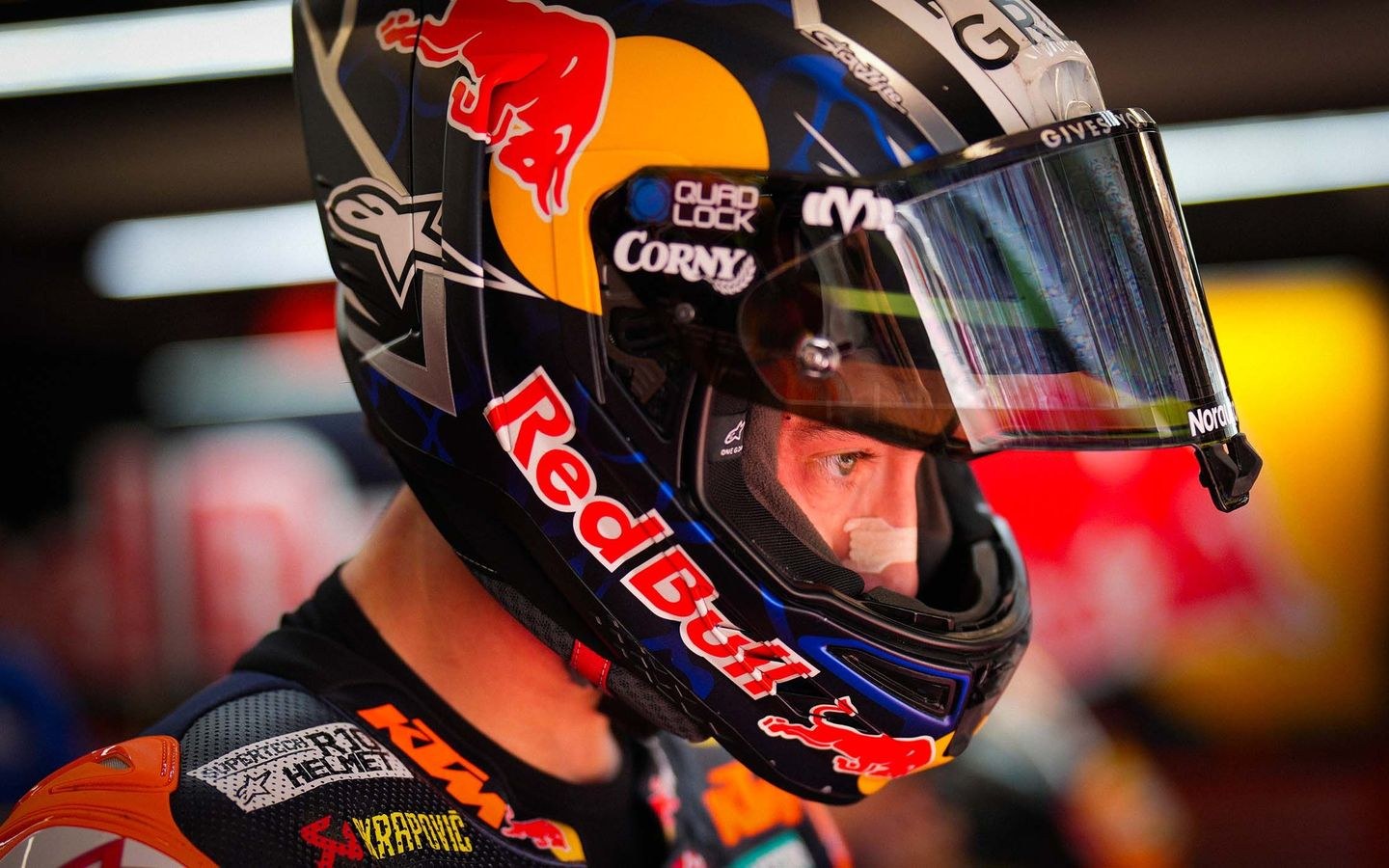
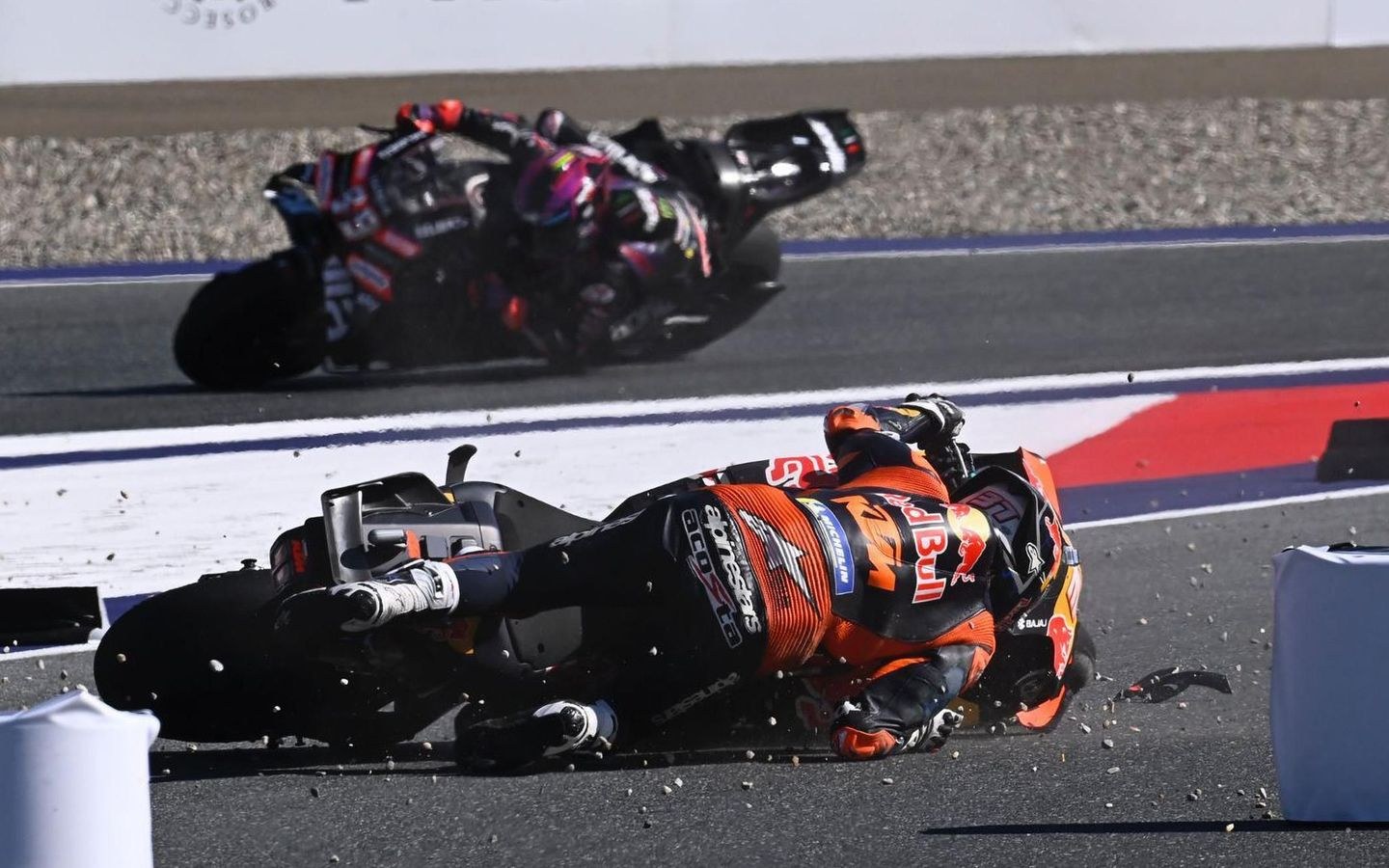
According to Motorsport.com’s interview report after the Austrian Grand Prix Sprint on 19 September, Pedro Acosta admitted that he missed his braking point while checking the remaining laps and fuel information on his dashboard. The Red Bull KTM Factory Racing rider was leading with only three laps left when he lost the front through the chicane around Turn 2 and retired, ending his chance of a home victory before the finish.
Acosta described the sequence directly. His feeling on the bike and his rhythm had been good, and he wanted to see how many laps remained and check the fuel situation. He focused on the dashboard at the wrong moment and then missed his normal braking reference. Fuel information was what he was checking; the cause he gave for the crash was his own timing in reading the information and his braking error.
He already had a margin before the crash
MotoGP’s official report described how Acosta had built his advantage. On the opening lap, he took the lead at Turn 3 when Marc Marquez ran wide, then gradually pulled away. When Martin moved into second on lap 8, Acosta still led by 2.8 seconds. Before the crash, the official report described his advantage as around two seconds, then recorded him losing the front at Turn 2a and Martin inheriting the lead.
MotoGP’s official interview page that day also led with Acosta admitting his mistake, and its introduction mentioned the roughly two-second lead he had built before crashing. In Motorsport.com’s interview report, Acosta summarised the situation as three laps to go with a three-second lead. The descriptions differ on the exact gap, but all place the incident in the same setting: he held a clear lead and the race was approaching its conclusion. The official results ultimately listed Martin, Marc Marquez and Bezzecchi as the top three, with Acosta failing to finish.
As reported by Motorsport.com, Acosta also said he had eased his pace slightly to take fewer risks but lost some concentration as a result. He said that if he found himself in the same position during the following day’s Grand Prix, he would not deliberately hold back in that way. When subsequently asked whether his overall racing approach would change, he said he would maintain the same approach. One response concerned managing his pace if he led again; the other answered a question about his general approach to racing.
The speed and starting position remained
Acosta’s pace was supported by his weekend results. MotoGP’s official timing showed him topping FP1 on 18 September with a 1 minute 29.851 second lap, then leading Practice with a 1 minute 28.381 second lap. In Q2 on 19 September, he was third, 0.071 seconds behind Martin’s pole lap. Fastest in both Friday sessions, on the front row on Saturday and then leading the Sprint for a sustained period, he had connected strong pace across different stages of the weekend.
The Austrian Grand Prix was scheduled to start on 20 September at 14:00 local time, or 20:00 China Standard Time (UTC+8), with Acosta starting third. He had demonstrated the pace to lead but still needed to convert it into a finish in the Grand Prix. For the longer race ahead, a front-row start offered another opportunity to run near the front; the final result remained to be decided.
INKA SPORTS Analysis: Why a lead cannot protect a braking point
Acosta’s experience shows that a lead and the demands of a braking zone must be managed at the same time. An advantage of around two seconds separated him from the riders behind, but he still needed to identify the immediate braking reference in time for the next corner. Lap and fuel information on the dashboard is useful in the closing stages, but the timing of reading it still has to fit the braking task ahead. By Acosta’s own explanation, the problem came when he missed that reference while looking at the information. A slightly slower rhythm did not automatically preserve his concentration.
Assessing whether he has corrected the problem therefore requires considering speed and execution separately. Friday’s fastest laps, a front-row start and Saturday’s lead had already demonstrated competitive pace that weekend. The test of the adjustment he described after the race would be whether, on next reaching a similar leading position, he could negotiate the crucial braking zones consistently and carry the advantage to the finish. That comparison needs to include his sustained performance in the closing phase, because this mistake occurred precisely when he already had a lead and was trying to control risk.
Conclusion
Acosta attributed his Sprint defeat to missing his braking point while checking the dashboard. The official report confirmed that he crashed with a clear lead as the race neared its end. His practice, qualifying and race-leading performances had established a basis for challenging for victory at KTM’s home event. The next task was to carry that speed to the finish. Starting again from the front row in the Grand Prix on 20 September would test whether he could combine management of his leading pace with sustained attention.