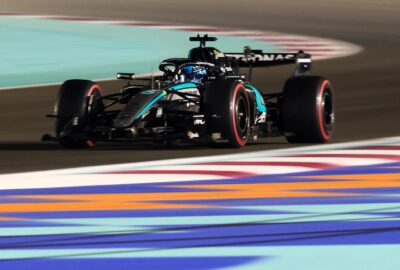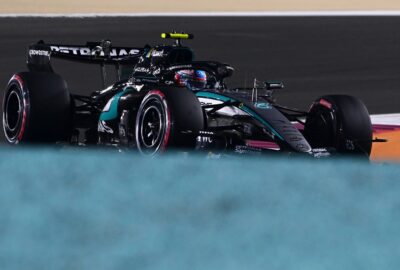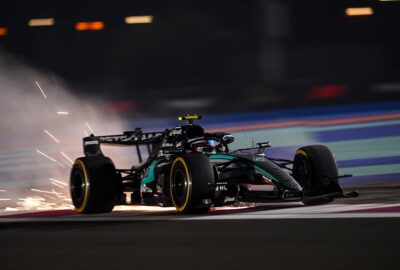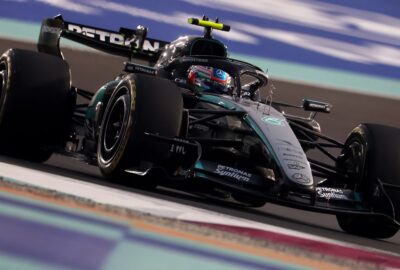

Lewis Hamilton qualified second for the Bahrain Grand Prix at Sepang in Malaysia on 3 October. His 1:35.428 put the Ferrari 0.298 seconds behind Max Verstappen. Hamilton had put himself somewhere around fifth or sixth in practice. A final set-up change gave him the balance he needed to complete a lap good enough for the front row.
What changed before qualifying
The Ferrari had been sliding in practice. In the heat, a slide on corner exit put more temperature into the tyres before Hamilton reached the next turn. At the post-qualifying press conference he explained how even small changes in front wing angle or ride height affected the balance. He also had to adapt the way he applied the throttle. After several attempts, the final adjustment gave him a car whose reactions he could anticipate throughout the lap.
Hamilton estimated that Ferrari was losing three to four tenths to Red Bull on the straights, leaving him to make time back in the corners. That was his assessment of one part of the circuit. The 0.298 seconds on the timing sheet was the measured difference over the whole lap. Neither figure tells us how much time the set-up change itself was worth.
Leclerc was quicker in Q2 but struggled with the rear in Q3
Charles Leclerc had topped Friday’s second practice and went 0.062 seconds quicker than Hamilton in Q2. Yet from that session onwards he found the rear harder to control the more he pushed. It began sliding in the second sector of his last Q3 run. Leclerc thought he might have gone too aggressive on set-up.
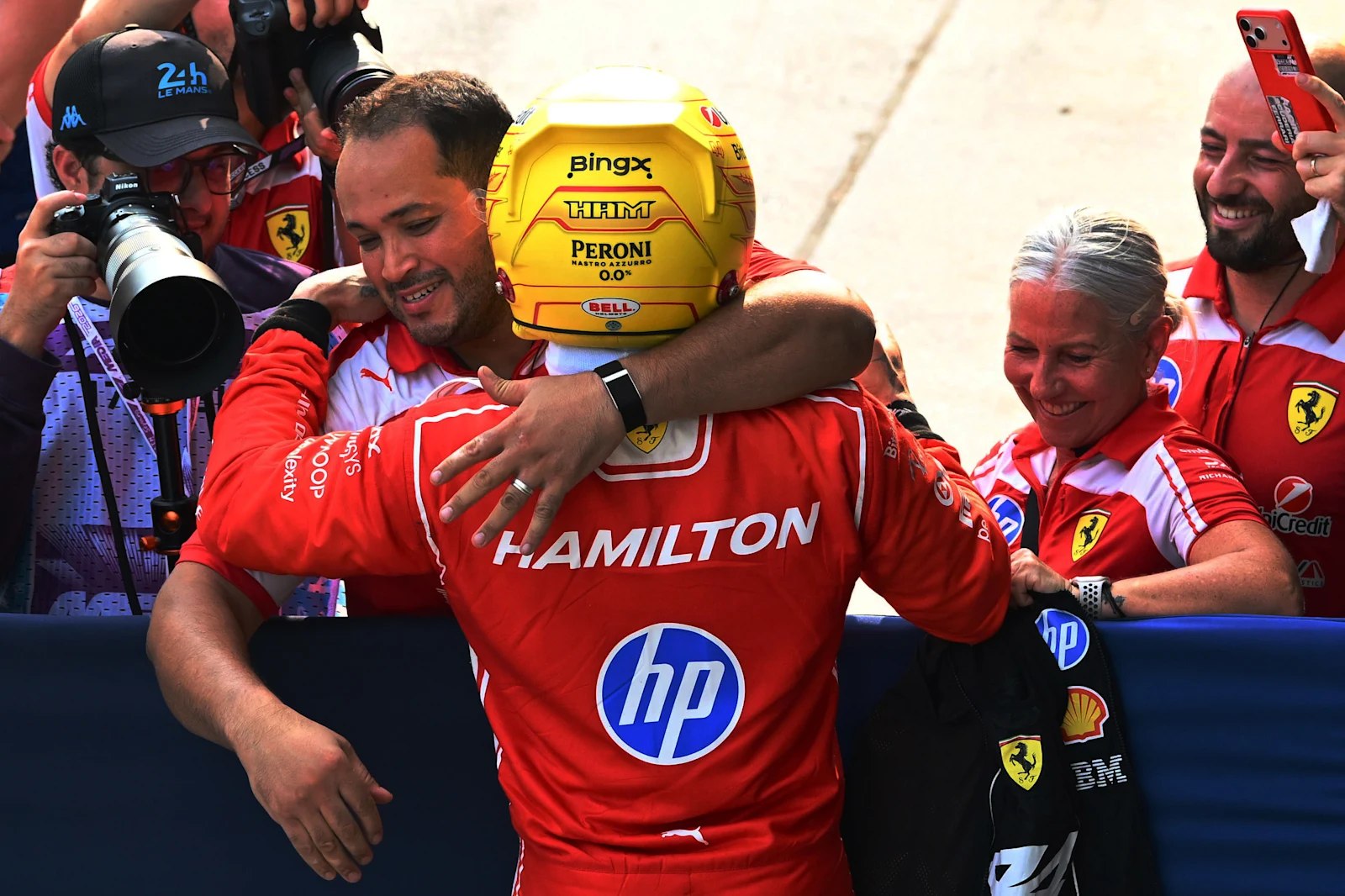
Leclerc still found 0.304 seconds between Q2 and Q3. Hamilton found 0.604, enough to reverse their order. Team principal Fred Vasseur felt the pace was there in both Ferraris but that Leclerc had been unable to put the sectors together on his final attempt.
| Session | Lewis Hamilton | Charles Leclerc |
|---|---|---|
| Q1 | 1:36.595 | 1:36.730 |
| Q2 | 1:36.032 | 1:35.970 |
| Q3 | 1:35.428 | 1:35.666 |
INKA SPORTS analysis and summary: what the front-row lap asks of the tyres
Hamilton qualified second and Leclerc fifth. Isack Hadjar’s five-place power-unit penalty moved Leclerc up to fourth on the grid. Both Ferraris would start in the first two rows, but Hamilton warned that the tyres tended to overheat when following another car. Even Sepang’s long straights offered no easy guarantee of a pass.
The question for Hamilton was whether he could keep making up time through the corners lap after lap. In qualifying he needed the tyres at their best for one lap. In the race a slide on exit while following Verstappen could cost little immediately but leave him with less grip at the next corner, or later in the stint. Starting alongside the Red Bull gave him an immediate chance to challenge it. Ferrari’s long-run form in practice gave him reason to be cautious about how long he could sustain that challenge.