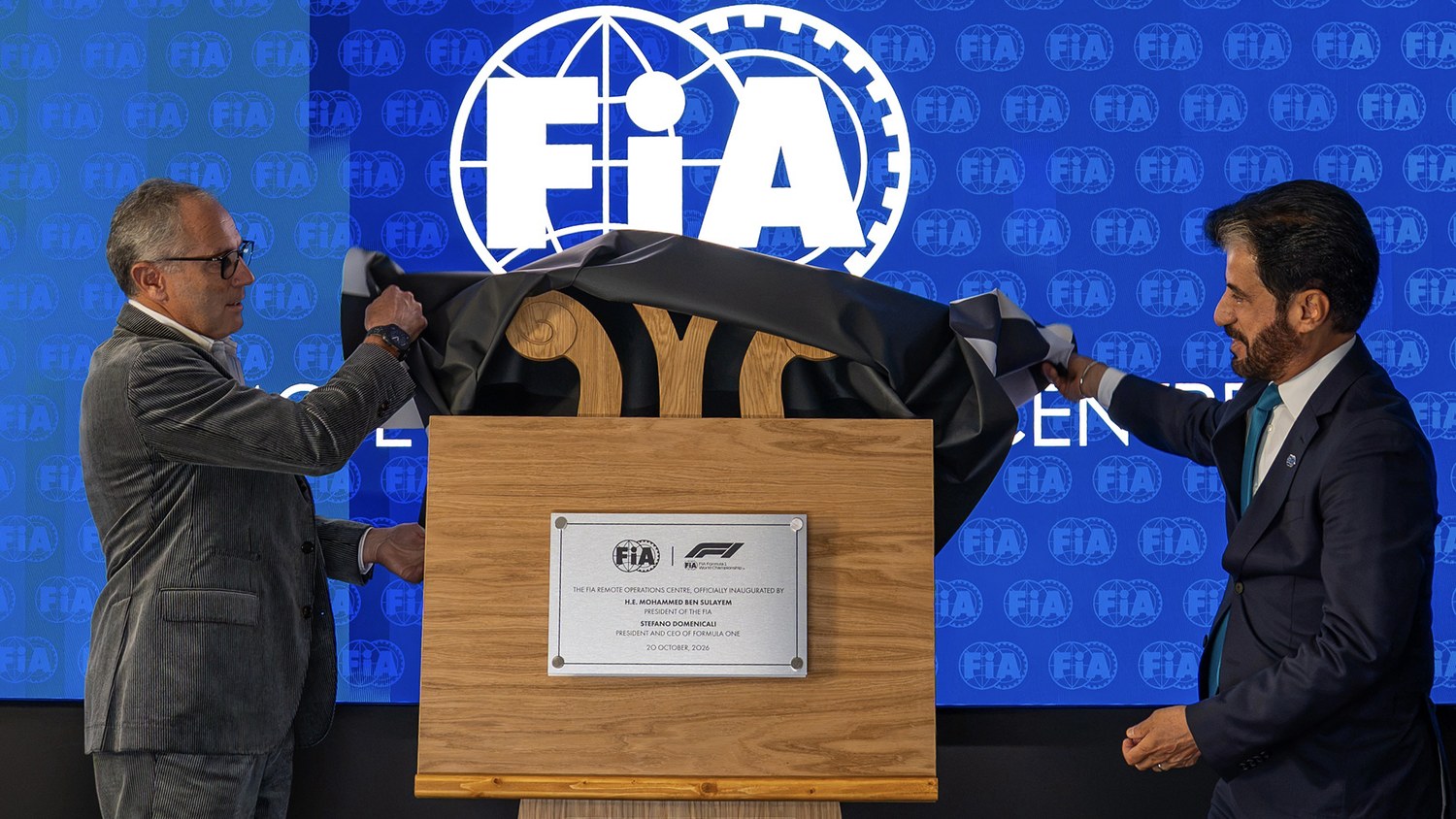
The FIA announced the official opening of its new Remote Operations Centre at Biggin Hill, UK, on October 20. Built with F1, it uses more than 140 audio-video feeds, car-position telemetry and team radio to provide real-time support to race control and stewards in F1, F2 and F3. Remote analysts join the management process to help trackside officials examine potential infringements.
Operational since the Dutch GP before its unveiling
FIA President Mohammed Ben Sulayem and F1 President and CEO Stefano Domenicali attended the ceremony. The center has been fully operational since the 2026 Dutch Grand Prix, making October 20 its formal unveiling rather than first race-management involvement. The FIA described a multimillion-pound move to the modern facility, with up to sixteen staff during race weekends.
Abbreviated ROC, it forms one of four FIA race-operations pillars alongside race control, systems operations and stewards. Remote analysts process live pictures, sound and vehicle data, identify matters needing review and support FIA officials' decisions. Race control handles running the event, while stewards adjudicate infringements.
Tasks include checking jump starts, incorrect grid positioning, track limits, pit-lane infringements and correct service of stop-go penalties, which require a driver to stop in the pits for the prescribed duration before leaving. Allocating such reviews remotely provides staff beyond the circuit to collate leads and recheck information continuously.
At Biggin Hill, broadcast production and race management have different tasks
The center is on F1's Biggin Hill campus, specifically its Media and Technology Centre, as Domenicali stated. F1's February 14, 2025, production-team article explained that international broadcasts and F1 TV programs have been produced there since 2020. Its archive control-room photo shows program production, a different function from the newly unveiled FIA management-support center.
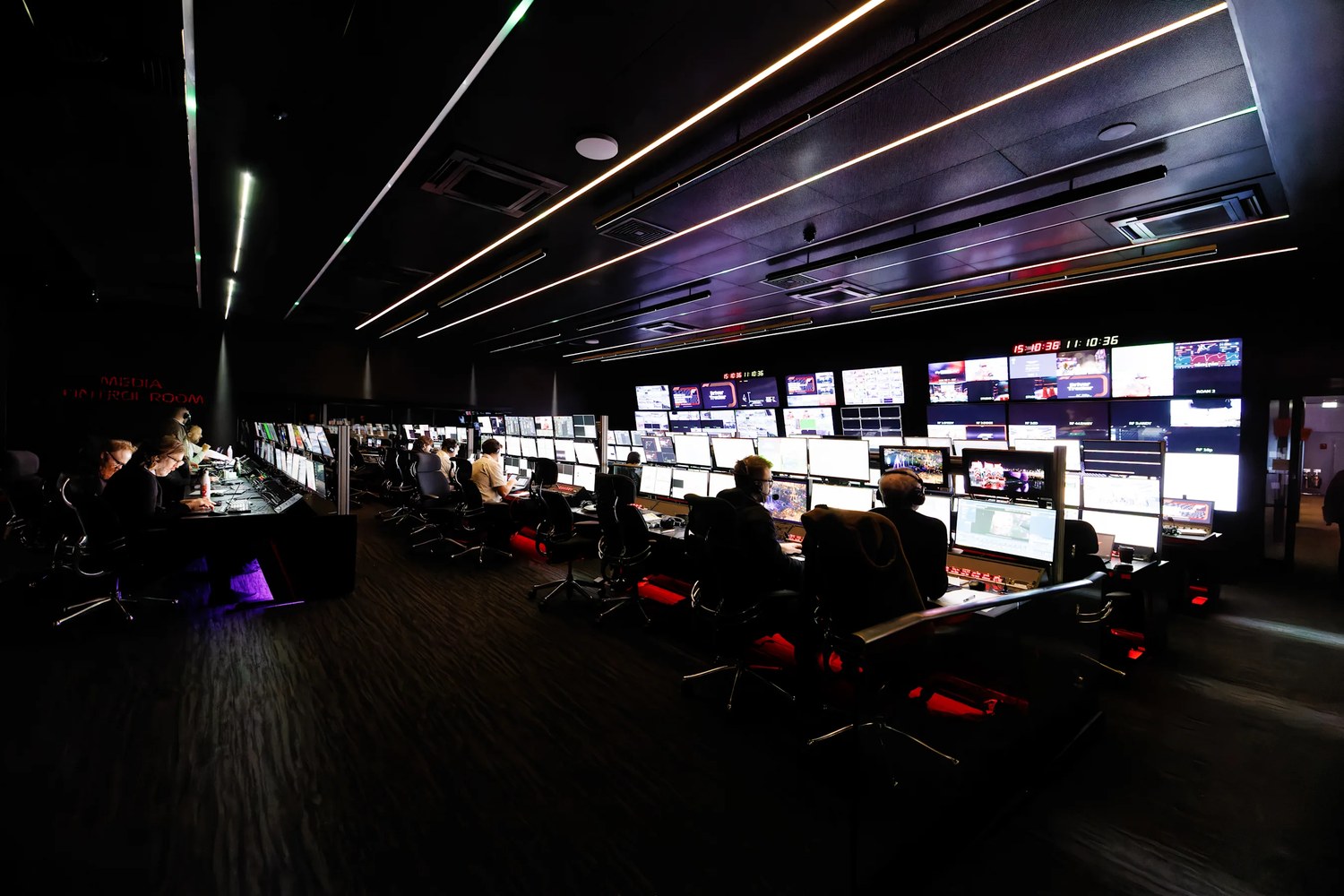
Technology flags matters; people make judgments
The facility uses AI-assisted shape recognition, computer vision and automatic radio-message tagging to identify potential incidents. These tools highlight pictures or communications worth examining among large information volumes; people then review them and support decisions by the relevant officials. Detecting a concern and establishing a breach remain separate stages, with adjudication still belonging to stewards.
The center also participates in post-race reviews to improve procedures, refine future rules and train race-control staff. It supports the FIA's officials' high-performance program, operating since 2023, with personalized training and pathways to world championship roles for stewards and race directors from different regions. Investment thus covers both live information processing and future personnel development.
INKA SPORTS analysis: Remote support shares the review workload
The key division separates information screening from final judgment. More than 140 audio-video feeds and vehicle data create observation points; remote staff identify and assess potential issues, while trackside officials manage and adjudicate. For track limits or penalty execution, remote checks provide concrete support within the same management system.
The center should therefore be evaluated beyond screen counts or AI tools. More important are accurate handoffs to responsible officials and whether review supports consistent decisions. Faster, more accurate and more consistent work are FIA objectives, not improvements established for every ruling by the unveiling alone.
Conclusion
Biggin Hill connects remote analysis, trackside management and training. Its information flow clarifies the role: tools flag, remote staff review, race control and stewards act within their responsibilities. F1 broadcasting and FIA management share a campus but serve distinct tasks; viewers' program images and officials' review support should be understood accordingly.