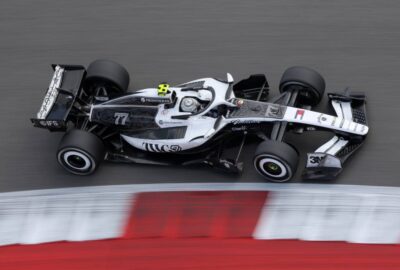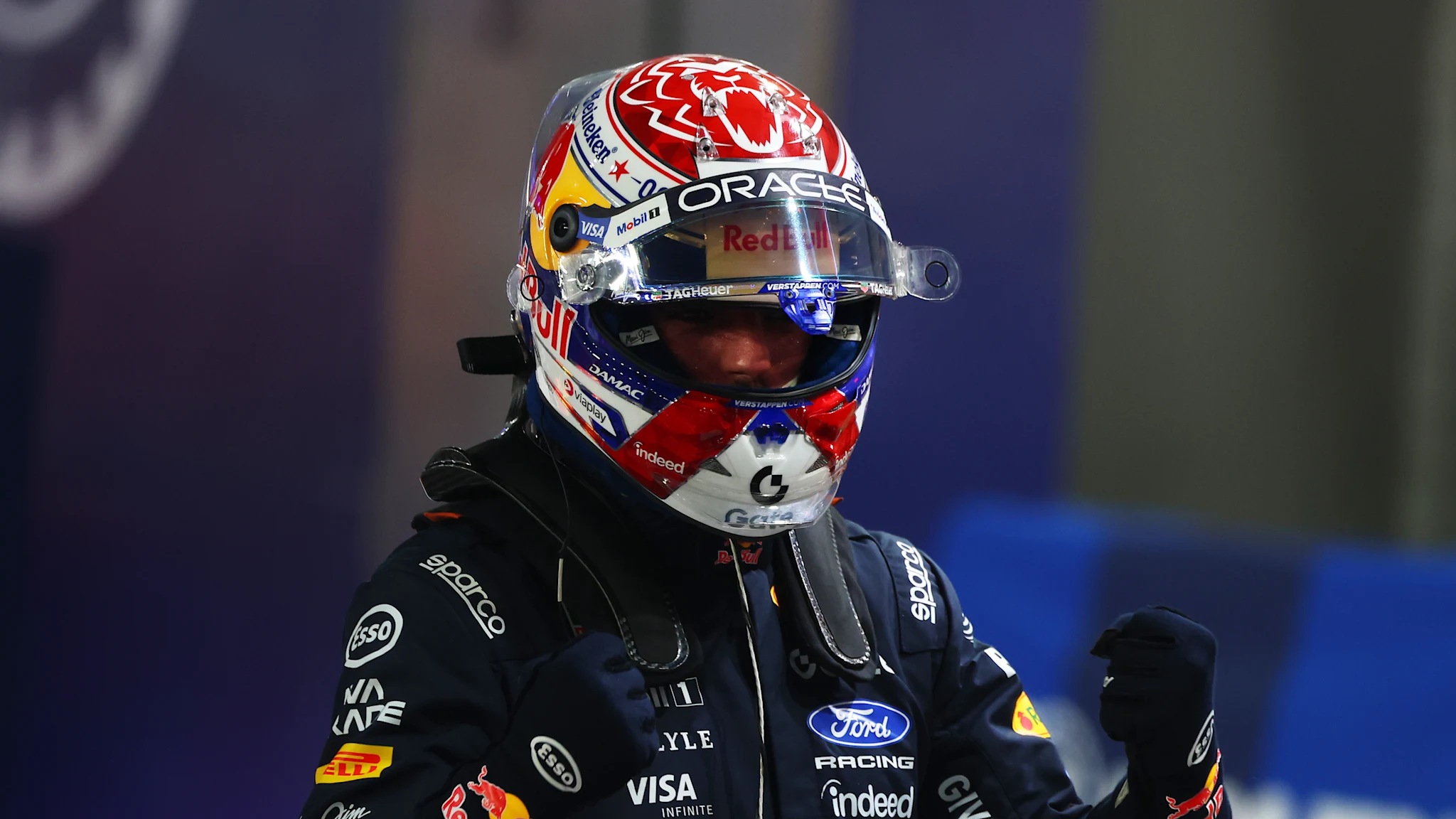
Max Verstappen beat Charles Leclerc by just 0.054 seconds in qualifying for round 17 of the 2026 F1 season, the Singapore Grand Prix, on October 10, with Lewis Hamilton third. Their fastest laps show Ferrari was quicker in the second sector, while Red Bull gained time in the first and last. Full results are in the Singapore Grand Prix qualifying report.
The timing system divides a lap into three sectors, whose times add up to the lap time. Comparing each driver’s actual fastest lap explains this pole battle more clearly than the final gap alone: Leclerc and Hamilton both recovered time in the middle of the lap, but by the finish neither had offset losses elsewhere.
Leclerc gains 0.130 seconds in sector two but loses 0.161 in the final sector
Verstappen’s pole lap was 1 minute 31.373 seconds, comprising sectors of 27.002, 38.531 and 25.840 seconds. Leclerc’s final run produced 1 minute 31.427 seconds, with sectors of 27.025, 38.401 and 26.001 seconds.
Leclerc was 0.023 seconds behind after the first sector. Recovering 0.130 seconds in the second put him 0.107 seconds ahead when comparing the cumulative times of their fastest laps. He was then 0.161 seconds slower in the final sector, turning that advantage into a 0.054-second deficit at the line. The third sector was where the outcome of these two fastest laps reversed.
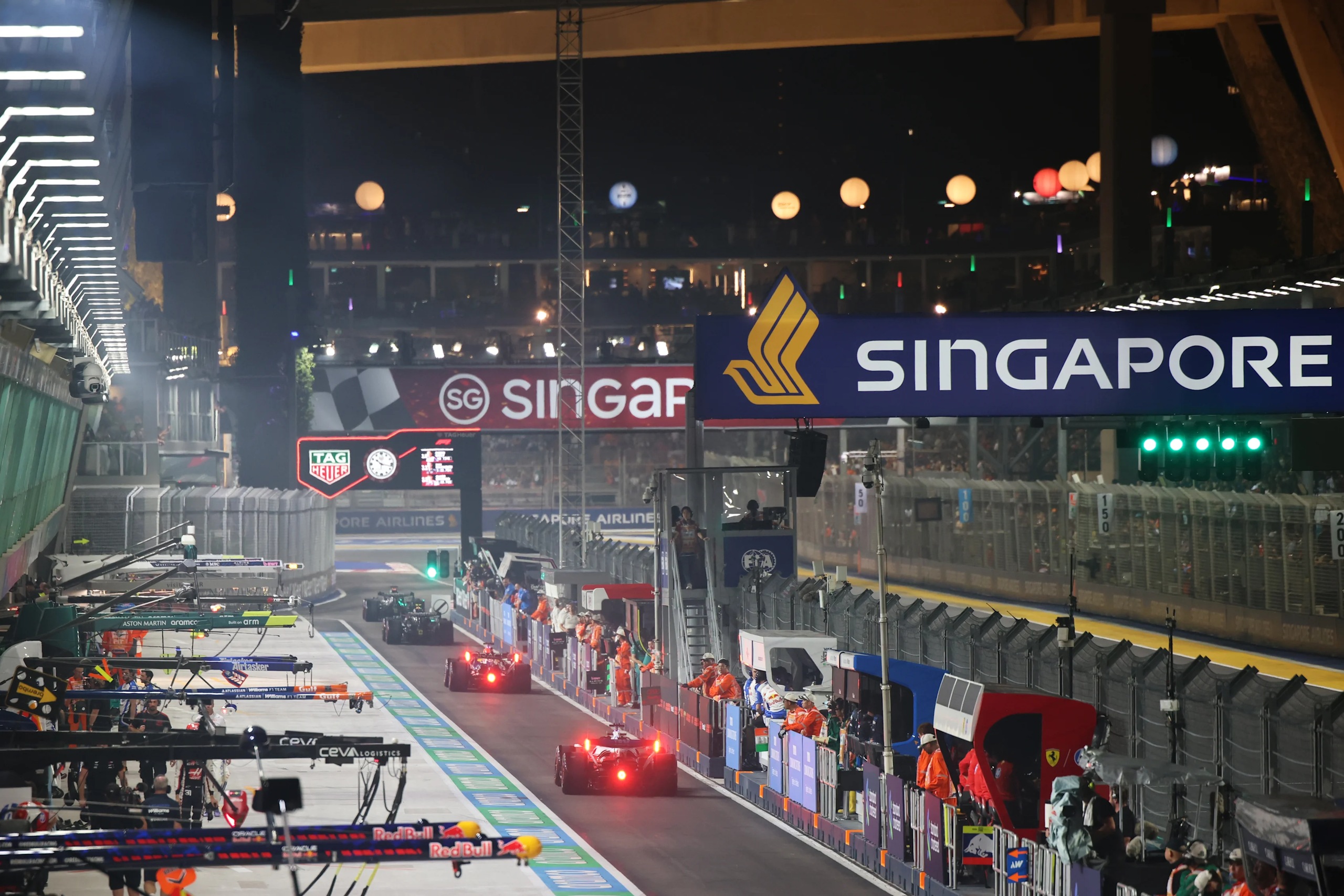
Leclerc’s first Q3 run was 1 minute 31.661 seconds, and he improved by 0.234 seconds on his second. Verstappen had already set his pole time on the first run; his final 1 minute 31.625 seconds did not improve it. Leclerc’s last attempt narrowed the gap but still did not beat Verstappen’s opening effort.
Hamilton gains more in the middle, but loses more at the start
Hamilton’s fastest lap was 1 minute 31.496 seconds. His second sector of 38.258 seconds was 0.273 seconds faster than Verstappen and 0.143 seconds faster than Leclerc. His opening 27.273-second sector, however, was already 0.271 seconds slower than Verstappen’s, almost entirely offsetting his middle-sector gain. He lost another 0.125 seconds in the third sector, leaving a final deficit of 0.123 seconds.
The table shows the actual sectors from each driver’s fastest lap, rather than combining their best sectors from different laps into a theoretical lap. Times are in seconds, with the total lap retained in minutes:seconds format.
| Driver | Sector one | Sector two | Sector three | Lap time |
|---|---|---|---|---|
| Max Verstappen | 27.002 | 38.531 | 25.840 | 1:31.373 |
| Charles Leclerc | 27.025 | 38.401 | 26.001 | 1:31.427 |
| Lewis Hamilton | 27.273 | 38.258 | 25.965 | 1:31.496 |
INKA SPORTS analysis: why the fastest middle sector did not deliver pole
For Leclerc, the problem was concentrated in the final sector. He had recovered the deficit in cumulative time over the first two sectors but could not carry that advantage to the finish. Hamilton’s situation was different: almost all his second-sector gain went towards offsetting his first-sector loss. Even though he was faster in the middle than his team-mate, he remained behind Leclerc over the full lap. The two Ferrari drivers did not face identical patterns of gains and losses.
Conclusion
Ferrari’s crucial shortfall in this pole battle lay outside the second sector, and the drivers lost time in different parts of the lap. This comparison covers only each driver’s fastest qualifying lap and can locate where the gaps arose. Determining the respective effects of driving, setup and track conditions at different running times still requires driver feedback and more detailed data.