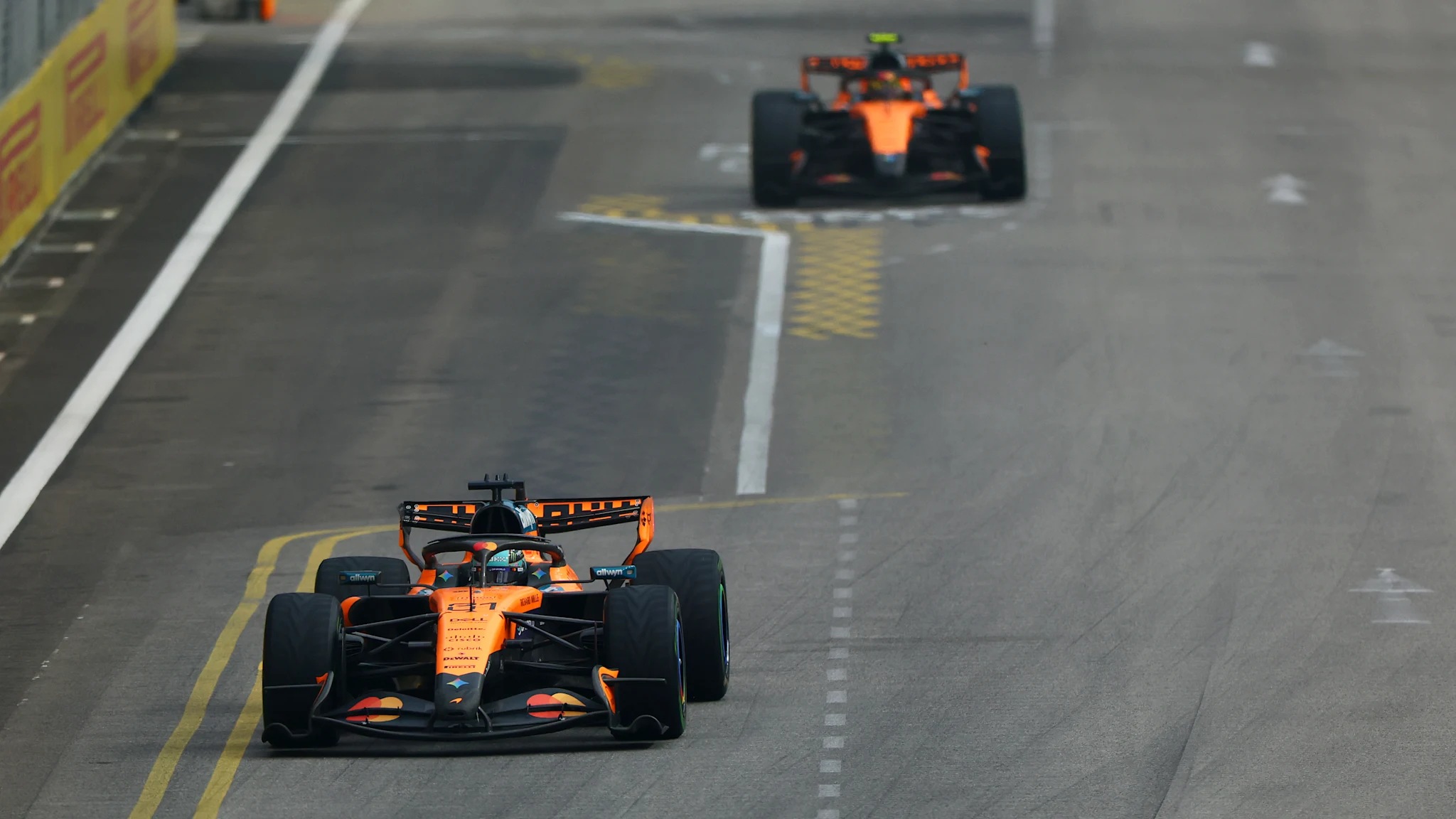
Lando Norris and Oscar Piastri collided at Turn 5 on the final lap of the Singapore Grand Prix Sprint, round 17 of the 2026 F1 season, leaving McLaren with just 1 point. The FIA decided on October 10 to take no further action. Full race details are in the Singapore Sprint report.
The same corner-entry opportunity, different driver judgments
Before the collision, Piastri and Norris were fourth and fifth, chasing third-placed Charles Leclerc. Norris tried to pass his team-mate on the inside at Turn 5, with contact at the apex. Piastri hit the wall and retired, while Norris continued to finish eighth and collect the final point.
The decision recorded Norris’s explanation: he saw an overtaking opportunity and believed his front axle had passed the position of the mirror on his team-mate’s car before the apex, so expected room to be left. Approaching the apex, however, he had less space than expected. He used the inside kerb and braked, but the collision still occurred.
Piastri said he had not expected his team-mate to attempt a pass. He noticed Norris on the inside only after starting to turn, and then tried to leave room. The drivers had different expectations about whether the attack was already established and which line the other would take next.
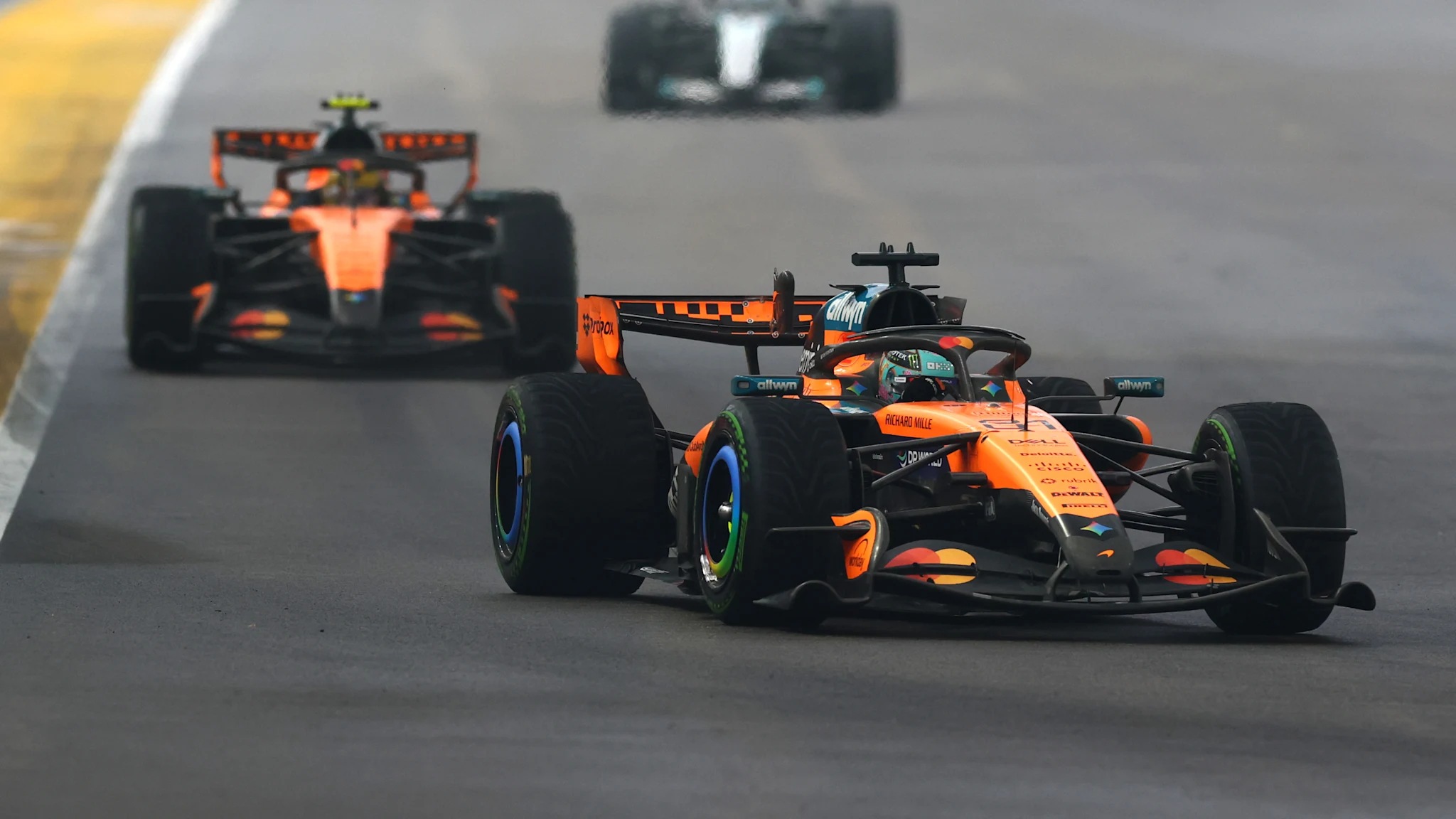
Post-race interviews published on F1’s website also showed that disagreement. Norris felt the gap was large enough and he was entitled to try. Piastri said his team-mate had appeared some distance back before corner entry and he needed to review the incident.
The ruling depended on responsibility, rather than the outcome alone
After hearing both drivers and team representatives and reviewing race and onboard footage, the stewards found both drivers’ actions contributed to the collision, but neither was wholly or predominantly responsible. They therefore decided to take no further action.
Piastri’s retirement and Norris’s ability to continue to the finish were different consequences of the collision. The stewards still based their assessment on both drivers’ actions as the collision developed. Norris’s description of his front-axle position was his own account; the ruling did not use it to find Piastri, on the outside, predominantly responsible.
INKA SPORTS analysis: why no penalty still leaves a team problem
The decision neither assigned responsibility solely to one driver nor endorsed every action by both. Their accounts show that the cooperation problem lay in their expectations of the overtaking opportunity: one already considered the pass on, while the other had not anticipated an attack when he began turning. Both then tried to avoid contact but could not remedy the risk created by that difference in judgment.
Conclusion
No further action was taken because the stewards did not find either driver wholly or predominantly responsible. McLaren’s points loss had already occurred: two cars previously running fourth and fifth ultimately brought home just Norris’s 1 point.