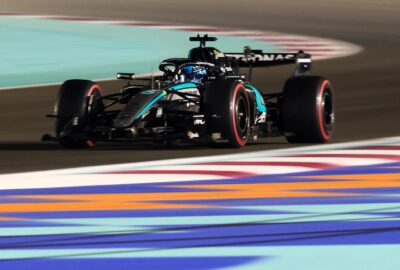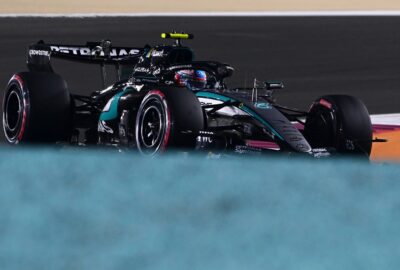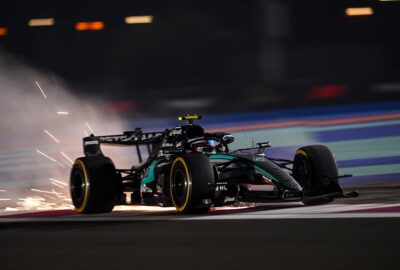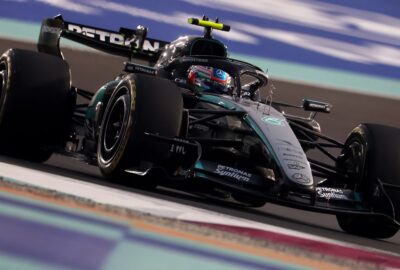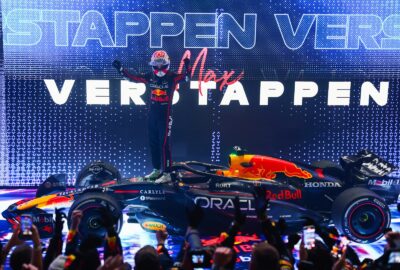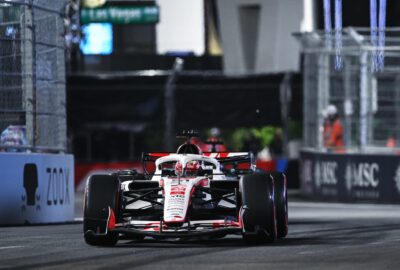
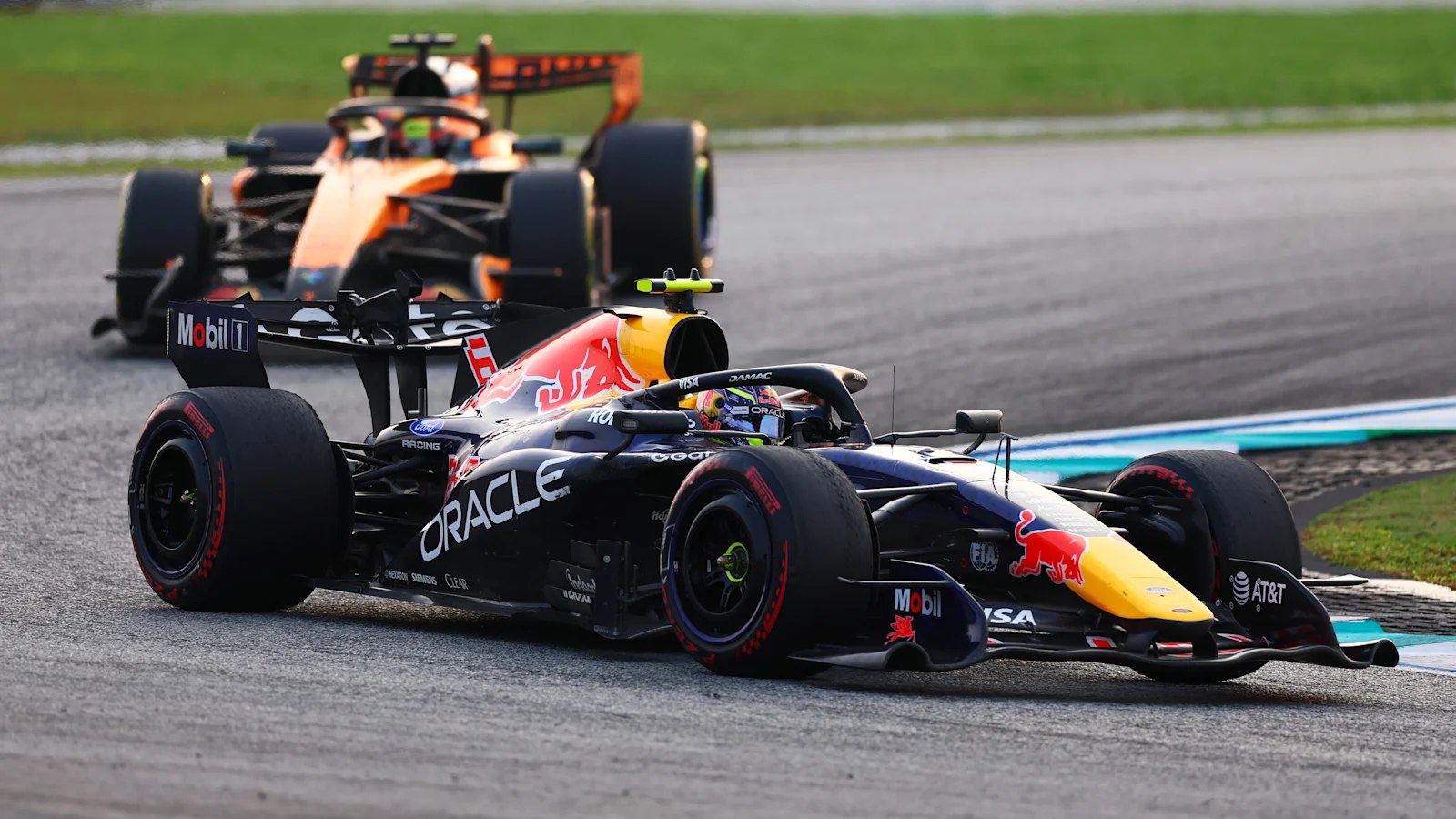
Red Bull’s Isack Hadjar started eighth and finished fifth in Round 16 of the 2026 Formula 1 championship, the Bahrain Grand Prix at Sepang in Malaysia on October 4. He briefly held third late on, then lost out to both Ferraris after the final restart. Afterwards, he described earlier grip difficulties and low battery energy at the restart as problems affecting different phases of his race.
Rain delayed proceedings. During the first start procedure, with the field following the Safety Car, Hadjar slid into the gravel at the exit of Turn 2 before recovering. Several cars also encountered power problems, and Race Control suspended the procedure with a red flag. The next attempt retained the original grid order, leaving Hadjar preparing to start eighth. That interruption came much earlier than the Safety Car that shaped the late podium fight.
From third in qualifying to fourth in the race
Hadjar had qualified third, but a five-place penalty for additional power-unit components moved him to eighth on the grid. The subsequent standing start took place on a slippery track. On intermediates, he advanced to fifth as drivers ahead struggled on slicks, although Racing Bulls’ Liam Lawson also passed him. On lap six, Hadjar overtook Lawson at the final corner for fourth, behind team mate Max Verstappen and the two Mercedes.
The right tyre choice gained positions, but Hadjar could not sustain a challenge to the leading three. He said the car lacked grip and was difficult to drive, unlike its performance earlier in the weekend. Around lap nine, Valtteri Bottas went off and triggered a Safety Car, bringing the intermediate runners into the pits for slicks as the race moved towards dry conditions.
Hadjar recalled Lewis Hamilton being around 15 seconds behind before rapidly catching him. Before the late Safety Car, Hamilton was already challenging for his fourth place. Hadjar said he still felt short of grip even while following the Safety Car and expected a difficult restart. Those comments described a continuing driving problem that preceded the two-lap energy shortage at the final restart.
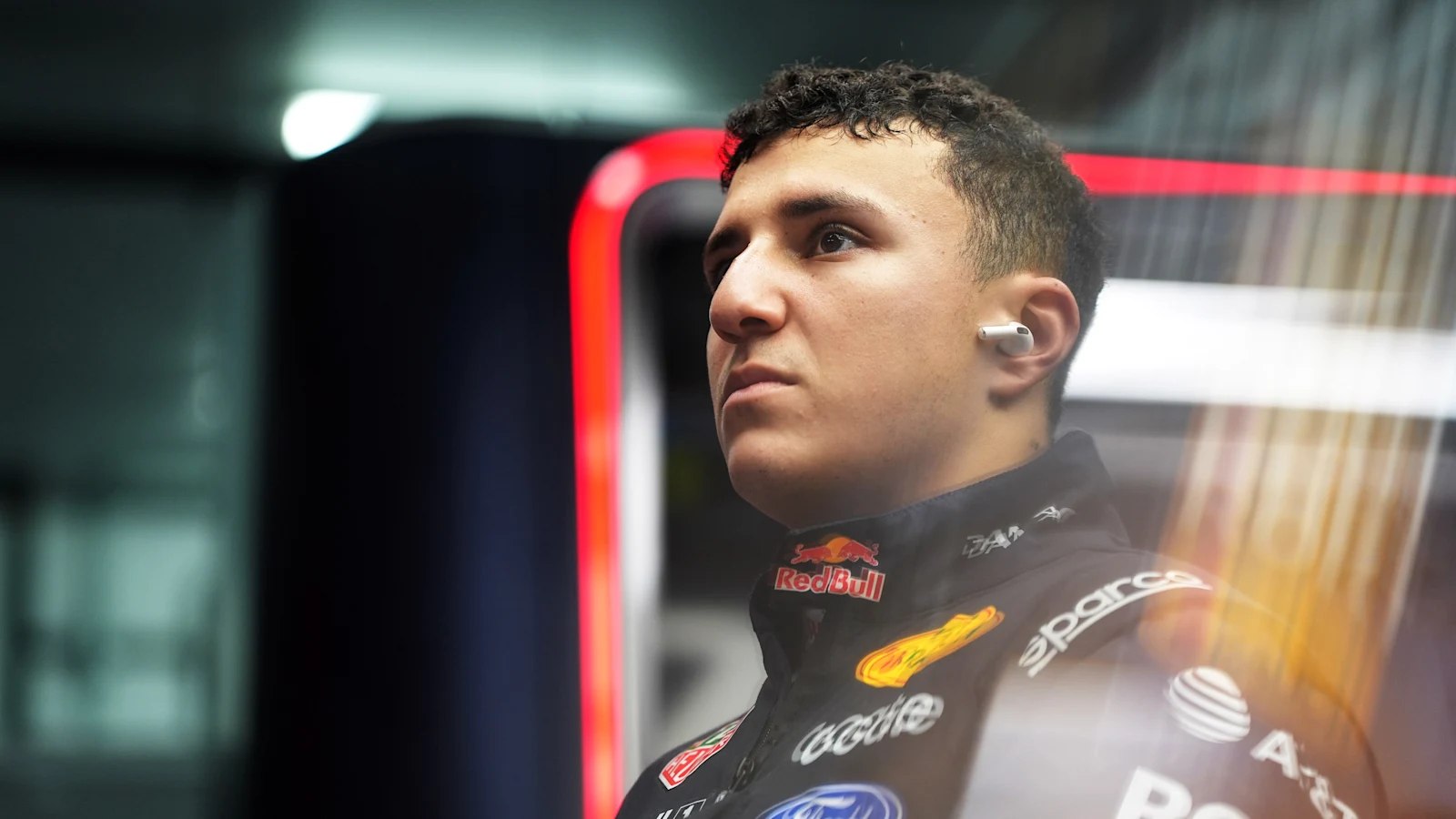
The late Safety Car and restart position losses
On lap 43, Alexander Albon stopped and triggered a Virtual Safety Car, requiring drivers to slow to a prescribed pace. A full Safety Car followed, bringing the field together. George Russell stopped and retired during that period, promoting Hadjar from fourth to third with the Ferraris directly behind.
Hadjar could not retain the podium position once racing resumed. Hamilton passed him at Turn 1 on the lap after the restart, and Charles Leclerc followed at the start of the next lap. Hadjar finished fifth, 8.571 seconds behind winner Verstappen, earning 10 points. As Red Bull took its first victory of the season, its other car lost the third place it had held late on.
Hadjar said low available battery energy over the first two restart laps left him unable to defend against Ferrari on the straights. The energy level then stabilised and his pace returned. He believed the power unit itself was fine but did not know why battery energy had been low. He also felt he could have kept third without that problem. That was his post-race assessment, with the precise cause still to be established by the team.
INKA SPORTS analysis and conclusion: why a brief problem had a lasting effect
The brief energy shortage Hadjar described coincided with the field regrouping and both Ferraris having an immediate opportunity to attack. In his explanation, limited straight-line defence gave them the chance to pass. Recovering energy afterwards did not reverse those completed moves, leaving him needing to regain the positions on track. A short-lived problem could therefore have an effect on his position that lasted to the finish.
Losing third and failing to follow the leading three earlier require separate explanations. Hamilton had already caught Hadjar before the Safety Car, and Hadjar had repeatedly reported poor grip. The restart energy issue explains the final defensive difficulty he described, while the broader race-pace deficit also calls for an explanation of why grip felt different from qualifying. Sepang exposed two specific concerns, sustained pursuit and energy availability over the first restart laps, that affected his chance to convert front-running speed into a podium.