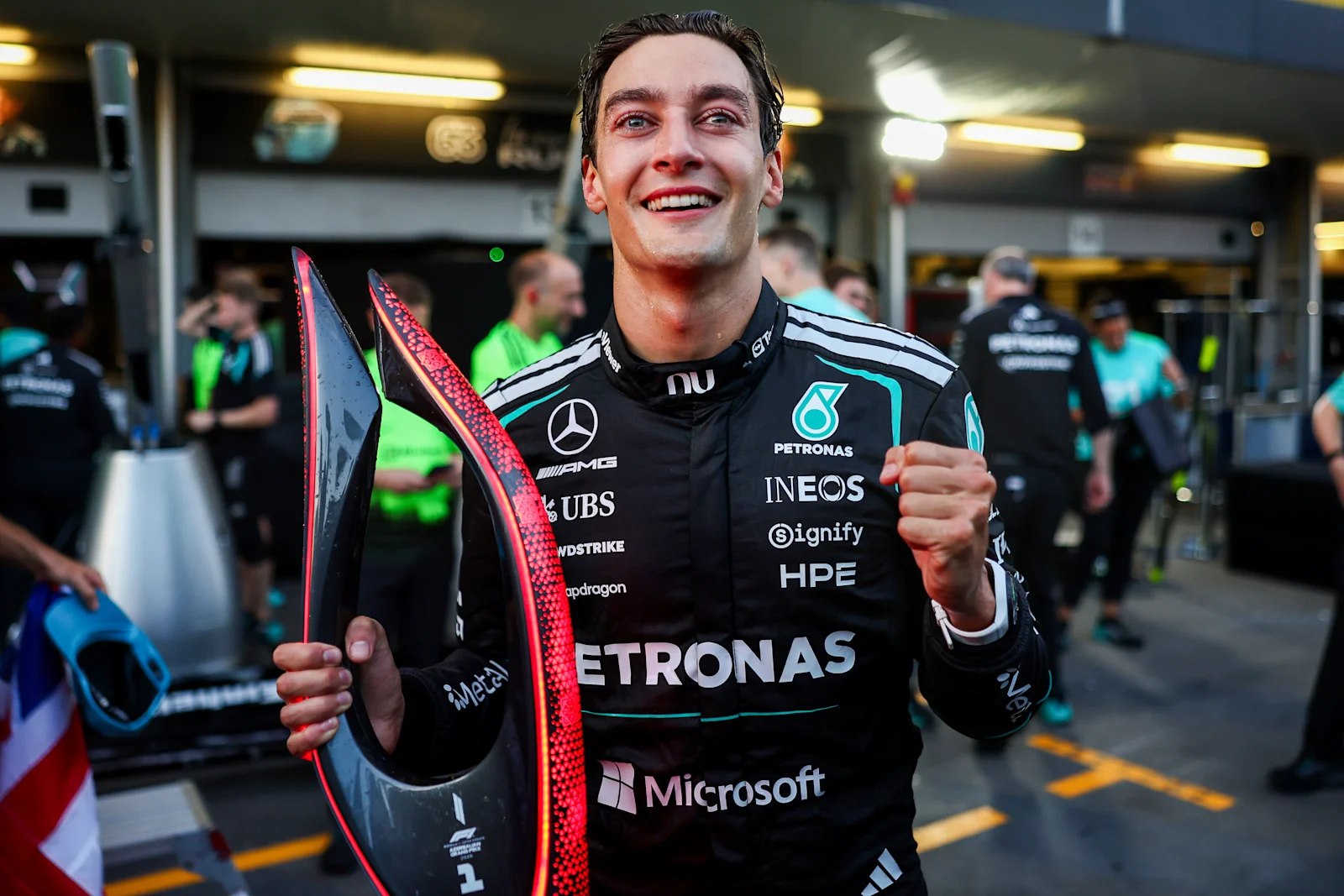
George Russell’s victory in the 2026 F1 Azerbaijan Grand Prix reduced his deficit to Mercedes team-mate Kimi Antonelli from 81 points to 66. The F1 drivers’ standings after Baku show Antonelli on 302 points and Russell on 236. In an official F1 interview, Russell said the leader was under more pressure than he was and focused on trying to win each race. Assessing whether this victory can sustain his title hopes requires looking at both his full-weekend performance and his team-mate’s ability to limit the damage.
Baku: winning and damage limitation as two routes to points
Russell started from pole and won, scoring 25 points. It was his third Grand Prix victory of the season and his first since Austria, with just 0.196 seconds separating him from Verstappen at the finish. Antonelli climbed from 16th on the grid to fifth, earning ten points, so the gap between them narrowed by 15. Starting position and race execution produced two different scoring paths: one driver fighting for victory, the other reducing his losses from further back.
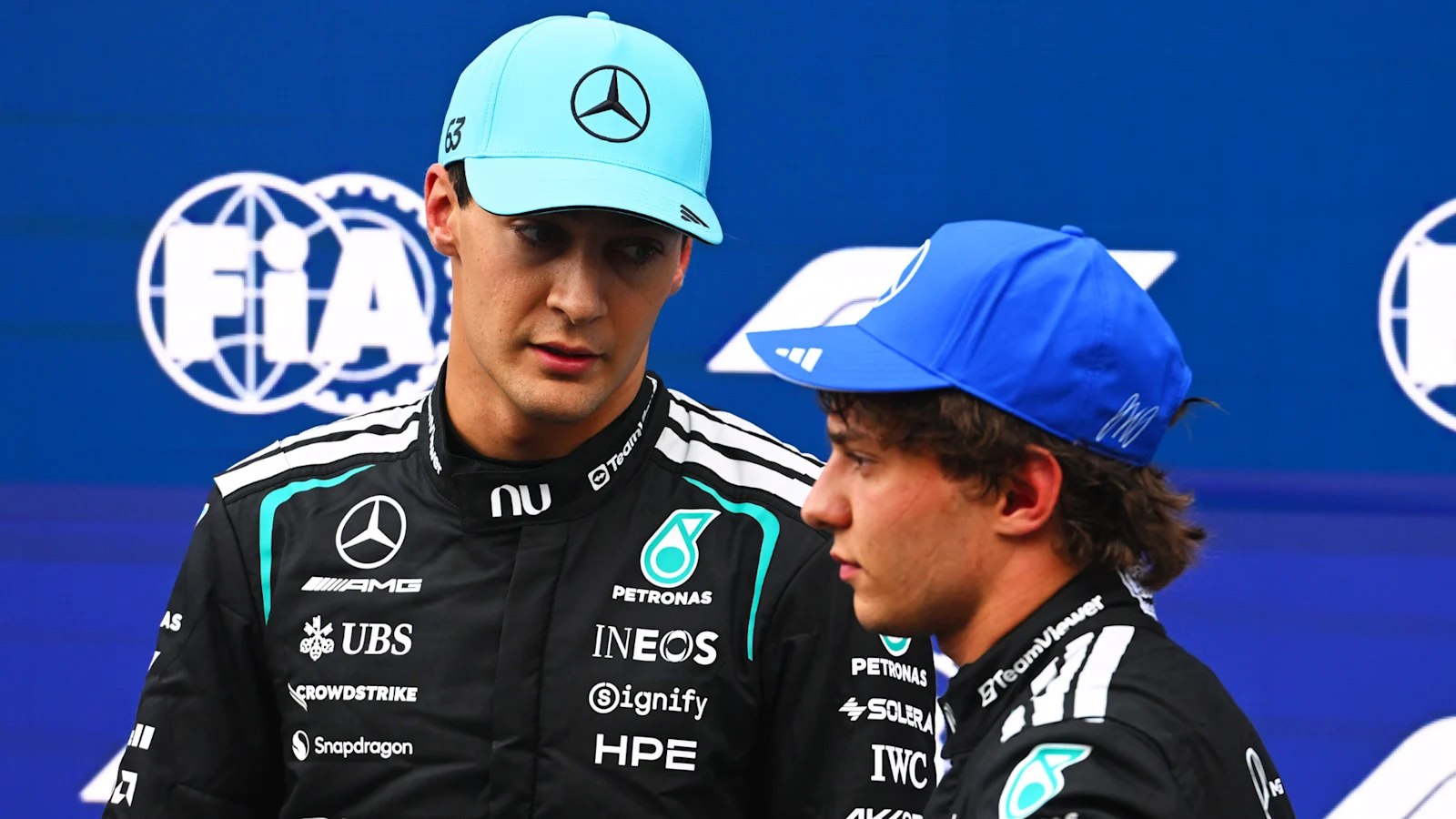
In an official F1 post-race interview, Antonelli said technical problems in practice had disrupted his weekend and a qualifying mistake had left him short of confidence. Contact with Oliver Bearman at the safety-car restart then caused substantial floor damage. He said his pace was not strong and the task was to minimise the loss; fifth place was ultimately a result he had to accept.
The last three rounds: the team-mates’ finishing order reverses
The order in the previous two rounds was exactly the opposite. At Monza on 6 September, Mercedes finished first and second, with Antonelli winning and Russell runner-up. In Madrid on 13 September, Antonelli won again while Russell finished fifth. Those consecutive wins extended Antonelli’s advantage, bringing him to Baku with an 81-point lead. This time, the combination of a win and fifth place favoured Russell instead.
Three-race scenarios: points changes under defined conditions
The table below compares three combinations of results repeated over three consecutive Grands Prix. It uses 25 points for a win, 18 for second and ten for fifth, applying the same combination in all three races and excluding sprint and other points. It illustrates how the opponent’s finishing position changes the net gain even when the chasing driver keeps winning.
| Assumed result in each race | Net points gained per race | Russell’s gap after three consecutive races |
|---|---|---|
| Russell wins; Antonelli second | 7 | 45 behind |
| Russell wins; Antonelli fifth | 15 | 21 behind |
| Russell wins; Antonelli scores no points | 25 | 9 ahead |
INKA SPORTS analysis: why one victory has not changed the three-round scoring trend
Baku’s gain has not yet offset the losses in the previous two rounds
Russell lost seven points at Monza and 15 in Madrid before recovering 15 in Baku. Across those three Grands Prix, he scored 53 points to Antonelli’s 60, leaving the gap seven points wider than it had been before that sequence. One fifth place in Madrid cancelled out the net gain from winning in Baku. Baku reversed the scoring order for a single round, but also showed that reducing low-scoring weekends is as important for Russell as increasing his win tally.
In a title fight between team-mates, other drivers’ positions matter too
Monza illustrated the effect of a Mercedes one-two on this title contest: the team achieved a dominant result, but the winner gained only seven points on his team-mate. Even with their order reversed, Russell’s rate of recovery depends on whether Antonelli finishes directly behind him. Having two Mercedes capable of winning helps Russell score heavily, but also makes it easier for his direct rival to retain a high score.
Baku produced a more favourable combination for the pursuer. Verstappen, Hadjar and Leclerc finished between Russell and Antonelli. Antonelli’s ten points were eight fewer than the 18 awarded for second, so the net benefit of this victory was greater than that of a one-two. Yet Verstappen finished only 0.196 seconds behind Russell: other cars may finish ahead of Antonelli, but they may also take victory away from Russell. Which team-mate finishes ahead, and how many cars separate them, both determine the eventual points gain.
Different scoring tasks behind the comments about pressure
Russell says he is not fixating on the large deficit but is trying to win every race, directing his attention towards an objective he can achieve at each event. Antonelli changed his Baku task to damage limitation and retained fifth despite the floor damage. Their scoring requirements now differ: Russell needs to keep outscoring his team-mate, while Antonelli can reduce those gains by finishing in the points even on bad weekends. Russell’s comments about pressure should also be understood in that context of pursuer and leader.
Conclusion
Baku gave Russell an effective response, but Antonelli still holds the advantage in points accumulated over the last three rounds. To turn wins into a sustained recovery, Russell needs to reduce lower-scoring weekends such as fifth-place finishes and keep placing his team-mate behind him. Antonelli has already protected part of his advantage with fifth on a difficult Baku weekend. The challenge in a 66-point deficit is that Russell must fight for wins while facing a team-mate who is often equally capable of scoring heavily.