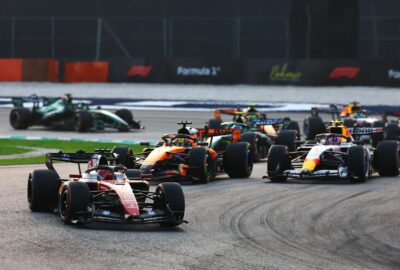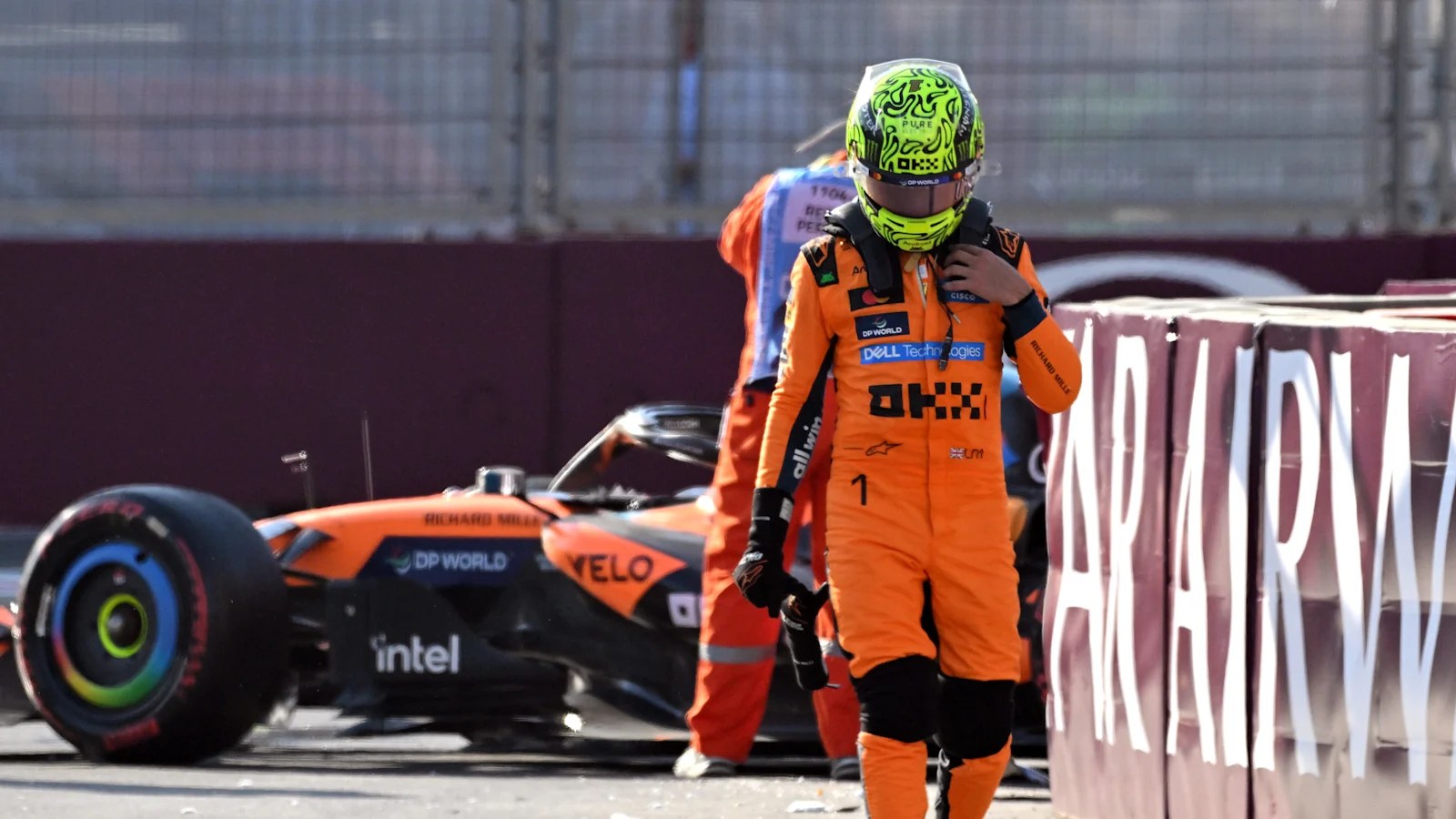
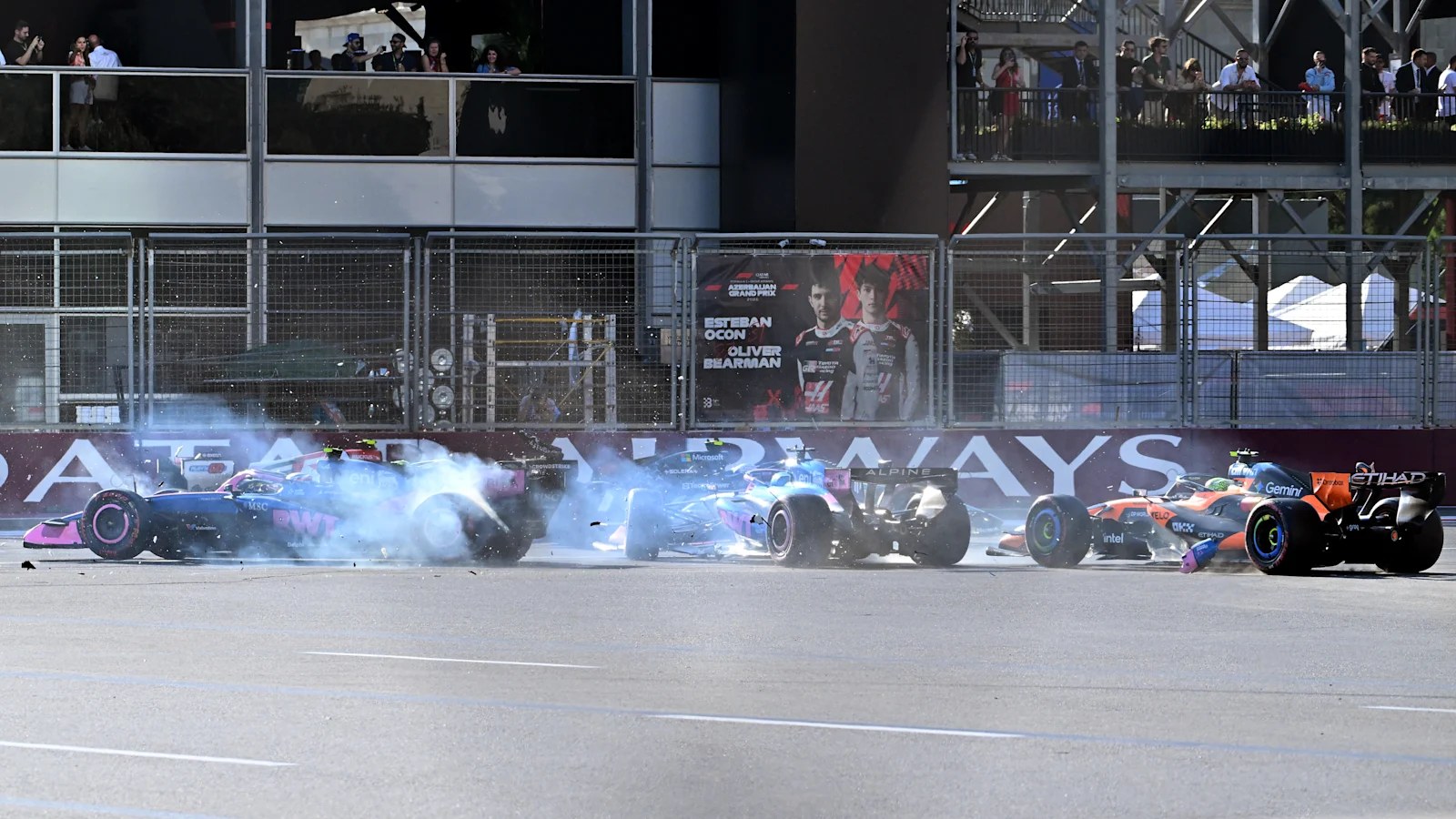
In the F1 Azerbaijan Grand Prix on 26 September, Franco Colapinto locked up at Turn 1 after the first safety-car restart, hit Alpine team-mate Pierre Gasly and also involved McLaren’s Lando Norris. All three retired. Norris called afterwards for a ban of at least one race, while Colapinto admitted his mistake and apologised. The FIA’s formal decision was a five-place grid drop at his next Grand Prix participation; it did not impose a ban.
The restart collision: three scoring opportunities end together
According to F1’s official post-race interviews and reconstruction of the accident, Gasly and Colapinto were seventh and tenth respectively at the time. Colapinto entered Turn 1 on the inside, lost control and hit Gasly, who then struck Norris on the outside. The FIA’s final classification records Colapinto completing 36 laps and Gasly and Norris 35 each, with all three unclassified.
According to RacingNews365’s report from the post-race media interviews, Norris called for drivers causing such accidents at restarts to be suspended for at least one race and highlighted the financial cost of damaged components. In his F1 interview, Colapinto apologised to the team’s factory staff and Gasly. In the response recorded by RacingNews365, he also apologised to Norris, admitting that he locked up under braking, completely lost control of the car and should take responsibility.
The ruling and race context: grid drop confirmed, recovery opportunity unrealised
FIA decision number 66 found that Colapinto braked too late and entered the corner at a speed that prevented him from negotiating it in a controlled manner, making him wholly or predominantly responsible. Although the incident occurred at the first corner after a restart, no other driver’s contribution justified mitigation, so the stewards applied the standard ten-second penalty. Because he had retired and could not serve it, the regulations converted it into a five-place grid drop at his next Grand Prix participation. This was a change in the form of the sanction, not an additional grid penalty on top.
McLaren’s official report shows that Norris had already lost positions through a straight-line speed deficit, then entered the Turn 1 run-off and flat-spotted his tyres. After switching to softs under the safety car, he was ninth and preparing to attack cars ahead on mediums. The crash ended that recovery opportunity. Piastri separately locked up while defending later in the race and was ultimately classified 13th, leaving McLaren scoreless.
INKA SPORTS analysis: responsibility carries forward, but lost opportunities cannot be restored
Norris’s emphasis on component losses and demand for a ban reflects an affected driver’s judgement of the accident’s cost and the deterrent required. Decision number 66 specifically addresses who caused the collision, whether mitigation existed and how the time penalty could be enforced. A five-place grid drop carries a competitive cost into Colapinto’s next participation rather than allowing retirement to leave the time sanction unenforced. It cannot restore Norris’s and Gasly’s lost race opportunities or remove repair costs. The two address different scopes: whether the current sanction offers sufficient deterrence can be debated, but Norris’s demand cannot be treated as an effective ban.
McLaren’s review must also distinguish the cause of retirement from Norris’s situation beforehand. He had already fallen from the leading group into the midfield, with the straight-line deficit and his own braking mistake reducing his prospects. Switching to the better-performing softs created conditions for recovery, but he had not yet converted that opportunity into a finish. Responsibility for the collision has been ruled on: his earlier errors cannot reduce Colapinto’s responsibility for this incident. Equally, the team cannot explain its whole weekend solely through the crash. Piastri reaching the finish without points further shows that McLaren must address competitiveness, braking mistakes and their consequences together, rather than attributing both cars’ zero score to the same accident.
Conclusion
Baku’s controversy exposes a practical mismatch: responsibility can carry into the next participation, but opportunities lost by the affected drivers in the current race cannot be recreated. Colapinto has been given a five-place grid drop; Norris’s demand for a ban remains a driver’s position. McLaren lost a window to counterattack on softs, but its own problems had appeared before the collision. Reducing forced defending and sustaining recovery opportunities to the finish remain competitive tasks for the team.