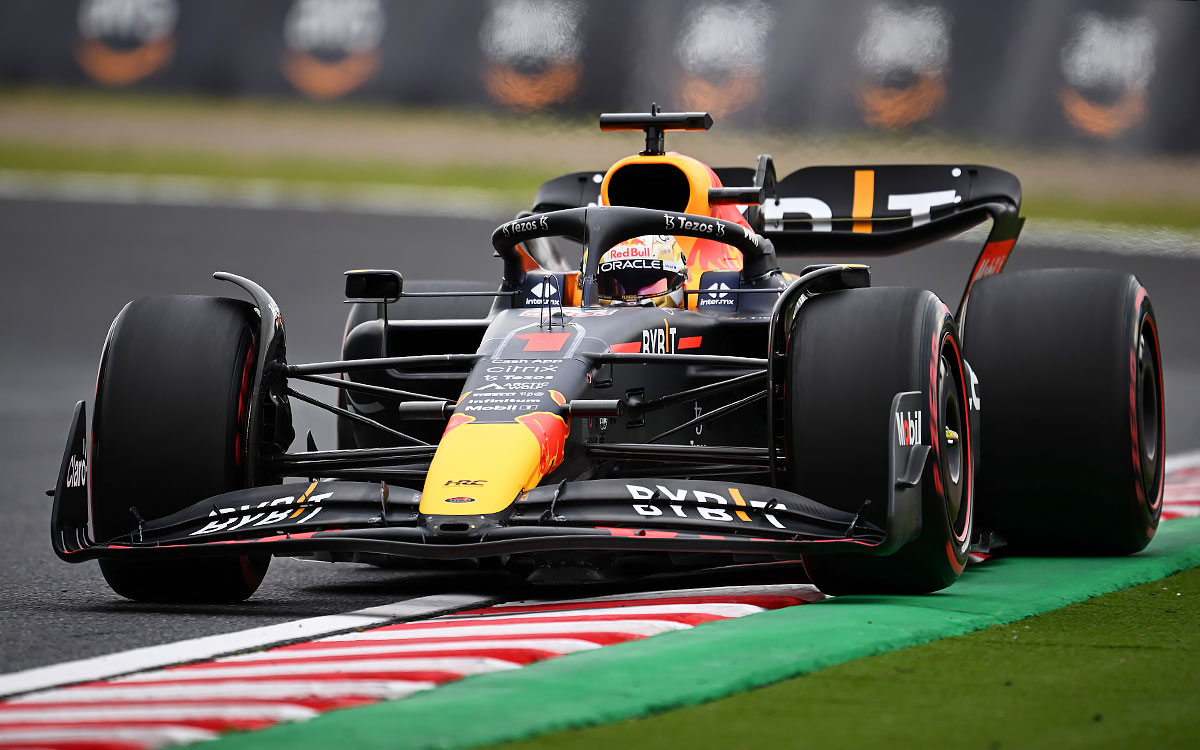
Around midday on October 8 Beijing time, Saturday’s third practice for round 18 of the 2022 Formula 1 season, the Japanese Grand Prix, took place at Suzuka. Red Bull’s Max Verstappen set the pace ahead of the first Japanese Grand Prix qualifying session in three years, beating both Ferraris by about 0.3 seconds. He combined the fastest sectors into the quickest lap, but with teams following different programmes and the track still evolving, the qualifying picture remained uncertain.
On October 8, the second day of the Grand Prix weekend, clouds spread over Suzuka with occasional sunshine. The final practice session ran for an hour from noon Japanese time in dry conditions, with air temperature at 21.5°C and track temperature at 30.3°C.
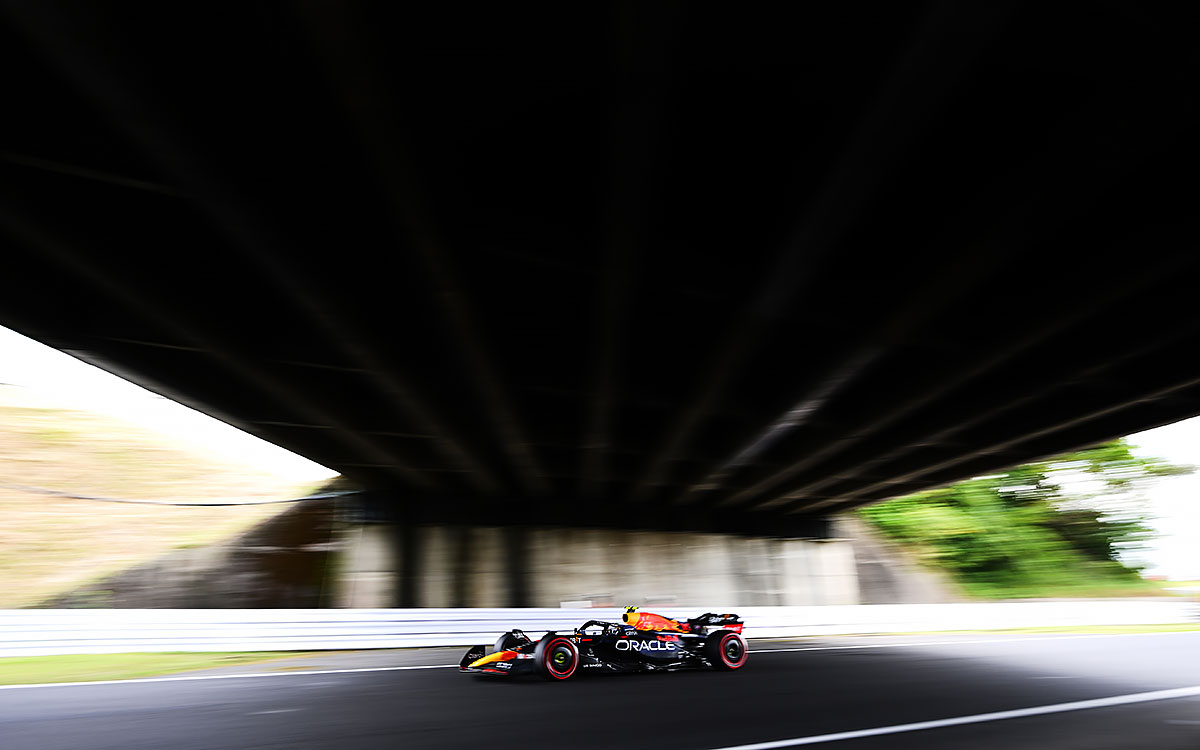
The wind was strong, however, and Williams’ Nicholas Latifi told his team over the radio that it felt like the windiest day of the entire season.
As the weekend’s first and only dry practice session, FP3 began differently from usual, with all 20 cars heading out as soon as it started. Sunday’s weather remained uncertain, but qualifying was set to be dry, and the teams adopted different approaches.
The track was completely green, with no rubber laid down. Early on, several cars slid at the rear in traction-dependent sections such as the final corner and the second Degner. McLaren’s Daniel Ricciardo suffered a heavy right-front lock-up on the approach to the chicane.
Verstappen, who would seek a second consecutive Drivers’ Championship in Sunday’s race, set a 1:32.050 on soft tyres early on, despite the poor, unrubbered surface, to establish a familiar one-second lead. After moving into second on mediums midway through the session, he fitted new softs again with five minutes remaining, set the fastest times in all three sectors and went to the top of the timesheets.
Team mate Sergio Perez lost time in the middle sector amid heavy traffic but still finished fifth, eight tenths behind.
For Ferrari, Carlos Sainz was second, 0.294 seconds off the pace, and Charles Leclerc third, 0.309 seconds behind.
After locking up at the chicane, Sainz vented his frustration over the radio, saying, “Come on… all thanks to Charles.” The cars were a considerable distance apart at the time, however, leaving doubt over whether his team mate’s wake had really caused it.
Just hours after his move to Alpine for 2023 was announced, Pierre Gasly ended the session in a surprising last place. His AlphaTauri team mate Yuki Tsunoda was also down the order in 17th.
The three-part qualifying session, lasting one hour in total, began at 15:00 Japanese time on October 8. Suzuka is generally a difficult circuit on which to overtake, making grid position particularly important.
| Position | Driver | Team | Gap | Laps |
|---|---|---|---|---|
| 1 | Max Verstappen | Red Bull | 1:30.671 | 22 |
| 2 | Carlos Sainz | Ferrari | +0.294 | 27 |
| 3 | Charles Leclerc | Ferrari | +0.309 | 27 |
| 4 | Fernando Alonso | Alpine | +0.649 | 20 |
| 5 | Sergio Pérez | Red Bull | +0.843 | 25 |
| 6 | George Russell | Mercedes | +0.859 | 28 |
| 7 | Lewis Hamilton | Mercedes | +0.918 | 25 |
| 8 | Lando Norris | McLaren | +1.076 | 27 |
| 9 | Esteban Ocon | Alpine | +1.079 | 22 |
| 10 | Lance Stroll | Aston Martin | +1.167 | 25 |
| 11 | Daniel Ricciardo | McLaren | +1.189 | 28 |
| 12 | Alex Albon | Williams | +1.275 | 26 |
| 13 | Valtteri Bottas | Alfa Romeo | +1.300 | 24 |
| 14 | Sebastian Vettel | Aston Martin | +1.551 | 25 |
| 15 | Kevin Magnussen | Haas | +1.619 | 23 |
| 16 | Mick Schumacher | Haas | +1.695 | 24 |
| 17 | Yuki Tsunoda | AlphaTauri | +1.706 | 26 |
| 18 | Zhou Guanyu | Alfa Romeo | +1.714 | 24 |
| 19 | Nicholas Latifi | Williams | +2.197 | 26 |
| 20 | Pierre Gasly | AlphaTauri | +2.210 | 24 |